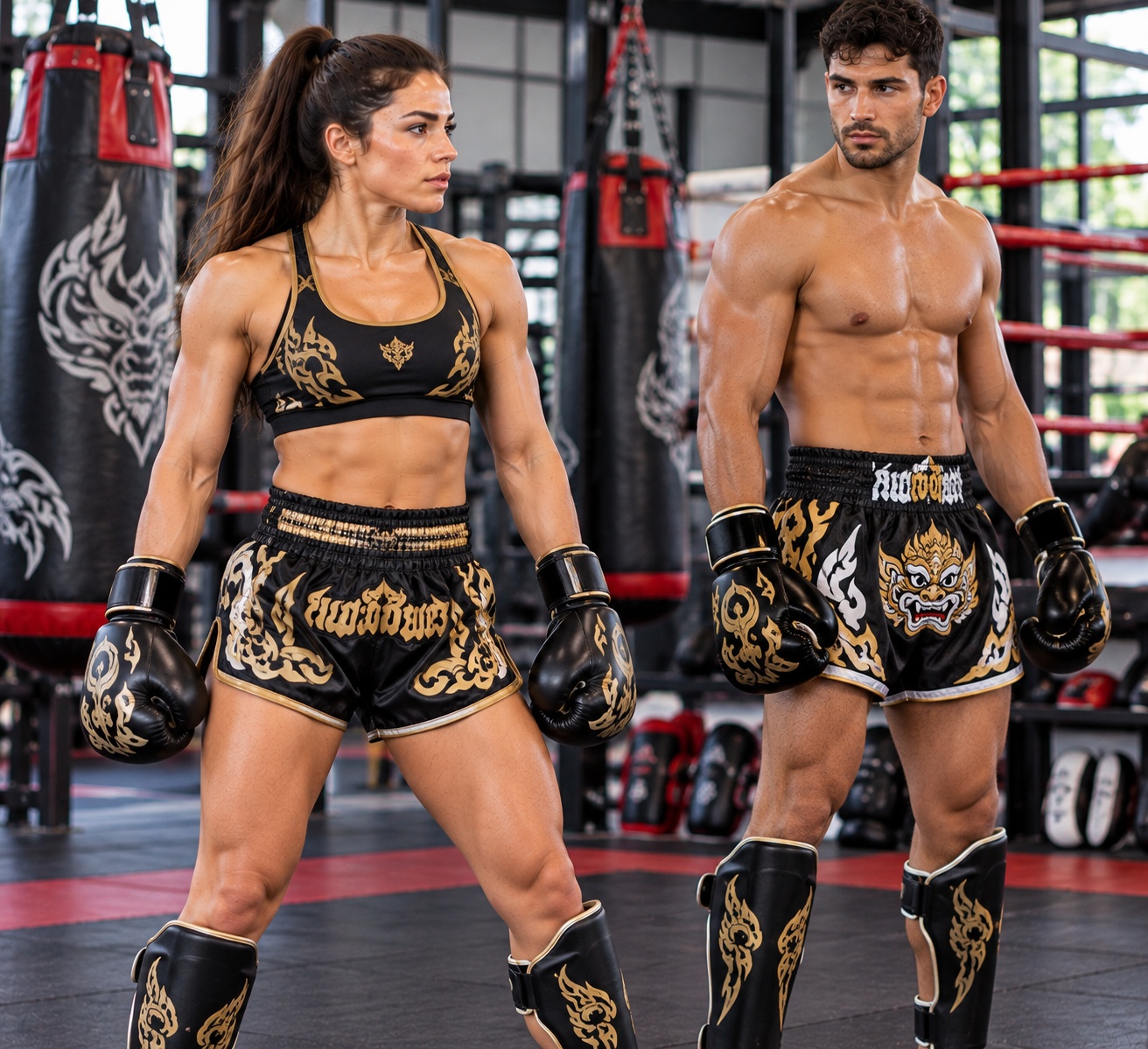
Clothing used in Muay Thai is subjected to intense stress due to sweat, friction and frequent training sessions. Proper maintenance helps preserve the characteristics of the fabrics, maintain comfort during use and prolong the lifespan of the garments.
Washing shorts, technical shirts and other garments correctly does not only mean removing visible dirt, but also following the manufacturer's instructions regarding temperature, detergents and drying methods. Inadequate maintenance can in fact compromise the elasticity, breathability and resistance of the fibers.
This guide explains how to wash Muay Thai clothing through practical criteria, illustrating recommended procedures, the most common mistakes and ways to keep garments in good condition over time.
How to wash Muay Thai clothing?
Muay Thai clothing should be washed following the instructions on the manufacturer's label, using programs compatible with the type of fabric, appropriate detergents and correct drying. It is advisable not to leave damp garments inside the bag after training and to proceed with washing as soon as possible.
Regular maintenance helps preserve comfort, fit and the technical characteristics of the materials.
Each garment may require specific instructions that should be checked before washing.
When to wash the garments?
It is preferable to proceed with washing after each intense training session, avoiding long periods of damp garments staying in the bag.
Why read the label?
The manufacturer's instructions represent the main reference for choosing temperature, washing program and drying mode.
How to carry out the wash correctly?
Washing should respect the characteristics of the fabric, avoiding procedures incompatible with the material used.
Separating technical garments from particularly dirty items or those with abrasive components can help limit wear during the wash cycle.
It is also advisable to close any fasteners and turn garments inside out when indicated by the manufacturer.
Choosing the detergent
Use products compatible with technical fabrics following the instructions on the garment's label.
Setting the correct program
The choice of the wash cycle should be made according to the material and the instructions provided by the manufacturer.
What criteria to follow to preserve fabrics?
Proper maintenance does not depend only on washing but on the overall management of clothing between sessions.
It is useful to avoid prolonged accumulation of moisture, follow recommended drying methods and periodically check the condition of seams and elastic parts.
Constant maintenance helps maintain the functionality and comfort of garments over time.
Protecting materials
Technical fabrics can maintain their characteristics longer when treated according to the manufacturer's instructions.
Regular washing
A constant routine prevents sweat and residue from remaining on fabrics for a long time between one training session and the next.
How to dry and store clothing?
Drying is a phase as important as washing because it contributes to the preservation of materials.
It is advisable to let garments dry completely before storing them, avoiding poorly ventilated environments or closed containers when the fabric is still damp.
Proper storage helps maintain comfort during subsequent training sessions.
Promoting air drying
When compatible with the manufacturer's instructions, it is advisable to let garments dry in a well-ventilated environment.
Do not leave garments in the bag
Removing clothing immediately after training helps limit the stagnation of moisture.
What mistakes to avoid?
One of the most frequent mistakes is postponing the wash, leaving garments damp for many hours after training.
It is also advisable to avoid washing programs incompatible with the material, non-recommended detergents or drying methods different from those indicated by the manufacturer.
Neglecting to check the general condition of the garments can also reduce their lifespan over time.
Handling accessories as well
Clothing should be kept separate from particularly dirty or damp equipment during transport. To complete the equipment dedicated to combat sports, you can consult the combat equipment section.
Pay attention to the flooring
Placing garments on clean surfaces during changing helps limit contamination before and after washing.
How to organize proper maintenance?
Effective maintenance includes regular washing, checks on the condition of the fabric and proper storage between uses.
Periodically checking elastics, seams and areas subject to the most stress makes it possible to identify any signs of wear before they compromise the comfort of the garment.
Orderly management also facilitates the rotation of clothing when training with high frequency.
Checking the condition of the garments
Regularly inspecting seams and fabrics allows you to schedule any replacements when necessary.
Alternating garments
Having multiple changes allows you to respect washing and drying times without using garments that are still damp.
FAQ on washing Muay Thai clothing
Is it necessary to wash garments after every training session?
For intense training, it is generally advisable to wash after each use, always following the manufacturer's instructions.
Can I use any detergent?
It is preferable to choose products compatible with the type of fabric and respect the instructions on the garment's label.
Are there specific standards?
Maintenance methods depend mainly on the instructions of the individual garment manufacturers. For this reason, the label represents the most important technical reference to follow.
How to store clothing after washing?
It is advisable to store it only when completely dry in a clean and well-aerated environment.
Taking care of equipment over time
Proper maintenance of Muay Thai clothing allows you to preserve the comfort, functionality and durability of the garments used during training.
Following the manufacturer's instructions, organizing a constant washing routine and periodically checking the condition of the clothing allows you to maintain the characteristics of the materials over time.
An approach based on simple and verifiable procedures facilitates equipment management and helps ensure optimal conditions for every training session.


 Budgets
 Dumbers
 Discs
 Benches
 Racks and Rigs
 Weights Holders
 Isotonic machines
 Calisthenics
 Cardio
 Kettlebells
 Flooring
 Gym Set
 Accessories
 Combat
 ARTI MARZIALI
 CONTAINER GYM
 Tug-Of-War
 Used Gym Equipment
 PILATES MACCHINARI
 GINNASTICA ARTISTICA
 CAMPI DA PADEL
 Prodotti in Pronta Consegna
 Informazioni
 IRONMAN
 Gift Card