
Trolley
You have no items in your shopping cart

 Budgets
 Dumbers
 Discs
Discs
 Benches
 Racks and Rigs
 Weights Holders
 Isotonic machines
 Calisthenics
 Cardio
 Kettlebells
 Flooring
 Gym Set
 Accessories
 Combat
 ARTI MARZIALI
 CONTAINER GYM
 Tug-Of-War
 Used Gym Equipment
 PILATES MACCHINARI
 GINNASTICA ARTISTICA
 CAMPI DA PADEL
 Prodotti in Pronta Consegna
 Informazioni
 IRONMAN
 Gift Card
- Donatif
- Sports products
- 0 I like it
- 2301 Views
- 0 comments
- gym flooring, safety flooring, gym safety, shock-absorbing materials
READING TIME: 5 MINUTES ➤➤
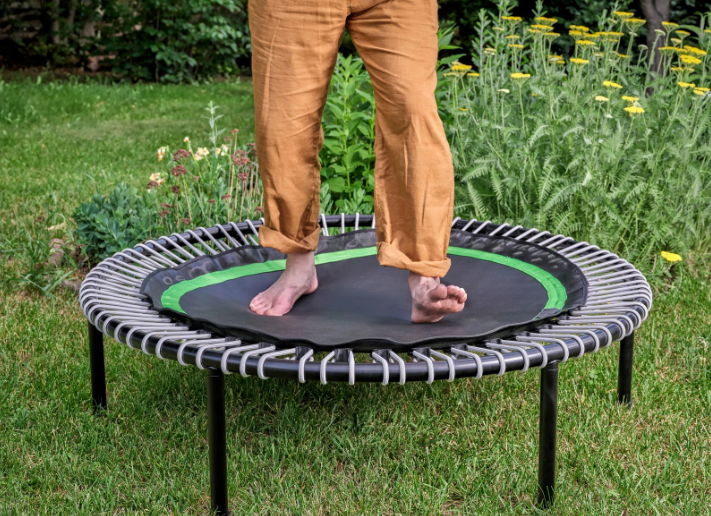
Dimensional Comparison: Which Trampoline Diameter Should You Choose and Why
Choosing the right trampoline diameter is one of the aspects that creates the most uncertainty before purchasing. People looking for a model to train at home are often faced with different sizes without fully understanding how they affect everyday use. The result is a feeling of confusion: a model that is too large may take up too much space, while one that is too small could limit comfort during workouts.
Understanding which trampoline size is most suitable does not simply mean evaluating the external diameter. Available space, the type of exercises planned, frequency of use, and the desired level of stability all play an important role. A well-chosen size makes training more practical, smoother, and easier to integrate into a daily home routine.
How the trampoline diameter changes the user experience
Differences between compact trampolines and larger models
Trampoline sizes directly affect the perception of movement during workouts. More compact models are often chosen by people with limited space or by those who want equipment that is easy to store away. In smaller environments, they can be a practical solution, especially when the trampoline is used occasionally or integrated into a multifunctional area of the home.
A larger diameter, on the other hand, offers a wider support surface and allows more natural movement. During cardio exercises or more dynamic sessions, having more space under your feet improves the feeling of control and reduces stiffness during movement. This aspect is particularly appreciated by users who train consistently or want a smoother bouncing experience.
Stability, comfort, and freedom of movement
A larger trampoline generally provides a greater feeling of stability. This depends not only on the structure itself, but also on weight distribution and the available jumping surface. People approaching rebound training for the first time often prefer a model that feels secure and helps them maintain better control during movement.
Compact models can still be highly functional when chosen carefully. In an apartment or shared room, a trampoline that is too large may become cumbersome and difficult to manage. The ideal choice therefore comes from balancing comfort of use with everyday practicality, rather than focusing exclusively on the largest size available.
How much space is really needed for a fitness trampoline at home
Actual dimensions and workout space requirements
When evaluating a fitness trampoline, it is useful to consider not only the stated diameter, but also the space required to use it comfortably. During training, the body moves laterally and vertically, so it is important to leave enough free space around the structure. A model intended for a living room or home gym requires at least minimal planning of the available area.
Many users underestimate this aspect and focus only on whether the trampoline will physically “fit” into the room. In reality, freedom of movement significantly changes the training experience. A space that is too narrow can limit workouts and make even a simple cardio session less enjoyable. Carefully evaluating the actual footprint helps avoid impractical purchases.
Solutions for small spaces and shared environments
Small-space models are especially popular in apartments, multifunctional rooms, or shared living spaces. In these situations, foldable trampolines or structures that are easy to move after workouts can be particularly useful. The possibility of folding the equipment reduces the feeling of clutter and makes it easier to integrate fitness into daily home life.
The height of the structure also contributes to space management. A lightweight compact trampoline can be stored more easily under a bed or behind furniture, while a professional model generally requires a dedicated area. The right choice therefore depends not only on room size, but also on how frequently the trampoline will be used throughout the week.
Which diameter to choose based on training goals
Light cardio workouts and daily use
People looking for a trampoline for light activities, mobility exercises, or short cardio sessions often prefer compact sizes. In these situations, practicality becomes the main priority: the equipment should be easy to use, quick to position, and minimally invasive inside the home. A smaller diameter allows consistent workouts without turning the living space into a permanent gym.
For daily use, the psychological management of space is also important. A trampoline that is too large may appear visually bulky and lead to less frequent use over time. A size that is proportionate to the room instead encourages a more natural and consistent training approach, especially for those seeking a sustainable long-term solution.
Intensive sessions, balance, and movement control
More dynamic workouts generally require a larger surface area. During exercises involving changes in rhythm, lateral movement, or higher-intensity cardio, a wider diameter improves the sense of freedom and makes body control easier. This benefit is especially noticeable for experienced users or for those who use the trampoline as a central part of their fitness routine.
A larger surface can also help with balance management and weight distribution during bouncing. People looking for a more stable feeling often prefer slightly larger models over ultra-compact versions. This is not only about comfort, but also about workout continuity and the overall quality of the training experience.
How to avoid mistakes when choosing the size
When a trampoline that is too small limits your workout
One of the most common mistakes is choosing a model solely to save space. A trampoline that is too small may initially seem practical, but can become limiting after a few weeks of use. The reduced surface area changes the way the body moves during exercises.
This issue becomes especially evident when users increase workout intensity and frequency. An excessively compact structure may create a feeling of stiffness and reduce overall training comfort. Evaluating your real habits in advance helps avoid purchases that are unsuitable for actual use.
When a large diameter becomes impractical
Choosing a size that is too large can also create difficulties. In some home environments, a large trampoline may become difficult to move, store, or manage on a daily basis. This aspect is often underestimated during the purchasing phase, especially when people focus only on the theoretical performance of the product.
If the equipment takes up too much space or requires constant assembly and disassembly, there is a risk of using it less over time. For this reason, the ideal size does not always correspond to the largest available model. A good balance between dimensions and practicality makes the experience more sustainable and helps maintain consistency in training.
How to find the right balance between space and functionality
Evaluating environment, frequency of use, and ease of management
To truly understand which trampoline size to choose, it is useful to start with the environment where it will be used. Occasional use requires different considerations compared to daily training. Even the possibility of leaving the trampoline assembled has a major impact on the final decision, because it completely changes the perception of household clutter.
Frequency of use is often the most important factor. People who train regularly tend to prefer a size that provides greater long-term comfort, while occasional users may prioritize more compact and easy-to-manage solutions. The best choice always comes from a practical evaluation of everyday habits.
Why the right dimensions matter in the long term
Choosing a trampoline with the correct diameter means reducing unnecessary compromises. A model that matches the available space and personal goals promotes better continuity of use and lowers the risk of regret after purchase. This becomes especially important in home environments where every centimeter must be organized carefully.
Dimensions also affect the overall perception of the product. A trampoline that is proportionate to the room appears more integrated into the environment and less invasive. For this reason, evaluating the correct size should not be considered a secondary technical detail, but rather a central part of choosing the most suitable equipment for your needs.
Comments (0)