
Trolley
You have no items in your shopping cart

 Budgets
 Dumbers
 Discs
Discs
 Benches
 Racks and Rigs
 Weights Holders
 Isotonic machines
 Calisthenics
 Cardio
 Kettlebells
 Flooring
 Gym Set
 Accessories
 Combat
 ARTI MARZIALI
 CONTAINER GYM
 Tug-Of-War
 Used Gym Equipment
 PILATES MACCHINARI
 GINNASTICA ARTISTICA
 CAMPI DA PADEL
 Prodotti in Pronta Consegna
 Informazioni
 IRONMAN
 Gift Card
- Donatif
- Sports products
- 0 I like it
- 4120 Views
- 0 comments
READING TIME: 5 MINUTES ➤➤
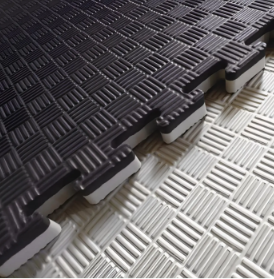
Rubber Gym Flooring Thickness and Density: A Complete Guide to Choosing
When designing a gym, every detail matters. Among these, the thickness of rubber flooring is a crucial element, often underestimated, yet essential to ensure safety, durability, and user comfort. It’s not just a matter of aesthetics or cost: choosing the right thickness means optimizing the performance of the space and reducing risks associated with intensive use.
In this guide, we will analyze in detail the most common thickness options — from 2 to 5 cm — outlining their technical characteristics and practical implications. A resource designed for gym owners, designers, and technicians who want to make informed decisions without leaving anything to chance.
Why thickness matters when choosing rubber flooring
Impact on user safety and stability
The first factor to consider when choosing the thickness of rubber flooring is safety. Flooring that is too thin may be unstable, increasing the risk of falls or injuries, while flooring that is too thick — if not properly balanced — can affect stability and movement precision. The most suitable thicknesses ensure a good balance between cushioning and grip, especially in areas dedicated to bodyweight training or functional fitness.
In addition, thickness helps absorb impact energy generated by dropped equipment or weights. In high-intensity environments such as weight rooms, it is essential to prevent injuries and protect underlying surfaces. Stability also translates into longer equipment lifespan and a better overall user experience.
Effect on subfloor protection
One of the less visible but most important aspects is the ability of rubber flooring to protect the subfloor from impacts, vibrations, and potential damage. Greater thickness allows for more effective insulation, preserving the structural integrity of the screed or slab. This is particularly important in gyms located on upper floors or in shared buildings, where acoustic and mechanical insulation is critical.
Investing in the right thickness helps avoid costly repairs in the future and ensures long-term reliability. Preventive maintenance starts with smart design choices like this.
Technical guide to the most common thicknesses
2 cm gym flooring: suitable for cardio areas and light traffic
A thickness of 2 cm represents the basic solution for low-impact areas. Ideal for cardio zones, group class studios, or spaces with moderate traffic, it offers a good balance between cost, comfort, and practicality. It is easy to install, often modular, and provides decent sound insulation in less demanding environments.
However, it is not suitable for areas where free weights or heavy equipment are used, as it does not sufficiently absorb strong impacts. In such cases, both the flooring and the subfloor may be damaged, compromising overall safety.
3 cm gym flooring: balance between comfort and absorption
With a thickness of 3 cm, you enter the range of products ideal for mixed-use gyms, where activities include functional training and general fitness. This type of flooring ensures a good level of mechanical absorption, improving joint comfort for users and reducing vibration transmission to lower floors.
Material density plays a key role at this level: a high-quality 3 cm product can outperform a thicker but less dense alternative. It is the ideal choice for those seeking versatility and reliability in a single solution.
4 cm gym flooring: enhanced durability and sound insulation
For those aiming to create a robust and well sound-insulated environment, 4 cm is an excellent choice. This thickness is designed to withstand heavy loads and intensive use, making it ideal for cross-training or HIIT areas where the floor is constantly under stress.
In addition, sound insulation is significantly more effective compared to thinner options. It is particularly suitable for urban or shared environments where noise transmission can become an issue. The increased thickness also acts as a thermal and vibration barrier.
5 cm gym flooring: ideal for weight rooms and high-impact areas
The top-tier solution for maximum protection, durability, and shock absorption. 5 cm flooring is designed for weight rooms, powerlifting, Olympic lifting, and any environment where heavy loads are the norm. It can withstand repeated drops of dumbbells and barbells without deforming, protecting both equipment and building structure.
Despite the higher cost, it is a secure investment for facilities aiming to offer the highest quality standards while minimizing long-term maintenance. It also enhances brand perception by conveying solidity, professionalism, and attention to detail.
Material density: how it affects durability and performance
What density is and why it matters in technical flooring
Beyond thickness, the density of rubber flooring is a key factor in overall performance. Density refers to the amount of material within a given volume: the higher it is, the better the floor can absorb impacts without deforming. This results in greater durability and less frequent need for replacement.
A dense floor is also more stable, does not shift during use, and provides a consistent surface for technical or dynamic movements. In professional settings, density should always be carefully evaluated during the purchasing phase.
High density vs low density: pros and cons
High-density flooring ensures greater mechanical resistance, better shock absorption, and reduced wear over time. However, it may feel more rigid and less comfortable, making it less suitable for relaxation or stretching areas. Costs are generally higher but are offset by longer lifespan and lower maintenance needs.
On the other hand, low-density flooring offers greater elasticity and softness but may deform more easily under prolonged stress. It is suitable for low-use or temporary areas but not recommended for heavy-load environments. The key is finding the right balance between thickness and density based on the specific use of each area.
How to choose the ideal thickness for your gym
Key factors: activities, budget, and technical goals
Every gym has unique characteristics: choosing the right thickness means carefully considering the type of activities performed, the available budget, and technical priorities. In multi-purpose facilities, it may be beneficial to use different thicknesses for different zones, optimizing performance in a targeted and efficient way.
A good compromise is often between 3 and 4 cm with high-density materials, but for high-impact disciplines, 5 cm is the better choice. The type of clientele also matters: professional or advanced users require higher-performance flooring solutions.
Practical tips for designers and gym owners
For designers and gym owners, the key concept is customization. Every space should be designed based on its specific needs: from the type of exercises to usage frequency, as well as acoustic and structural requirements. Working with experienced suppliers and choosing certified materials is essential for achieving a functional and long-lasting result.
Finally, remember: there is no universally perfect thickness, only the one that fits your project. Evaluate carefully, compare technical data sheets, and rely on concrete data to make a choice that ensures performance, safety, and long-term value.
Comments (0)