
Trolley
You have no items in your shopping cart

 Budgets
 Dumbers
 Discs
 Benches
 Racks and Rigs
 Weights Holders
 Isotonic machines
 Calisthenics
 Cardio
 Kettlebells
 Flooring
 Gym Set
 Accessories
 Combat
 ARTI MARZIALI
 CONTAINER GYM
 Tug-Of-War
 Used Gym Equipment
 PILATES MACCHINARI
 GINNASTICA ARTISTICA
 CAMPI DA PADEL
 Prodotti in Pronta Consegna
 Informazioni
 IRONMAN
 Gift Card
- Donatif
- Sports products
- 0 I like it
- 206 Views
- 0 comments
- gym flooring, safety flooring, gym safety, shock-absorbing materials
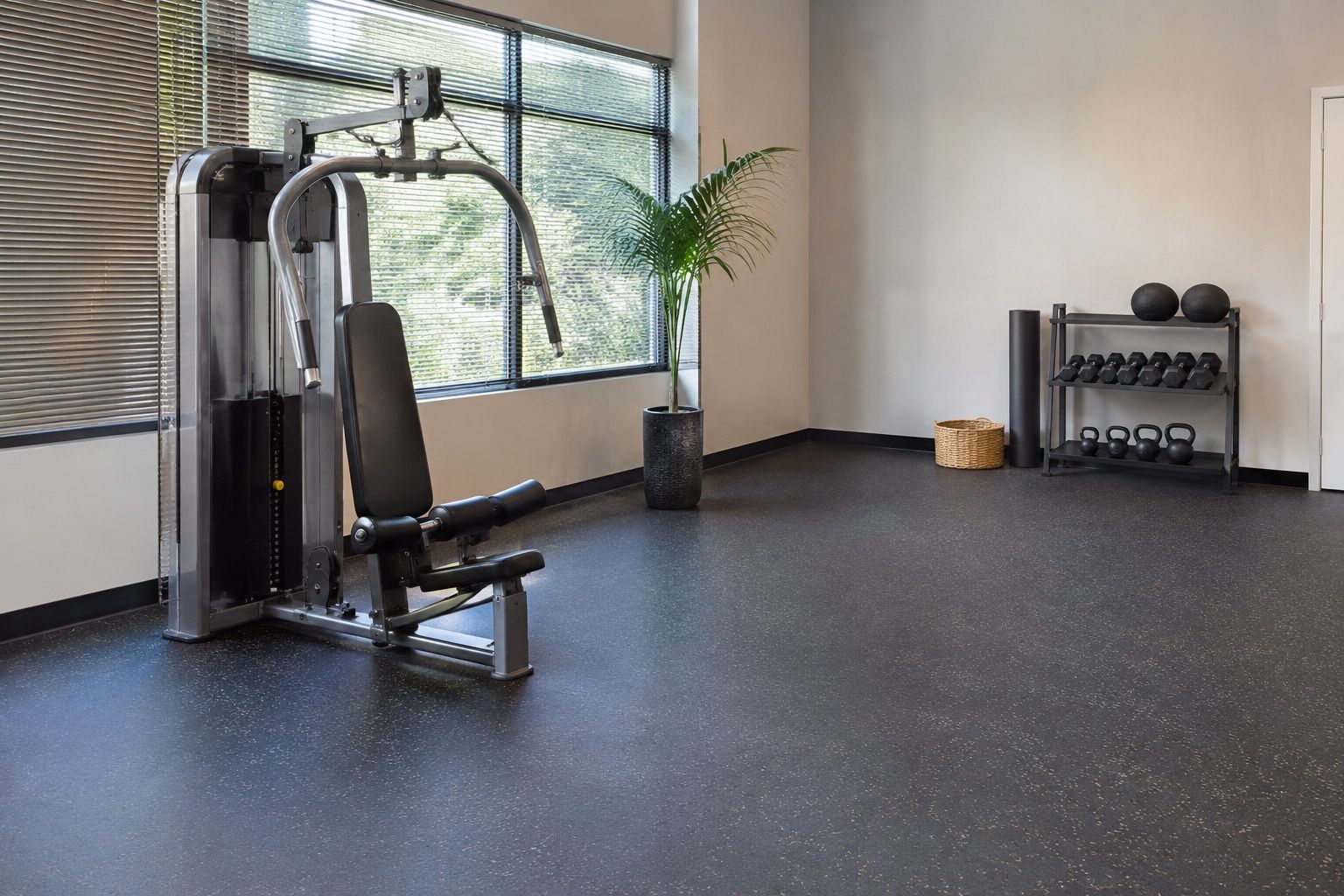
In a personal training studio, every piece of equipment must contribute concretely to the quality of the service and the organization of sessions. Available space is often limited, and the choice of machines requires careful evaluation of client needs, training programs, and frequency of use. A resistance machine purchased with the goal of expanding the offering may turn out to be less in demand than expected, gradually becoming an underutilized resource.
The problem is not just about the price paid at the time of purchase. A rarely used machine continues to occupy floor space, requires maintenance, needs checks, and limits the possibilities of organizing the environment differently. Its effective cost therefore also includes the opportunities that the studio gives up by keeping it in its layout.
For a studio owner personal trainer, understanding how much an underused machine costs in a PT studio means adopting a more comprehensive economic and operational criterion. There is no universal threshold of use below which a piece of equipment must necessarily be eliminated: the decision depends on the type of clientele, the function of the machine, the availability of alternatives, and the value that workstation brings to the overall experience.
This guide presents a method to calculate opportunity cost, measure space occupancy, and compare different surface usage possibilities. The numerical examples are purely illustrative and must be replaced with the studio's actual data before making economic decisions.
The specific problem: how much an underused machine costs in a PT studio
A rarely used machine may seem like a secondary problem when the studio is operational and sessions are running regularly. However, looking at the organization over the medium term, a more important issue emerges: that workstation continues to absorb resources without necessarily generating a proportionate contribution. The cost therefore does not coincide with the simple depreciation of the equipment, but includes all resources committed to keeping it available.
The first distinction to make concerns the difference between temporary underutilization and structural underutilization. A machine may be in low demand during certain weeks because clients' programs have changed, because there are periods of lower turnout, or because the personal trainer is experimenting with new ways of working. A persistently low frequency, observed instead over a representative period and across different types of clients, suggests a possible incompatibility between the equipment and actual demand.
The owner must avoid judging a machine solely based on impressions. Remembering that a certain workstation is used rarely is not the same as knowing the number of sessions, minutes of use, and occasions when it would have been genuinely useful. Data collection allows a perception to be distinguished from a verifiable situation and constitutes the starting point for any subsequent evaluation.
Purchase price and effective cost
The initial price represents only part of the economic cost. To evaluate a machine already purchased, one must consider the residual value of the investment, any maintenance costs, the time dedicated to management, and the resources needed to keep it functional. If the machine was financed, any remaining financial liabilities may also be relevant, while for equipment purchased without financing, it is still important to consider the immobilized capital.
It is necessary to distinguish costs already incurred from those that can still be avoided. The original price is a historical cost and does not change based on future decisions. Conversely, non-essential maintenance, any management expenses, and other recurring costs can vary based on the choice to keep, move, or decommission the machine. This distinction avoids making decisions based solely on the desire to recover an expense already made.
A correct evaluation must also consider the functional value of the workstation. An underused machine may be important for a specific program, a dedicated service, or a particular training requirement. The low number of uses does not automatically prove that the equipment is useless. It is necessary to compare the contribution it offers with the resources it absorbs and the realistically available alternatives.
When underutilization becomes a problem
Underutilization becomes economically relevant when the machine occupies resources that could be deployed more effectively. For example, in a studio with a small surface area, an underused workstation might prevent the introduction of a bench, a space for functional work, or a second area dedicated to assessments and programming. The problem is not necessarily the machine itself, but the alternative use of the surface area.
Another indicator is the presence of unmet requests. If clients frequently wait to use a different workstation, or if the trainer has to modify the organization of sessions due to lack of space, keeping an underused machine could generate a significant opportunity cost. Conversely, if the studio has unused surface area and records no organizational problems, the same equipment may represent a resource with a low opportunity cost.
The decision should therefore stem from a combination of three elements: frequency of use, absorbed resources, and the value of alternatives. Considering these factors separately makes it possible to understand whether to intervene in the organization, modify the programming, move the machine, or evaluate its potential replacement.
Who uses the solution and in what context
A personal training studio has different characteristics compared to a commercial gym with a high number of members. The relationship between trainer and client, the duration of sessions, the level of personalization, and the distribution of appointments determine a specific usage model. For this reason, a machine that records numerous daily uses in a traditional gym might have a completely different function within a PT studio.
The owner personal trainer must start from the services actually offered and the training profiles present in their business. It is useful to distinguish individual sessions, any small groups, physical preparation paths, and athletic conditioning maintenance programs. Each type may require different equipment and generate different demand throughout the week.
The distribution of appointments also affects the occupancy of the machines. A workstation used by multiple clients consecutively may have a higher utilization level than equipment requested by a single specific program. To correctly measure demand, it is therefore necessary to consider both the number of users and the temporal distribution of sessions.
Analysis of training programs
The first step is to verify which programs actually involve the use of the machine. The owner can create a list of the main types of sessions and indicate, for each one, whether the equipment is essential, an alternative, or simply accessory. This classification helps understand whether low usage depends on insufficient demand or an organizational choice by the trainer.
A machine may be used little because its exercise is frequently replaced with another solution. In this case, it is necessary to understand whether the substitution is linked to the availability of more practical equipment, client preferences, or the structure of the programs. If the alternative allows the same organizational objective to be achieved with shorter preparation times, the owner may have a concrete reason to review the layout of workstations.
It is also advisable to record occasional requests. A machine used a few times a month might have a specific role in a program that the studio wishes to continue offering. Eliminating that possibility without consulting interested clients could reduce the variety of the service. Quantitative data must therefore be interpreted together with the function of the workstation and the commercial and technical objectives of the business.
Organizational constraints of the studio
Available surface area is one of the main constraints to consider. A workstation must be reachable, usable, and adjustable without interfering with other exercises. Knowing the external dimensions of the machine is not enough: it is necessary to evaluate the space required during movement, user access, adjustments, and maintenance operations. The manufacturer's instructions and applicable technical verifications must be considered before modifying the layout.
It is also necessary to observe how sessions take place across different time slots. A studio may have a very concentrated distribution of appointments in the morning and evening, with intermediate periods characterized by limited equipment use. A machine that appears to have low demand over the entire week might instead be particularly important during a specific time slot, creating operational value that a general average fails to highlight.
To make the analysis useful, the owner should collect information on footprint, accessibility, preparation times, interference with other activities, and the possibility of reorganizing the space. These elements allow frequency of use to be linked to the concrete configuration of the studio, avoiding theoretical comparisons that do not take real constraints into account.
Parameters needed to calculate opportunity cost and space occupancy
The calculation must start from a set of measurable data. It is not necessary to create a complex administrative system, but it is essential to define an observation period, record actual usage, and measure the resources committed. An orderly collection makes it possible to compare the machines present in the studio and identify those that deserve further investigation.
The observation period should be sufficiently representative of the business. A single week could be influenced by holidays, absences, or temporary variations in appointments. When possible, it is preferable to use data from multiple weeks and distinguish seasonal variations from recurring trends. The owner should also note any changes in programs that may have influenced demand.
The result must be an economic and operational sheet for the machine. This sheet should report at least the number of uses, actual occupancy time, occupied surface area, identifiable recurring costs, and available alternatives. In this way, the decision does not depend on a single indicator, but on a combination of comparable information.
Frequency of use and occupancy time
The number of uses can be calculated by recording how many sessions include the machine during the analyzed period. It is useful to distinguish the number of sessions from the actual minutes of work, because two uses can have very different durations. For example, a machine used in three ten-minute sessions does not present the same level of occupancy as a machine used three times for forty minutes.
A simple formula to calculate the utilization rate is: actual minutes of use divided by scheduled availability minutes, multiplied by one hundred. The result expresses the percentage of available time in which the machine is actually used. Scheduled availability must be defined consistently, excluding any periods when the studio is closed or the workstation cannot be used.
It is also useful to record accessory times. Adjustment, cleaning, setting changes, and preparation can increase the total time needed to manage the workstation. These minutes must not be confused with exercise time, but they contribute to the evaluation of organization. Equipment used little but requiring frequent preparations may be less efficient than the simple count of sessions suggests.
Surface area and recurring costs
To calculate space occupancy, it is necessary to measure the surface area occupied by the machine and the space required to use it correctly. The first concerns the physical footprint, while the second includes the operational space required by movements and access. The two measurements must be distinguished, because a compact machine may require a wider working area than its base.
Once the effectively committed surface area is defined, the owner can compare it with the economic cost of the space. If the studio incurs a rental fee, the monthly cost per square meter can be used as an accounting reference. The indicative formula is: monthly cost of space per square meter multiplied by the surface area attributed to the machine. This is an allocation criterion, not an automatic additional cost: the rent might remain unchanged even if the machine were moved.
Among recurring costs, it is advisable to include only effectively documentable items. These may include maintenance, spare parts, checks required by the manufacturer, and specific consumption, when measurable or attributable with a reliable criterion. Arbitrary amounts should not be assigned to a machine just to make the comparison more complete. If data is not available, it is preferable to indicate it as to be verified.
An expressly illustrative operational example
To understand the method, let us imagine a PT studio with limited surface area and a resistance machine used discontinuously. The owner wants to understand whether to keep it in its current position, move it, or allocate the surface area to another activity. The numbers reported below are didactic hypotheses, not market prices, industry statistics, or data relating to a specific marketed machine.
Suppose the machine occupies a physical surface area of 1.2 square meters and requires a total operational area of 3 square meters. Over four weeks, 12 uses of 15 minutes each are recorded, for a total of 180 minutes. If scheduled availability is 1,200 minutes in the same period, the utilization rate is equal to 15%. This value describes occupancy time, but does not establish on its own whether the machine is economically convenient.
To complete the analysis, it is necessary to verify the value of the surface area, recurring costs, the function of the machine, and the contribution of possible alternatives. If the workstation serves a specific program and there are no adequate substitutes, low usage might be compatible with the service model. If, on the other hand, the area can be allocated to a higher-demand activity, the opportunity cost deserves further investigation.
Calculation of space cost
Let us imagine, exclusively for illustrative purposes, that the monthly cost attributable to the space is 18 euros per square meter. Using the 3 square meters of the operational area, the monthly accounting value of the space is 54 euros. This amount represents a share of the real estate cost attributed to the workstation, not an expense that automatically disappears when the machine is removed.
The distinction is important because opportunity cost does not always coincide with occupancy cost. If freeing up the surface area does not allow rent or other expenses to be reduced, the economic benefit derives from the alternative use that can be made of those square meters. For example, it might become possible to insert an additional workstation, better organize circuits, or increase the quality of available space for individual work.
The value of the surface area can therefore be used as a comparative indicator, but it must not be automatically added to the monetary costs of the machine. To avoid double counting, the owner should keep allocated real estate costs, actual management expenses, and the economic value of alternative opportunities separate. This distinction makes the model more transparent and makes it possible to explain how each figure was obtained.
Comparison between alternatives
Let us now consider three possible decisions: keeping the machine in its current position, moving it to a less strategic area, or freeing up the surface area for a different workstation. For each option, it is necessary to identify immediate costs, operational changes, expected benefits, and any constraints. The choice should not be based solely on the greater hypothesized frequency of use for the alternative, but also on its real compatibility with the studio's programs.
A comparison table can include requested surface area, expected number of sessions, purchase cost of any new equipment, maintenance, preparation times, and value for clients. If the new workstation requires an investment, one must also consider the time needed to make it operational and the conditions necessary to generate actual demand. An undocumented forecast must not be treated as certain revenue.
The decision may vary depending on the context. Keeping the machine might be preferable when it performs a non-substitutable function, while moving it could solve a layout problem without giving up its availability. Decommissioning, on the other hand, can be considered when underutilization is persistent, adequate alternatives exist, and the operational value of the workstation is limited compared to the committed resources.
Interpretation errors and limitations of technical sheets
An economic evaluation can be misleading when data is read without considering the context. The number of uses, the dimensions reported by the manufacturer, and the purchase price are important information, but none of these alone is sufficient to establish the profitability of a machine. The owner must connect technical characteristics to the way the equipment is actually used.
Technical sheets describe the features declared by the manufacturer and can provide indications on dimensions, adjustments, expected loads, maintenance, and installation methods. They do not automatically prove that a given machine is the most suitable choice for a PT studio. Compatibility must be verified in relation to service objectives, available space, and user characteristics.
It is also important to distinguish information declared by the supplier from results observed in the studio. A usage forecast, a hypothesized organizational advantage, or a savings estimate must be recognizable as evaluations and not presented as certain data. This attention makes it possible to build a replicable decision-making process and reduces the risk of investments based on unverified expectations.
Evaluating only the purchase price
Comparing two machines exclusively through their initial price can lead to incomplete conclusions. Budget equipment might require more maintenance, prove less practical to adjust, or occupy a larger surface area. Conversely, a more expensive product might offer useful features for a specific program, but not necessarily justify the expense in the context of a studio with limited usage.
For a coherent comparison, it is necessary to evaluate the total cost of ownership over the considered period. Items can include purchase, transport, installation, maintenance, spare parts, and other documented costs. It is also advisable to include the estimated residual value when reliable elements exist to determine it. Assumptions must be explicit and applied with the same criterion to the compared alternatives.
A frequent error also consists of considering the original cost as a sufficient reason to keep the machine. Having spent a certain amount does not mean keeping it is always the most convenient choice. Future decisions should be based on costs and benefits that can still be modified, without letting past investment automatically condition the evaluation.
Confusing footprint and economic value
A large machine is not necessarily an inefficient machine. If it is used frequently and performs an important function, the occupied surface area can be justified by the generated operational value. Similarly, a compact machine is not automatically convenient: if it remains unused and does not respond to a specific demand, it can continue to represent a poorly productive investment.
It is also necessary to avoid considering the entire operational surface area as space subtracted from other activities without verifying the floor plan. Some areas can be shared among multiple workstations, while others must remain free for accessibility or organization reasons. The calculation must respect the actual conditions of the studio and applicable technical indications, without artificially reducing footprints to improve the result.
Another erroneous interpretation consists of considering the cost per square meter as an immediate saving obtainable by removing the machine. If the rent remains unchanged, the real estate expense continues to exist. The benefit must be evaluated in terms of better space utilization, greater organizational capacity, or the concrete possibility of developing a different service. This distinction is fundamental to avoid overestimating the economic advantage of a layout modification.
How to verify the outcome and choose the next step
Once data is collected and alternatives are compared, the owner should verify that the proposed decision is applicable in practice. A theoretical calculation might indicate that a surface area would be more useful for another activity, but before proceeding, one must verify dimensions, accesses, adjustments, compatibility with other equipment, and possible interference during sessions.
It is also useful to consult with collaborators who use the machine daily. A personal trainer might know operational needs that do not emerge from logs, such as adjustment difficulties, preparation times, or recurring requests from certain clients. This information does not replace quantitative data, but helps interpret it correctly.
When the modification involves installation, anchoring, systems, or safety requirements, it is advisable to consult a competent technician and check relevant documentation. Similarly, information on dimensions, operational distances, and maintenance must be checked in the manufacturer's instructions. It is incorrect to assume that a machine can be moved or reinstalled without specific verifications.
Testing a new organization
When possible, a useful solution consists of simulating the new layout before making purchases or definitive modifications. A scaled floor plan allows the current configuration to be compared with the alternative one, verifying footprints and workstation distribution. A 2D or 3D project can help visualize spaces, but it must use real measurements and does not replace necessary technical verifications.
If the move is reversible and does not require complex interventions, it may be useful to schedule an observation period in the new configuration. During this period, preparation times, workstation usage, any interference, and trainer feedback can be recorded. Comparing before and after makes it possible to understand whether the change produces a concrete improvement or introduces new organizational problems.
Experimentation must have criteria defined in advance. For example, the owner can establish that the new layout will be evaluated based on the number of manageable sessions, ease of access, reduction of waiting times, and the operational satisfaction of collaborators. In the absence of shared indicators, judgment risks depending solely on first impressions.
Documenting results
At the end of the verification period, it is useful to update the machine's sheet and record the observed differences. The document should contain the initial configuration, implemented modifications, measured dimensions, and any incurred costs. In this way, the owner can reconstruct the motivations for the choice even months later and use the same method for other equipment.
If the machine is kept, the sheet can become a periodic monitoring tool. It is possible to check the utilization rate, maintenance expenses, and the function performed in programs. If it is moved, effects on session distribution and the accessibility of other workstations can be verified. If it is decommissioned, it is advisable to document exit costs and any recovered value.
Documentation is particularly important when the studio grows or new collaborators are introduced. A shared decision-making process helps prevent equipment from being moved or eliminated based on non-comparable individual evaluations. The availability of updated information also makes planning subsequent investments simpler.
Operational checklist for evaluating an underused machine
Before deciding whether to keep or replace a resistance machine, the owner personal trainer can use a checklist that summarizes the main verifications. The purpose is not to automatically assign a positive or negative score to the equipment, but to ensure that no important element is overlooked. The checklist should be completed using observed data and available documents.
The first group of verifications concerns demand. It is necessary to know how many sessions use the machine, how many minutes it is actually employed, which programs require it, and whether there are periods of higher or lower usage. The second group concerns space: physical footprint, operational area, accessibility, and possible interference with other workstations. The third group concerns costs, distinguishing actual expenses from simple accounting shares.
Finally, alternatives must be identified and their feasibility verified. A freed surface area can have value only if a concrete project exists to use it. The new configuration must be compatible with studio activities and must not introduce accessibility, safety, or management problems. When information is missing, the correct choice may be to postpone the decision until verifications are complete.
Data to collect
The sheet should report the machine model, available documentation, dimensions declared by the manufacturer, and actual measurements recorded in the studio. It is necessary to indicate physical surface area, operational space, any installation needs, and maintenance requirements. If some information is not available, it must be marked as to be verified rather than replaced with arbitrary estimates.
Regarding usage, it is advisable to record the number of sessions, actual duration, weekly distribution, and interested program types. Collection should distinguish scheduled uses from those actually performed and note any canceled or modified sessions. In this way, the owner can understand whether low employment depends on demand, planning, or practical problems of the workstation.
For the economic part, historical price, any costs still to be incurred, maintenance, spare parts, and other documentable charges must be noted. It is also useful to indicate residual value only when a reasonable basis exists to estimate it. The sheet should separate certain data, assumptions, and missing information, so that everyone involved can understand the level of reliability of the comparison.
Decision matrix
A simple matrix can compare four possible actions: keeping the machine, reorganizing its use, moving it, or evaluating decommissioning. For each alternative, expected cost, interested surface area, operational benefits, constraints, and information still to be verified can be reported. It is not necessary to assign a numerical score to each item, especially when data is not sufficiently precise.
The choice to keep it can be reasonable when the machine responds to a specific need and its management cost is sustainable. Reorganizing its use can be preferable when demand exists but the workstation is not effectively integrated into programs. Moving it can solve layout problems without giving up the equipment, while decommissioning can be evaluated when underutilization is persistent and the value of alternatives is documented.
The matrix should be updated every time studio conditions change. New clients, collaborators, programs, and spaces can modify the demand and value of the machine. A correct decision today is not necessarily valid forever: periodic monitoring makes it possible to adapt equipment without acting impulsively and without accumulating equipment that no longer responds to operational needs.
Investing better: the value of equipment coherent with the PT studio
Evaluating an underused machine means considering the studio's equipment as a set of resources that must work in a coordinated manner. Every piece of equipment occupies space, requires management, and contributes in varying degrees to the quality of programs. The most useful criterion does not consist in maximizing the number of machines present, but in verifying that each workstation has a clear and coherent function with the offered service.
When planning new purchases, it is advisable to start from the analysis of needs and spaces before comparing individual products. An evaluation of resistance machines for PT studios should consider planned exercises, user characteristics, adjustment possibilities, footprints, and maintenance conditions. To explore available equipment families, you can consult the section dedicated to professional resistance machines, subsequently checking individual product sheets and their compatibility with the project.
Opportunity cost can also become a particularly useful tool for planning future investments. If a machine occupies a surface area that could be allocated to a higher-demand service, the owner has a concrete criterion to compare alternatives. However, the value of the new opportunity must be demonstrated through programs, requests, organizational capacity, and sustainable costs, without transforming a forecast into a guaranteed result.
A reorganization project may require support from a supplier to verify dimensions, configurations, and equipment characteristics, or comparison with a technician when installation and safety constraints are involved. Manufacturer documentation, floor plan measurements, and studio usage data must remain the main references. A complete evaluation makes it possible to distinguish verified information from assumptions and make decisions proportional to available resources.
For the owner personal trainer, the most useful result is an updated decision-making sheet indicating how much each machine is used, what surface area it requires, what costs it entails, and what alternatives are concretely achievable. This method makes it possible to identify equipment that deserves to be kept, that which requires a different organization, and that for which evaluating a change may be appropriate. Investment quality depends above all on the coherence between equipment, space, and programs actually offered to clients.
Comments (0)