Parkour gym means keeping modules, crash mats, support surfaces, and landing areas in suitable condition through scheduled checks, cleaning, wear checks, and intervention logging. Organized maintenance helps preserve the safety, operational continuity, and lifespan of installed equipment.
Equipment used in indoor parkour is subjected daily to impacts, jumps, landings, and repeated movements. For this reason, maintenance should not be limited to simple cleaning but should include a structured inspection program involving modules, fastening systems, crash mats, flooring, and technical documentation.
For sports associations, public bodies, and facility managers, proactive management makes it possible to promptly identify any anomalies, schedule interventions, and maintain high safety standards during all sports activities.
How to organize the maintenance of a parkour gym?
Effective maintenance includes visual checks before use, periodic checks of modules, fastening systems, landing crash mats, flooring, and support surfaces, as well as logging performed interventions. Every check should follow the manufacturer's instructions and the facility's maintenance plan.
The frequency of checks depends on the intensity of gym use and the characteristics of the installed equipment.
Up-to-date documentation facilitates the planning of interventions and the operational continuity of the facility.
Objective of maintenance
Keep modules and surfaces in the conditions required by the design and technical documentation.
Operational approach
Schedule routine checks, thorough verifications, and extraordinary interventions as part of a single management procedure.
What to check?
Verifications should concern module stability, surface integrity, fastening systems when present, adjustments, connection points, and the general state of the structures.
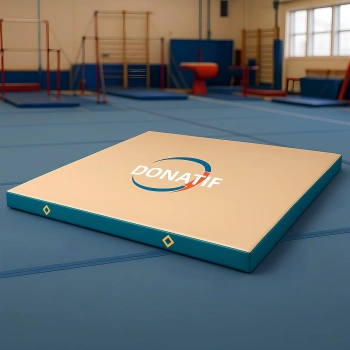
Protection crash mats should be checked by verifying the integrity of the covering, correct positioning, and the absence of deformations that could compromise their functionality.
The anti-shock flooring must also be kept intact, continuous, and free of elements that could interfere with users' movements.
Modules
Check stability, wear, structural elements, and correct positioning relative to the planned layout.
Crash mats
Verify coverings, seams, support surfaces, and correct placement in landing areas.
What frequencies to adopt and what signs to observe?
Verifications should follow the manufacturer's instructions and the maintenance program prepared by the facility.
| Element |
Check |
Reference |
| Modules |
Stability and general condition |
Manufacturer's manual |
| Crash mats |
Integrity and positioning |
Visual check |
| Flooring |
Continuity and wear |
Scheduled inspection |
| Fastening systems |
Connection verification |
Maintenance plan |
| Documentation |
Register update |
Internal procedures |
Abnormal noises, instability, deformations, evident wear, or damage to coverings represent signs that require technical verification before subsequent use.
Daily checks
Before activities begin, it is useful to perform a visual check of the main equipment and surfaces.
Scheduled checks
Thorough inspections make it possible to identify anomalies not immediately visible during routine checks.
How to organize cleaning and maintenance?
Cleaning operations should be carried out using procedures compatible with the materials indicated by the manufacturer.
Maintenance interventions must comply with technical instructions and provide for the logging of activities performed.
To explore dedicated solutions, you can consult gym equipment.
Maintenance register
Documenting every check facilitates the planning of future interventions.
Preventive maintenance
Intervening promptly helps reduce operational downtime and extraordinary corrective activities.
When to intervene or replace?
Any component that shows anomalies, instability, deformations, or wear incompatible with the manufacturer's instructions should be verified before new use.
Replacements should be planned by evaluating spare parts availability, the general state of the equipment, and the continuity of sports activities.
When necessary, it is appropriate to temporarily suspend the use of the affected equipment until technical verifications are completed.
Repair
Every intervention should be carried out following the manufacturer's technical documentation.
Replacement
The decision should be included within the facility's maintenance program.
What errors to avoid?
Postponing periodic inspections, modifying modules or fastening systems without following technical documentation, using damaged crash mats, or failing to log interventions represent recurring errors in the management of a parkour gym.
Neglecting preventive maintenance can also increase the number of extraordinary interventions and reduce equipment availability.
Documented planning instead makes it possible to organize checks and maintain a constant quality level of the facility.
Insufficient checks
Verifications should be planned and carried out regularly.
Incomplete documentation
Manuals, registers, and procedures constitute an integral part of the facility's technical management.
FAQ
How often should modules and crash mats be checked?
Frequency depends on the manufacturer's instructions, the intensity of gym use, and the maintenance plan prepared by the manager.
Is it useful to log every intervention?
Yes. Keeping a history of verifications facilitates maintenance planning and equipment management.
Which documents should be consulted?
Manufacturer manuals, installation instructions, maintenance registers, and technical documentation relating to the installed equipment.
How to plan maintenance in the long term?
An effective program should start with an equipment inventory, define operational responsibilities, establish routine and extraordinary checks, and constantly update the maintenance register. This approach makes it possible to plan interventions without interrupting sports activities.
When applicable, the main references include current building regulations, technical standards relating to sports equipment, instructions from competent sports organizations, and manufacturer manuals regarding installation, use, and maintenance. Every verification should be carried out in compliance with the intended use of the facility and the procedures provided.
Preventive maintenance, supported by regular checks and up-to-date documentation, helps maintain the safety, functionality, and operational continuity of the entire parkour gym over time.


 Budgets
 Dumbers
 Discs
 Benches
 Racks and Rigs
 Weights Holders
 Isotonic machines
 Calisthenics
 Cardio
 Kettlebells
 Flooring
 Gym Set
 Accessories
 Combat
 ARTI MARZIALI
 CONTAINER GYM
 Tug-Of-War
 Used Gym Equipment
 PILATES MACCHINARI
 GINNASTICA ARTISTICA
 CAMPI DA PADEL
 Prodotti in Pronta Consegna
 Informazioni
 IRONMAN
 Gift Card



Comments (0)