The choice between smith machine and free barbell depends on the training goal, the user's level of experience, the context of use and the characteristics of the available equipment. Neither solution is universally better: both respond to different needs and require correct use.
The operational answer is simple. If the goal is to work with a guided trajectory, have constant reference points during the movement and use integrated safety systems, the smith machine represents a valid solution. If instead you want to also train barbell control along a free trajectory, the traditional barbell offers different characteristics that require greater movement management.
This guide compares the two systems using verifiable criteria, avoiding absolute judgments and providing practical indications for choosing the equipment best suited to the training context.
Smith machine or free barbell: which to choose?
The smith machine uses a barbell that slides along mechanical guides while the free barbell follows a trajectory completely controlled by the user.
The choice should be based on the type of exercise, the athlete's experience, the presence of assistance during training and the programming goals.
Both tools can be used effectively as long as the manufacturer's instructions are respected and correct technique is adopted.
The first criterion is the goal
Before choosing, it is advisable to define whether you want to work with a guided trajectory or with a completely free movement.
Does experience count too?
The user's technical level influences the choice of equipment and the way exercises are performed.
What is the difference between smith machine and free barbell?
The main difference concerns the movement trajectory. In the smith machine, the barbell path is determined by the guides while in the free barbell the movement is managed entirely by the athlete.
The presence of the guides modifies the behavior of the equipment during exercises such as squat, bench press and military press.
Safety systems also differ since the smith machine normally integrates engagement mechanisms and adjustable stoppers.
Guided barbell
The guides keep the barbell along a path defined by the manufacturer and reduce lateral movements during the exercise.
Free barbell
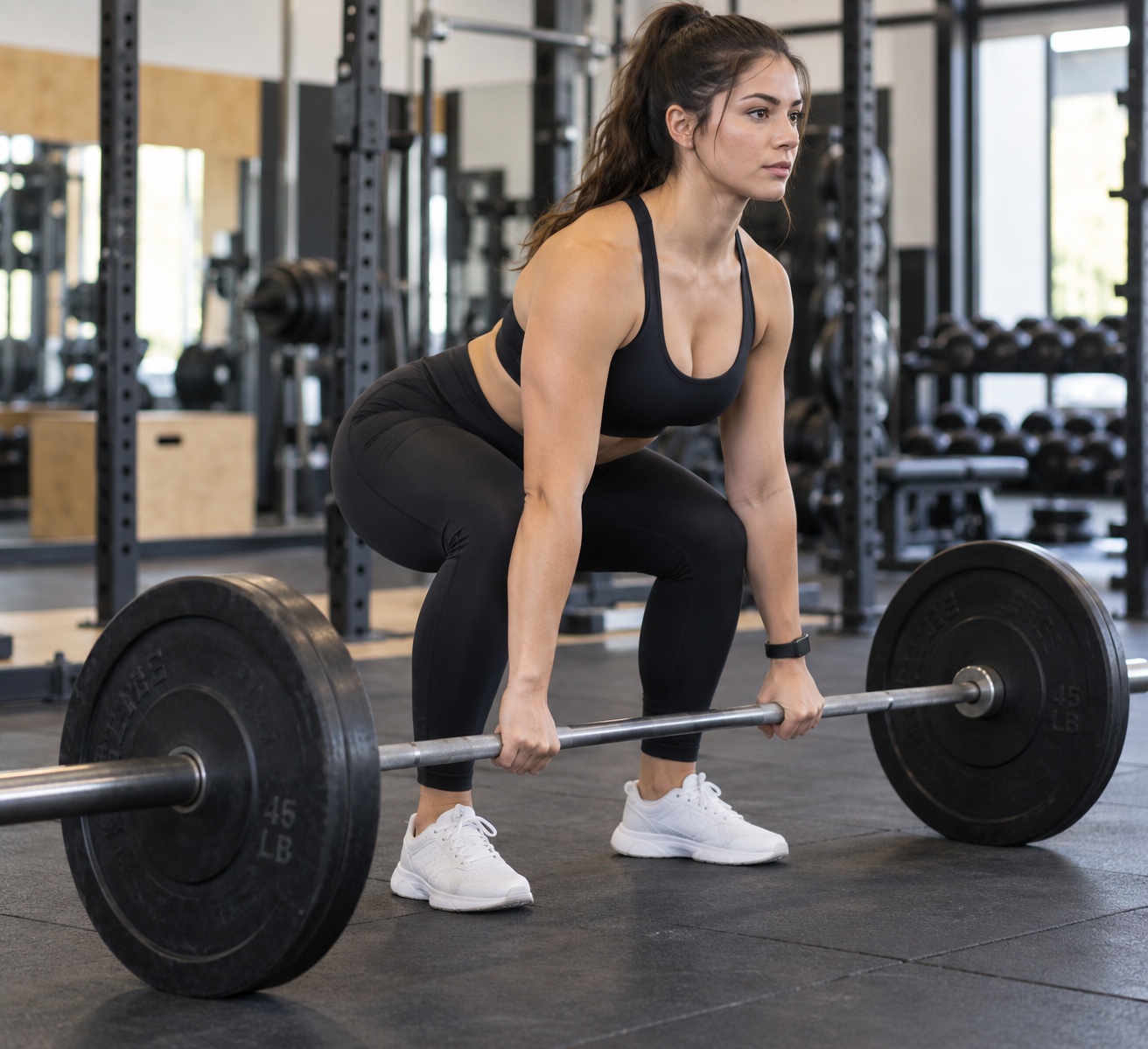
The movement requires continuous control of the trajectory and load stabilization throughout execution.
How are they used correctly?
With the smith machine it is necessary to adapt body position to the trajectory imposed by the guides instead of trying to automatically replicate that of the free barbell.
With the traditional barbell, movement can be adapted to one's technique as long as load control is maintained.
In both cases it is essential to use loads consistent with one's preparation level.
Use of the smith machine
Before starting, it is necessary to check the correct functioning of the guides and adjust the safety stoppers according to the exercise.
Use of the free barbell
It is important to use adequate supports, check the work area and adopt a technique consistent with the planned movement.
What practical criteria help in the choice?
The decision should take into account the type of training, available space, the presence of other equipment and the intended usage methods.
In a commercial gym, the two solutions are often used in a complementary way because they meet different needs.
The availability of qualified personnel and the level of users also represent useful factors in the evaluation.
Available space
Equipment layout and safety spaces influence the organization of the weight area.
Type of users
A gym frequented by users with different experience levels can benefit from the presence of both equipment.
What errors and safety aspects to consider?
One of the most frequent errors consists in considering execution techniques on the two tools identical.
The guided trajectory of the smith machine requires specific adjustments of the starting position while the free barbell requires continuous control of the movement.
Before each workout, it is advisable to check the condition of the equipment, the correct tightening of structural elements and the efficiency of the provided safety systems.
Technical error
Automatically applying the same technique to both pieces of equipment can make the movement less effective and less comfortable.
Preliminary checks
Guides, hooks, supports, flooring and work area must be checked before the start of training.
For which exercises are they most used?
Squat, flat bench press, lunges, military press and calf raise can be performed both with the smith machine and with the free barbell, adapting the technique to the equipment characteristics.
The choice depends on the training program and the session goals.
Each exercise requires correct equipment adjustment and compliance with the operational instructions provided by the manufacturer.
Squat
Foot and body position must be consistent with the type of equipment used.
Flat bench press
Bench height, barbell position and any safety devices must be adjusted before execution.
What aspects to evaluate when choosing equipment?
For gym managers, it is useful to evaluate construction quality, spare parts availability, maintenance, technical assistance and compatibility with the rest of the weight area.
A complete equipment set can include both solutions to offer different training possibilities. To learn more about the category of isatonic machines, it is also advisable to compare the technical characteristics of the different configurations available.
Complete manuals, technical documentation and maintenance instructions represent important elements in investment evaluation.
Indicators to compare
Structure rigidity, guide quality, maintenance simplicity and assistance availability are useful criteria for comparison.
Technical documentation
Manufacturer specifications constitute the main reference for installation, use and maintenance.
FAQ
Is the smith machine suitable for everyone?
Suitability depends on the type of exercise, the technique used and the user's characteristics. It is always advisable to follow the manufacturer's instructions.
Does the free barbell require a different technique?
Yes. The trajectory is controlled entirely by the user and requires different management compared to a guided barbell.
Is it possible to use both pieces of equipment in the same program?
Yes. Many training programs include the use of both depending on the session goals.
The structure of this content follows an answer-first approach with verifiable criteria, consistent with the brief provided.


 Budgets
 Dumbers
 Discs
 Benches
 Racks and Rigs
 Weights Holders
 Isotonic machines
 Calisthenics
 Cardio
 Kettlebells
 Flooring
 Gym Set
 Accessories
 Combat
 ARTI MARZIALI
 CONTAINER GYM
 Tug-Of-War
 Used Gym Equipment
 PILATES MACCHINARI
 GINNASTICA ARTISTICA
 CAMPI DA PADEL
 Prodotti in Pronta Consegna
 Informazioni
 IRONMAN
 Gift Card


Comments (0)