If new dumbbell smell is a concern for you, the practical answer is this: a general rule is not enough. You need to ask the supplier for documentation on the specific model and agree in advance on how to communicate the smell to members. Your nose can't tell you what is in the coating, so neither you nor the seller should make chemical claims that can't be proven.
The topic of coatings and how to evaluate them is already covered in this guide on how to assess the coating of new dumbbells. Here the goal is different: to give you a method for managing expectations and specifications. You'll see which questions to ask, what not to say, what to check on delivery, and how to explain the situation to staff and clients.
This article is written for gym managers, personal training studios, hotels and maintenance managers. It does not contain medical assessments or data on material composition. For those, the manufacturer's information on the model you are buying is what counts.
In this article
Why can a new dumbbell have a smell?
A piece of equipment fresh out of its packaging can have a noticeable smell, especially if it is coated in rubber or other synthetic materials. The possible causes vary: the material itself, the manufacturing process, time spent in sealed packaging, storage or transport. These are general hypotheses: for a specific model, only the manufacturer can tell you what applies.
Perception varies greatly from person to person. A smell that an instructor finds negligible can bother a sensitive member, especially in a small, poorly ventilated room. For this reason, it is best to treat the smell as a variable to manage, rather than as a defect or as a detail to ignore.
Why it matters for specifications
If you buy many dumbbells at once, the smell adds up: twenty pairs stored in a closed room smell more than a single isolated pair. It therefore makes sense to include it among your purchasing criteria, alongside grip, finish and coating durability.
Which statements are best avoided
When a member asks "Is it safe?" or "Is it toxic?", the temptation is to reassure them with a firm statement. This is the riskiest move, because a firm statement requires evidence that you usually don't have.
- "It doesn't emit any substances" or "it's odourless": not verifiable by sight or smell, and easily disproven by the first member who notices otherwise.
- "It's non-toxic" or "it's certified": only valid if a document exists for the exact model. Without that, don't say it.
- "It disappears within a few days": depends on material, environment and ventilation. A promised timeframe becomes a complaint.
- "Rubber is better than urethane" (or the reverse): without comparable specifications, these comparisons should be avoided.
- Medical diagnoses or health reassurances: if a member reports symptoms, refer them to a doctor and stop using that piece of equipment.
A more honest wording is: "There may be an initial smell. We have requested the model's documentation from the manufacturer and, if anyone is bothered, we ventilate the room and assess the situation calmly." You state what you know and what you are verifying.
Which questions to ask the supplier
A good method is to put your questions in writing before ordering and keep the answers together with the product sheet. You don't need technical jargon; you need precise questions about the model you are about to buy.
- What material is the coating of this exact model made of (rubber, vinyl, other), and how is it applied to the steel part?
- Is there manufacturer documentation on the materials of this model? If so, can you provide a copy?
- Are there cleaning and maintenance instructions for the coating? Which cleaning products are not recommended?
- Are there guidelines on ventilation, unpacking or first use?
- What should the buyer do if the smell remains strong or causes discomfort? Who should it be reported to, and with what photos or data?
- What usage conditions does the model cover (heavy commercial use in a gym, home use)?
If some answers don't come, it's not a disaster: it is information in itself. Record it as "data not available" instead of filling the gap with an assumption. If the answer is already on the website, the source to cite is the product page, which you can check together with the dumbbell category.
Comparison table of information to collect
| Information | Where to find it | If missing |
|---|
| Coating material | Product page | Ask the seller before ordering |
| Manufacturer documentation | Written request | Mark as "not available" and make no claims |
| Cleaning instructions | Manual or spec sheet | Use only water and a cloth until you have guidance |
| First-use instructions | Manual or seller | Ventilate the room and test a sample from the batch |
What to check on delivery and before use
Unpacking is the right moment to gather evidence. If a doubt arises later, you'll have a concrete basis to start from.
- Open the cartons in a ventilated area, not directly in the training room.
- Photograph packaging, labels and coating before assembling or moving anything.
- Check that the coating is intact: cuts, bubbles, peeling, differences between dumbbells from the same batch.
- Note whether the smell is light, medium or strong, and whether it is the same on all pieces or only some. A difference between pieces is data worth reporting.
- Keep packaging and documents until your check is complete.
- If something doesn't convince you, write to the seller with photos and notes instead of putting the equipment into use "just to see".
For cuts and coating failures, which are a separate issue from smell, you'll find a method in how to recognise coating defects and decide when to stop using equipment. It is written for benches but is useful as a framework.
How to communicate the smell to members and staff?
Members don't read spec sheets: they read your attitude. If your staff is prepared and says the same things, the issue gets resolved without tension.
A shared response for staff
Agree on three points with your team: the equipment is new and there may be an initial smell; the manufacturer's documentation has been requested and is available for consultation; anyone who is bothered can let staff know and use a different piece of equipment. Avoid improvised comments about composition.
Handling sensitive members
If a member reports persistent discomfort, don't downplay it and don't make medical assumptions. Stop using that piece, ventilate the space, note what was reported and refer the member to their doctor. Then report the case to the supplier with photos and notes.
Order and rotation
If the room is small, introduce new dumbbells gradually instead of replacing everything in one day. To organise delivery and tidying during classes, you can look at the method in how to organise dumbbells before and after a group class.
Practical example: a weights room to set up
Imagine a neighbourhood gym that needs to complete its dumbbell rack with new pairs. The manager has to choose between hex dumbbells and round rubber-coated ones. Before deciding, they write down their conditions: a medium-sized room, limited air exchange in winter, and a very varied membership profile.
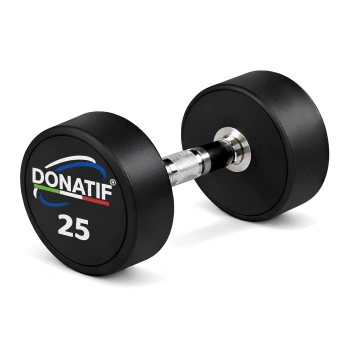
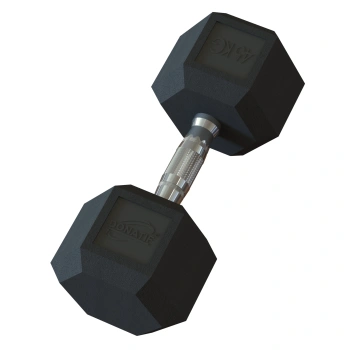
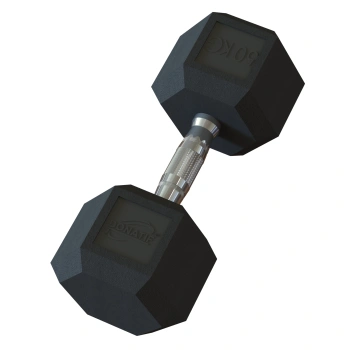
With this information, they prepare a sheet for each model, using the questions in the table above, and fill it in with data from the website and the seller's answers. For example, they compare a professional rubber hex dumbbell with a professional round rubber dumbbell: same training family, different shape, so different footprint and grip. For grip, not just smell, the dumbbell handle guide can help. If you are also evaluating adjustable models, the materials comparison is in cast iron or rubber-coated dumbbells.
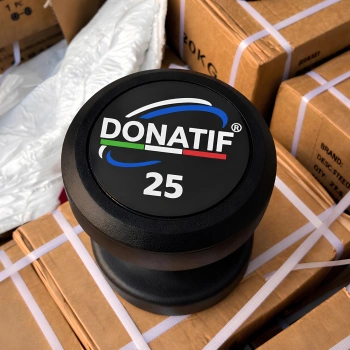
On delivery, the manager opens the cartons in the storeroom, notes the smell and photographs a sample. They then bring the pairs into the room gradually and inform staff using the shared response. If one piece smells very different from the others, they isolate it and report it. None of this requires knowing what is in the coating: it only requires method and documentation.
An important note: availability, lead times and conditions change, so always check the product page before setting opening dates or setup schedules.
Frequently asked questions
Is the smell of new dumbbells a defect?
Not necessarily: an initial smell can be present on new equipment. It becomes something to report if it is very strong, differs from piece to piece, or doesn't fade with ventilation. In that case, write to the seller with photos and notes.
Can I tell members it is harmless?
It is better not to, unless you have documentation for the specific model that supports it. You can say that a smell is possible, that you have asked the manufacturer for information, and that anyone who is bothered can use a different piece of equipment.
How long will it take to go away?
There is no timeframe that applies to everyone: it depends on material, environment and ventilation. Avoid giving members a duration, as it would become a promise.
What should I do if a member complains of discomfort?
Stop using the piece, ventilate the room and invite the person to see their doctor. Record what was reported and notify the seller or manufacturer, attaching photos.
Which coating smells less, rubber or something else?
Without comparable specifications, this cannot be said. It is better to compare specific models, asking the same information for each one.
Conclusion: decide with data and state your limits
Managing new dumbbell smells doesn't require chemical certainty: it requires a method. Collect information on the model, check and photograph on delivery, prepare your staff with a shared response, and treat every report as data to follow up on.
If you want to compare options, start from the hex rubber dumbbells category or from the round rubber dumbbells category. If you have a fit-out project involving several models and want advice on the specification sheets, you can request a consultation or a quote from Donatif.


 Budgets
 Dumbers
 Discs
 Benches
 Racks and Rigs
 Weights Holders
 Isotonic machines
 Calisthenics
 Cardio
 Kettlebells
 Flooring
 Gym Set
 Accessories
 Combat
 ARTI MARZIALI
 CONTAINER GYM
 Tug-Of-War
 Used Gym Equipment
 PILATES MACCHINARI
 GINNASTICA ARTISTICA
 CAMPI DA PADEL
 Prodotti in Pronta Consegna
 Informazioni
 IRONMAN
 Gift Card