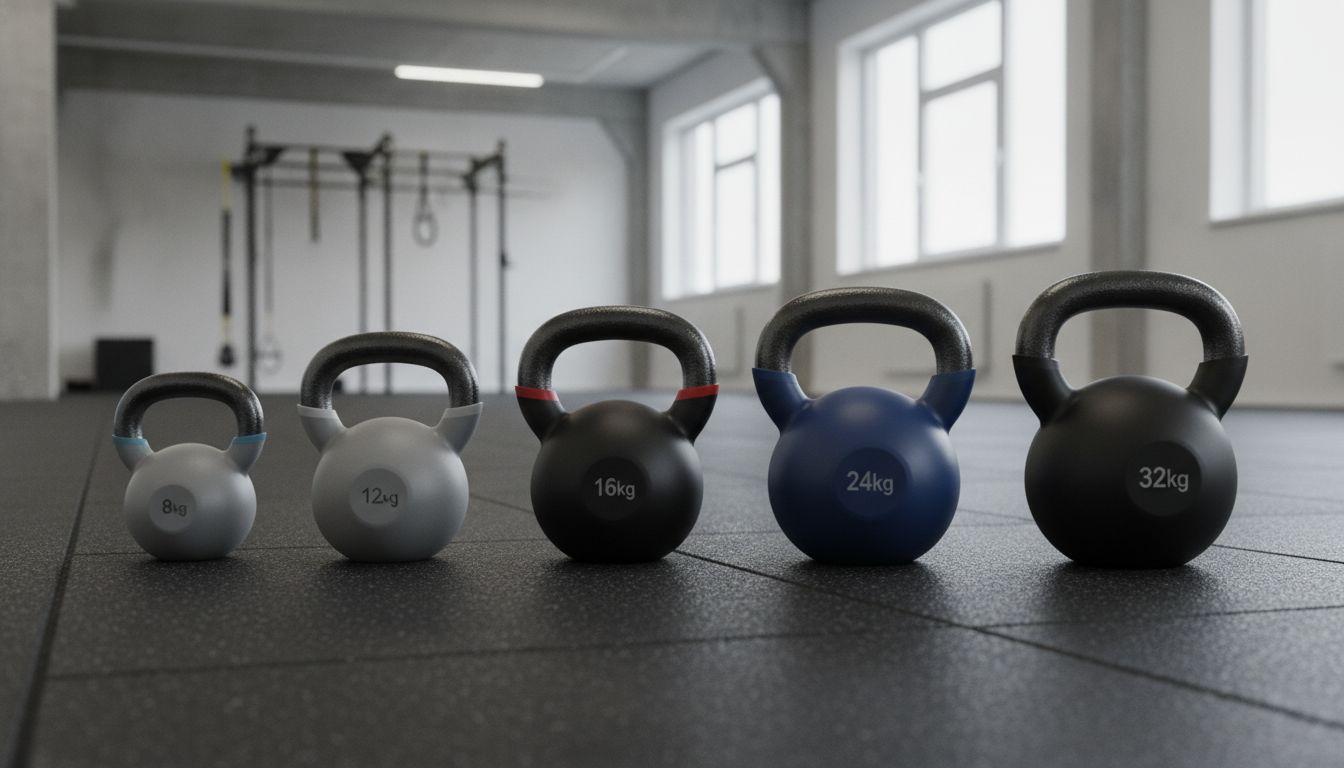
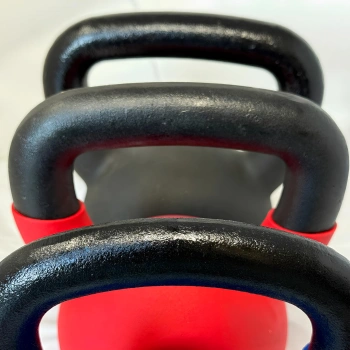
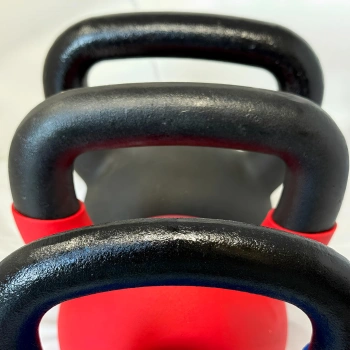
There is no single right weight: beginners usually start at around 8-12 kg for women and 12-16 kg for men, then move up depending on the exercise. Choosing the right kettlebell weight depends on your level, your goal and the movements you will do. A swing uses a much heavier load than a military press.
Getting it slightly wrong is not a disaster, but getting it very wrong is. A kettlebell that is too light stops being useful after a few weeks. One that is too heavy compromises your technique and increases the risk of injury.
In this guide you will find a chart by level and goal, criteria for choosing based on the exercise, and a method for building a set without buying weights you won't use. If you are looking for more detail on the first kettlebell for men and women, see our complete guide to the weight of your first kettlebell.
In this article
Which weight should you start with?
Start with a weight that lets you perform the movement well for all sets, without compensating with your back or shoulders. If the last rep is already sloppy, the load is too heavy for that exercise.
The indications below are guidelines and do not replace the advice of a qualified instructor. If you have physical issues or have not trained for a long time, get guidance from a professional or your doctor before starting.
What matters more than gender
Male or female is only a statistical starting point. Experience with weights, leg and glute strength, hip and shoulder mobility, and how consistently you train matter much more. A woman who has trained for years may start with a heavier weight than a sedentary man.
Chart by level and goal
The chart shows typical starting weights, not limits. Use it to narrow your choice, then check with a practical test lasting a few minutes.
| Level / goal | Women (approx.) | Men (approx.) | Notes |
|---|
| Beginner, never used weights | 6-8 kg | 8-12 kg | Learn technique first, then increase the load |
| Beginner with some training base | 8-12 kg | 12-16 kg | Suitable for swings, goblet squats and deadlifts |
| Intermediate, functional training and conditioning | 12-16 kg | 16-24 kg | You need at least one lighter weight as well |
| Intermediate, leg strength and posterior chain | 16-20 kg | 24-32 kg | For swings and deadlifts with heavier loads |
| Advanced | 20 kg and above | 28-32 kg and above | Complete set, including transition weights |
| Mobility, warm-up, supervised rehabilitation | 2-6 kg | 4-8 kg | Only under the guidance of the professional supervising you |
Does the weight change depending on the exercise?
Yes, and that is why a single kettlebell is rarely enough. Exercises for the legs and glutes allow for higher loads, while overhead or shoulder-focused movements allow much less.
- Swings and deadlifts: these are the movements where you use the heaviest load, because they work mainly the hips and legs.
- Goblet squat: a medium-to-high load that lets you stay upright through the torso.
- Clean and snatch: a lighter weight than the swing, because the technique is more demanding.
- Press and Turkish get-up: the lightest load, usually well below the swing weight.
- Mobility and warm-up: very light loads, useful even for experienced trainees.
A practical rule: if you can do clean swings with a given weight but the press is a struggle, that is not a mistake. It means you need a second, lighter kettlebell for the shoulders.
One kettlebell or several weights?
If you can, start with two weights: one for leg exercises and one lighter for the shoulders. A single kettlebell forces a compromise on every movement.
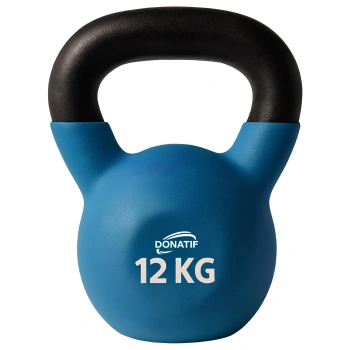
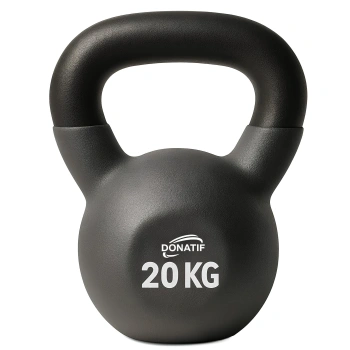
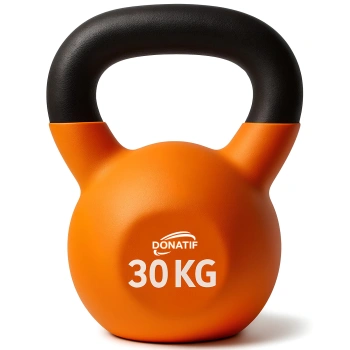
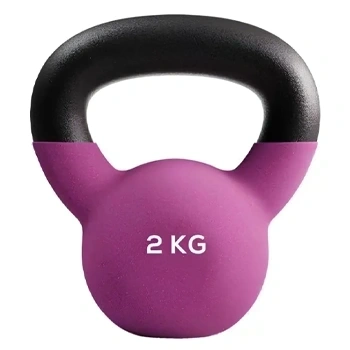
Three sizes cover most cases, for example a light weight such as the 12 kg neoprene kettlebell, a medium one such as the 20 kg kettlebell, and a heavy one such as the 30 kg kettlebell. This is not a universal choice: adapt these three sizes to your level, using the chart above.
In the kettlebell category you will find the full range of weights, from light loads to strength training. Always check availability and details on each product page.
How much to increase between weights
For beginners, a jump of 2-4 kg between kettlebells is manageable. For intermediate and advanced trainees, a larger step makes more sense, because small increments are less noticeable and make the set expensive and bulky.
Gyms and studios: how to set up your range
In a gym, a functional training box or a personal training studio, the challenge is different: you have to serve members of different levels within the same hour. A range with regular steps and enough pieces for each size avoids queues and constant swapping.
- Plan for multiple copies of the central weights, the ones most clients will use.
- Keep a light tier for beginners, mobility work and shoulder training.
- Add a few heavy weights, which require fewer pieces.
- Organise the space with dedicated storage: a weight rack keeps the area tidy and reduces the risk of tripping.
For choosing between training and competition kettlebells, read competition kettlebells for functional training. For the floor of your training area, suitable flooring protects both the surface and the equipment.
Buying mistakes to avoid
- Buying only the weight you 'wish' you could use: choose the one you work with well today, not the one you dream of in a year.
- Forgetting the shoulders: without a light weight, overhead movements remain a problem.
- Ignoring the handle and coating: check the product page for diameter and finish, as they affect grip and durability.
- Not considering space: more weights mean more bulk, so plan where you will store them.
- Starting from scratch without a base: if you have never used weights, first see the essential equipment for starting to train with weights.
To understand shape and coating as well, the kettlebell guide covers what is not included here.
Frequently asked questions
What kettlebell weight does a woman starting out need?
Usually you start between 6 and 12 kg, depending on experience. If you have never used weights, begin at the lower end and increase once your technique is stable.
What kettlebell weight does a man starting out need?
Usually you start between 8 and 16 kg. If you already train with weights, you can aim for the upper part of the range.
How many kettlebells do you need for home training?
Two is a good starting point: one for legs and glutes and one lighter for shoulders and technical movements. You can add a third as you progress.
How do I know if the weight is too heavy?
If you cannot maintain controlled posture and breathing, or if your technique deteriorates in the final reps, the load is too heavy. In that case, drop to a lighter weight.
How to choose now
Start from your level, use the chart to narrow your choice and plan at least two weights, one for the legs and one for the shoulders. For a wider range, browse the kettlebell category and check each product page.
If you need to equip a gym or studio and want a balanced range suited to your clientele, contact Donatif for a consultation or a quote.


 Budgets
 Dumbers
 Discs
 Benches
 Racks and Rigs
 Weights Holders
 Isotonic machines
 Calisthenics
 Cardio
 Kettlebells
 Flooring
 Gym Set
 Accessories
 Combat
 ARTI MARZIALI
 CONTAINER GYM
 Tug-Of-War
 Used Gym Equipment
 PILATES MACCHINARI
 GINNASTICA ARTISTICA
 CAMPI DA PADEL
 Prodotti in Pronta Consegna
 Informazioni
 IRONMAN
 Gift Card