
Trolley
You have no items in your shopping cart

 Budgets
 Dumbers
 Discs
Discs
 Benches
 Racks and Rigs
 Weights Holders
 Isotonic machines
 Calisthenics
 Cardio
 Kettlebells
 Flooring
 Gym Set
 Accessories
 Combat
 ARTI MARZIALI
 CONTAINER GYM
 Tug-Of-War
 Used Gym Equipment
 PILATES MACCHINARI
 GINNASTICA ARTISTICA
 CAMPI DA PADEL
 Prodotti in Pronta Consegna
 Informazioni
 IRONMAN
 Gift Card
- Donatif
- Sports products
- 0 I like it
- 2701 Views
- 0 comments
READING TIME: 7 MINUTES ➤➤
Modular and interlocking gym flooring: flexibility and cost savings
Modular gym flooring is now one of the smartest solutions for those looking to create functional, safe, and easily reconfigurable fitness spaces. Whether it’s a home gym or a professional fitness center, having interlocking flooring provides tangible advantages in terms of cost savings, practicality, and independence. In this article, we explore in detail the features of modular rubber and PVC flooring, their benefits, and how to choose them based on your needs.
- Why choose modular flooring for your gym
- Main types: interlocking, puzzle, and modular systems
- Practical and technical advantages of modular flooring
- How to choose the best solution for your gym
- Conclusion: an efficient solution for dynamic spaces
Why choose modular flooring for your gym
Adaptability to any space and requirement
One of the main advantages of modular gym flooring is its ability to adapt to spaces of any size. Thanks to their modular structure, tiles can be cut, added, or removed with ease, allowing for a custom configuration suitable for both small home workout areas and large fitness facilities. This flexibility is especially appreciated by those with evolving needs or who want to modify layouts without investing in permanent and costly flooring solutions.
Additionally, modularity allows for cost optimization: you can purchase only what you need, with the option to expand later. This incremental approach reduces waste and ensures a sustainable long-term investment.
Flexibility in installation and future changes
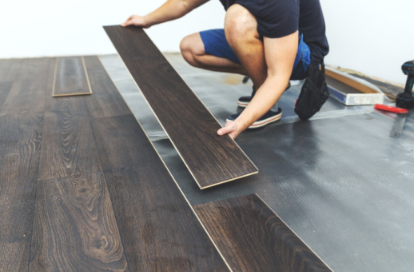
Installing interlocking gym flooring is extremely simple: it does not require adhesives, special tools, or professional labor. A flat surface and basic tools are enough to install the tiles independently, even in a home environment. This is ideal for those who want full control over their space without relying on external professionals.
Beyond initial installation, the system can be modified just as easily: moving a weight area, expanding a cardio zone, or reconfiguring the layout can be done in minutes, without invasive work or downtime. This is a key advantage in dynamic environments where needs evolve over time.
Main types: interlocking, puzzle, and modular systems
Interlocking flooring: stability without adhesives
Interlocking solutions are among the most common in gyms, thanks to their ease of use and ability to provide a stable, secure surface. Each tile features shaped edges that connect like puzzle pieces, creating a continuous and durable surface without permanent fixing to the ground.
The strength of interlocking flooring makes it ideal for supporting heavy equipment, high-intensity activities, and constant foot traffic without deformation or shifting. It is also easy to remove and reuse, making it perfect for rented or temporary spaces.
Puzzle tiles: speed and simplicity
Puzzle gym tiles offer an even faster and more intuitive way to set up training surfaces. Similar to interlocking systems, they feature toothed edges that allow manual assembly without tools. They are ideal for those seeking a lightweight, portable, and easily adjustable solution.
These tiles are often made from materials such as EVA foam or expanded rubber, providing good cushioning and comfort. Perfect for stretching areas, bodyweight exercises, or children’s activities, they combine practicality and safety without sacrificing aesthetics. They are also easy to clean and maintain their shape over time.
Practical and technical advantages of modular flooring
Quick installation and simplified management
A key strength of modular gym flooring is how quickly it can be installed. In many cases, an entire fitness area can be completed in just a few hours, without invasive work or downtime. This is a competitive advantage for gym owners, who can minimize operational disruptions.
In residential settings, the ease of installation allows even inexperienced users to install the flooring themselves. The cost savings compared to traditional solutions are significant, both in terms of labor and time—critical factors when building a custom home gym.
Maintenance, durability, and wear resistance
The most commonly used materials, such as PVC and rubber, are known for their excellent durability. They resist wear from free weights, machines, athletic footwear, and sweat, maintaining both appearance and performance over time. Non-porous surfaces make cleaning quick and easy, ensuring hygiene even in high-traffic environments.
Additionally, in case of localized damage or wear, only the affected tile needs to be replaced rather than the entire floor. This modular approach simplifies maintenance and provides a clear advantage in terms of operational continuity and cost efficiency.
How to choose the best solution for your gym
Selection criteria based on use and traffic
Not all modular gym flooring systems are the same. The choice should start with a careful evaluation of the intended use. For high-impact areas like weight zones, high-density rubber tiles are recommended to absorb shocks and protect the subfloor. For stretching or functional training areas, softer materials can provide more comfort.
Traffic volume is also a key factor. High-usage gyms require more durable flooring, while home environments can opt for lighter and more versatile solutions. The modular nature allows gradual upgrades, adapting the setup over time.
Mistakes to avoid when selecting materials
One of the most common mistakes is underestimating material quality. A cheap gym floor that is not certified may deform, emit unpleasant odors, or negatively impact training performance. It is essential to rely on specialized suppliers and check technical specifications such as density, thickness, and chemical resistance.
Another frequent mistake is choosing tiles that are not compatible with each other or with the existing subfloor. Before purchasing, it is important to measure the space accurately, allow for expansion margins, and verify compatibility between modules. A small investment in planning can prevent structural issues and unexpected costs in the long run.
Conclusion: an efficient solution for dynamic spaces
Invest in independence, save on management
Choosing modular gym flooring is not just a functional or aesthetic decision: it is a strategic choice for those who want to maintain control over their environment, optimize costs, and ensure a safe, customized training experience. Whether for a home or professional setup, interlocking systems offer the right balance between durability, ease of use, and flexibility.
In a context where spaces must quickly adapt to new needs, modular flooring proves to be a valuable ally. Investing in this solution means equipping yourself with an adaptable system that can grow alongside your business or lifestyle.
Comments (0)