The choice between a soft plyo box and a wooden one mainly depends on the users' level, the training context, and the facility's priorities. Soft models prioritize impact reduction in case of accidental contact with the box, while wooden ones offer a rigid and stable surface appreciated in numerous athletic preparation and functional training contexts.
There is no absolute best solution. Both types allow for the same exercises, but they feature different characteristics in terms of use, maintenance, space management, and sensations during training.
Before purchasing, it is therefore advisable to evaluate the type of users, the frequency of use, the functional area setup, and the facility's goals, avoiding choosing solely based on the material.
Soft or wood plyo box: which is better?
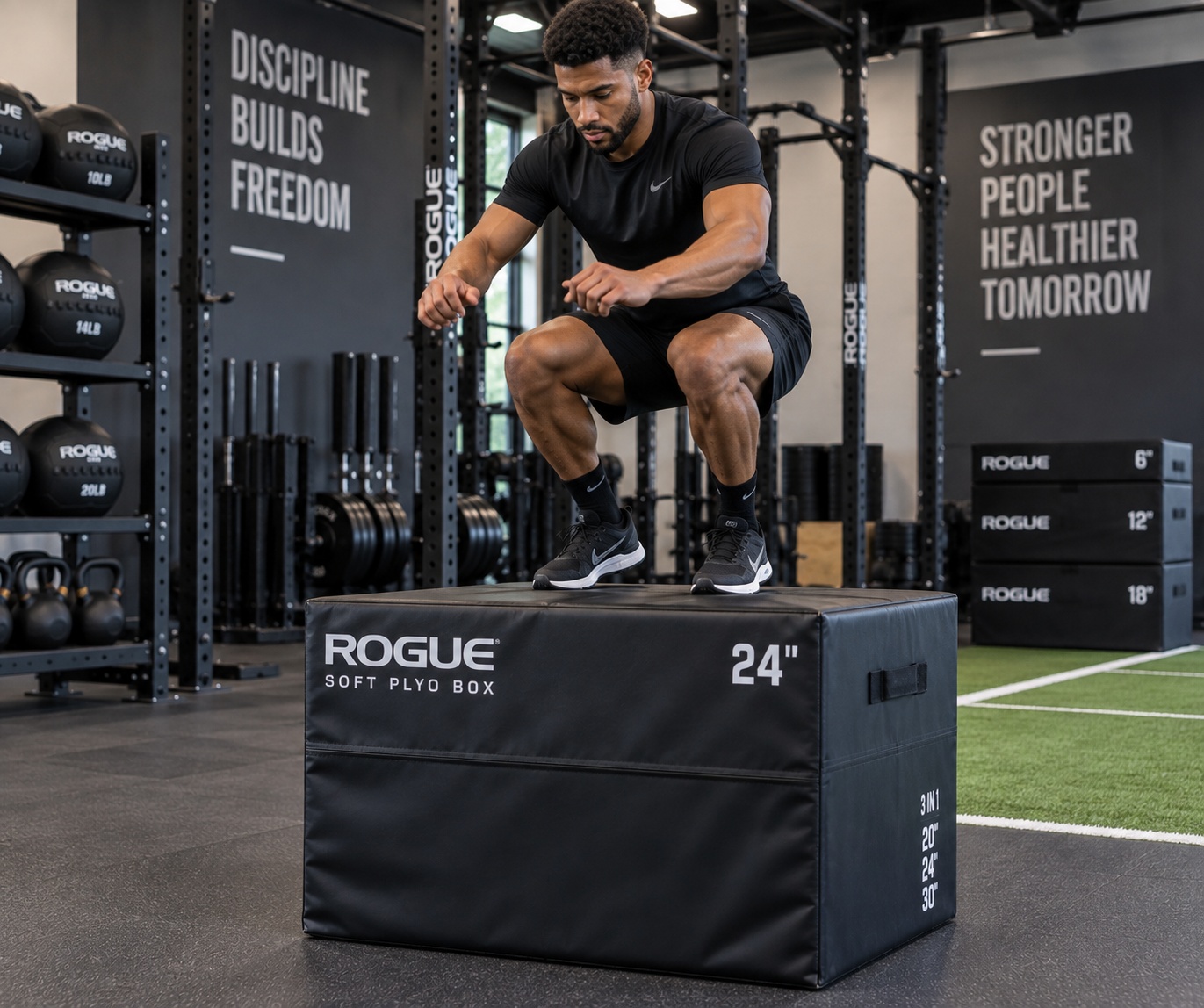
A soft plyo box is often a recommended choice when the main objective is to reduce the consequences of any accidental impacts during exercises. A wooden model, on the other hand, is preferred by many facilities seeking a rigid surface and a stable support feeling during plyometric work.
The choice should always be made considering the users' level, the type of exercises performed, and the gym's operational context.
To get the best result, it is appropriate to evaluate the material together with the available heights, the area setup, and the frequency of use.
What is the most important criterion?
The main criterion is to verify which type of users will use the plyo box and with what intensity.
Why does the usage context matter?
A home gym, a personal training studio, and a professional gym may have different requirements when choosing equipment.
What are the differences between soft and wood plyo boxes?
The main difference concerns the outer material and the behavior of the surface during use. Soft boxes feature a coating designed to cushion accidental contact, while wooden ones offer a rigid structure.
Both allow you to perform plyometric exercises, strength work, and technical progressions, but they can convey different sensations during support and landing.
Maintenance, transport, and area organization can also influence the final choice.
Characteristics of soft models
Soft models are frequently chosen when you want to increase comfort while learning the box jump or in contexts with users of different levels.
Characteristics of wooden models
Wooden models are appreciated for their rigid structure and the feeling of stability during plyometric exercises.
Comparison table
This summary highlights the main decision-making criteria.
| Feature |
Soft plyo box |
Wooden plyo box |
| Outer material |
Soft coating |
Rigid structure |
| Accidental contact |
More comfortable |
More direct |
| Usage |
Progressions and classes |
Functional training and athletic preparation |
| Maintenance |
Coating inspection |
Structure inspection |
| Ideal choice |
Educational versatility |
Surface rigidity |
The table shows how the choice depends mostly on the intended use rather than a presumed superiority of one material over the other.
How to interpret the comparison
Each criterion should be evaluated considering the users' level and the planned training program.
Which aspects are most important?
Material, available heights, and intended use represent the main decision-making elements.
When to choose a soft plyo box?
The soft plyo box can be a suitable solution in facilities that host users with different levels of experience or that pay special attention to technical progression.
It is often used in functional training classes, motor preparation, and programs dedicated to learning plyometric exercises.
It can also be practical in multifunctional areas where operational safety is a priority.
Main advantages
The coating helps make accidental contact more comfortable during exercises without changing how the box is used.
Recommended contexts
It is a frequent choice for group classes, fitness centers, and studios where users with different levels of preparation alternate.
When to choose a wooden plyo box?
The wooden model is often adopted in areas dedicated to athletic preparation and continuous plyometric workouts.
The rigid surface represents a sought-after feature by many facilities that carry out high-intensity activities.
The choice remains linked to the gym's goals and the type of users.
Why choose wood
A rigid structure offers a constant support feeling during jumping and stepping exercises.
Where it is used most often
It finds application in sports centers, areas dedicated to athletic preparation, and functional rooms.
3-in-1 box or single height?
In addition to the material, it is also useful to evaluate the configuration of the plyo box. 3-in-1 models allow you to use different heights simply by rotating the box.
Single-height models, on the other hand, are indicated when you want to maintain the same training configuration at all times.
The choice depends on the variety of exercises and the number of users who will use the equipment.
When to choose the 3-in-1
It is a versatile solution when you want to work with multiple heights without purchasing multiple dedicated boxes.
When to prefer a fixed height
It can be useful in stations dedicated to specific and repetitive exercises.
What mistakes are best to avoid?
One of the most common mistakes is choosing the material solely based on personal preferences without considering the usage context.
Neglecting the quality of the support surface and the organization of the area can also negatively affect the training experience.
Finally, it is important to evaluate the available heights and compatibility with the users who will use the plyo box.
Evaluating only the material
The material represents one of the decision-making criteria but should be considered together with the configuration and usage methods.
Neglecting the flooring
An anti-shock gym flooring helps improve the stability of the station and protect the floor during continuous use.
FAQ
Is the soft plyo box only for beginners?
No. It can also be used in professional contexts when it meets the needs of the facility and the training program.
Is the wooden box more durable?
Durability depends on construction quality, usage, and maintenance. The material alone does not establish absolute superiority.
Is it worth choosing a 3-in-1 model?
It can be a practical solution when you want to use multiple heights with a single piece of equipment.
Does the material change the executable exercises?
No. The same exercises can be performed with both types, provided the box is used correctly.
How to evaluate the investment before purchasing
Choosing a soft or wooden plyo box means evaluating the type of training, the profile of the users, and the functional area setup. Considering material, available heights, frequency of use, and station organization together allows you to make a choice consistent with the actual needs of the facility.
For professional gyms, it can be advantageous to provide different configurations dedicated to specific programs, while in home gyms, it is often preferable to lean towards a versatile solution that accompanies technical progression over time.
A preliminary analysis of these elements allows you to invest in equipment suited to your operational context and to enhance the plyo box as an integral component of the functional area without limiting the decision to the mere comparison between materials.


 Budgets
 Dumbers
 Discs
 Benches
 Racks and Rigs
 Weights Holders
 Isotonic machines
 Calisthenics
 Cardio
 Kettlebells
 Flooring
 Gym Set
 Accessories
 Combat
 ARTI MARZIALI
 CONTAINER GYM
 Tug-Of-War
 Used Gym Equipment
 PILATES MACCHINARI
 GINNASTICA ARTISTICA
 CAMPI DA PADEL
 Prodotti in Pronta Consegna
 Informazioni
 IRONMAN
 Gift Card


Comments (0)