
Trolley
You have no items in your shopping cart

 Budgets
 Dumbers
 Discs
Discs
 Benches
 Racks and Rigs
 Weights Holders
 Isotonic machines
 Calisthenics
 Cardio
 Kettlebells
 Flooring
 Gym Set
 Accessories
 Combat
 ARTI MARZIALI
 CONTAINER GYM
 Tug-Of-War
 Used Gym Equipment
 PILATES MACCHINARI
 GINNASTICA ARTISTICA
 CAMPI DA PADEL
 Prodotti in Pronta Consegna
 Informazioni
 IRONMAN
 Gift Card
- Donatif
- Sports products
- 0 I like it
- 2725 Views
- 0 comments
READING TIME: 7 MINUTES ➤➤
Non-slip tatami: safety for all disciplines
Training in a safe environment is not just a matter of professionalism, but a real responsibility towards yourself and others. In every gym or dojo, the choice of flooring is a crucial element to ensure that every technical movement, jump, or fall takes place under optimal conditions. The non-slip tatami is now one of the most effective tools for preventing injuries and improving the sports experience, both for amateur practitioners and professional athletes.
Thanks to advanced technologies in materials and design, modern tatami mats offer superior grip, suitable for different disciplines and surfaces. Understanding the differences between the various available solutions and choosing the one that best fits your activity is the first step toward creating a safe, durable, and high-performance space.
- Why choose a non-slip tatami
- Key technical features
- Certified safety for sports environments
- Tatami in the dojo: a technical and cultural choice
- How to evaluate the quality of a non-slip tatami
Why choose a non-slip tatami
Reducing the risk of injuries
One of the most critical aspects of managing a sports facility is accident prevention. Sudden falls, slips during high-intensity exercises, or rapid movements can lead to serious injuries. A well-designed non-slip tatami minimizes these risks by providing a stable, uniform, and high-traction surface. Its use creates an environment where users can perform complex movements more safely, reducing the likelihood of losing balance or accidental slipping.
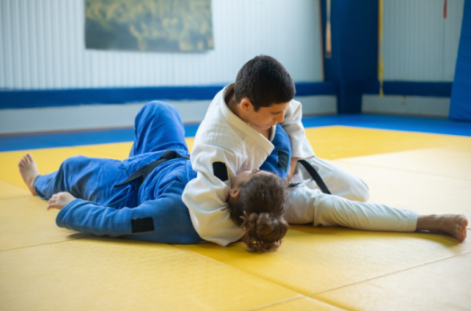
In disciplines such as judo, karate, or grappling, where contact is frequent and direction changes are sudden, floor grip plays a decisive role. A tatami with good grip ensures proper traction both barefoot and with technical footwear, protecting joints and muscles from excessive strain.
Improving stability and performance
Safety is not the only benefit offered by a good non-slip system. A professional tatami also directly impacts training quality. Athletes can focus better on technique, express maximum power in movements, and perform without worrying about slipping or holding back. This leads to improved performance and greater effectiveness in motor and postural work.
The stability provided by the tatami also allows better balance control during weight shifts, rotations, and strikes. For group activities or dynamic classes, this translates into smoother execution and fosters a climate of trust between instructor and participants.
Key technical features
Materials and density: what ensures grip
The choice of materials largely determines the quality of a non-slip tatami. The most effective models are made from high-density foams, often EVA (ethylene vinyl acetate) or PVC, ensuring an optimal balance between elasticity and compression resistance. This structure enhances grip and prevents module movement even under heavy stress.
Another important factor is the internal cohesion of the mat, meaning its ability to maintain shape and grip properties over time. Low-quality or overly soft materials may deform, lose stability, and reduce effectiveness. In contrast, high density ensures responsiveness and control even in intense situations.
Thickness and surface finish
Tatami thickness varies depending on intended use: for high-impact disciplines like judo, thicker mats (4–5 cm) are preferred, while for bodyweight or fitness activities, 2–3 cm is sufficient. However, it’s not just about thickness—what matters is pressure distribution and the ability to absorb impacts without compromising stability.
Another often overlooked element is the surface finish. Non-slip textures, such as rice-straw patterns, are designed to increase grip with both skin and synthetic materials, reducing slipping even in the presence of sweat or humidity. Surface quality directly affects the sense of safety and athlete confidence.
Durability and maintenance
Investing in a professional grip tatami requires evaluating its long-term resistance. Continuous foot traffic, impacts, mechanical stress, and frequent use test material durability. The best tatami mats retain their non-slip properties over time without deformation or loss of performance.
Ease of cleaning and maintenance is also a key advantage. Modular tatami with washable, detergent-resistant surfaces allow for effective hygiene management, essential in high-traffic environments. A well-maintained surface preserves grip, prevents dust buildup, and ensures a safe training experience.
Certified safety for sports environments
Standards and safety requirements
Every professional sports facility must comply with strict safety standards. Certified non-slip tatami meets European and international regulations (such as UNI EN 12503 or ISO 9001), ensuring quality, impact resistance, and anti-slip effectiveness. These standards are not just formalities but real guarantees for users.
Choosing certified solutions helps avoid legal issues, reduces insurance risks, and provides real protection for users. For gym owners and instructors, selecting compliant tatami demonstrates professionalism and respect for industry standards.
Adaptability to gyms and multi-purpose environments
Another strategic aspect is the ability of non-slip flooring to adapt to different setups and disciplines. Modular tatami allows customized installations suitable for martial arts halls, functional fitness spaces, yoga studios, or postural training areas. This versatility is also advantageous from a management perspective.
Adaptability also includes color, texture, and module compatibility. Modern gyms seek flooring that meets both technical and aesthetic requirements. A high-quality non-slip tatami combines functionality, safety, and design, enhancing the overall perception of the environment.
Tatami in the dojo: a technical and cultural choice
Tradition and function in martial arts
In martial arts, the tatami is not just flooring—it is an integral part of dojo culture and tradition. Choosing a good tatami reflects respect for both tradition and practitioner safety. Arts like judo, aikido, and karate require surfaces that absorb falls, provide grip, and withstand daily intensive use.
The symbolic value of tatami is even stronger in traditional settings, where every detail—from color to layout—helps create the dojo atmosphere. Using a non-slip tatami in this context combines respect for discipline with care for student safety.
The role of grip in specific movements
In many martial arts, correct technique execution depends on surface stability. A tatami with optimal grip allows athletes to perform quick movements, throws, and rolls with full control. This support prevents postural errors and facilitates technical learning, especially for beginners.
Grip also helps manage ground contact during falling techniques, allowing the body to react naturally without stiffness. In this way, the tatami becomes an ally in developing body awareness and refining martial movements.
How to evaluate the quality of a non-slip tatami
Visual and tactile indicators of good grip
Recognizing a quality tatami is not always immediate, but there are key indicators. Good grip can already be felt by touch: the surface should be slightly textured but uniform, without imperfections or overly smooth areas. It should provide traction both barefoot and with light footwear, avoiding a slippery effect when sweat accumulates.
Visually, a well-designed tatami has tight joints, stable edges, and a surface that does not lift or shift easily. Even color can be indicative: overly shiny or bright materials may suggest lower grip or cheaper composition.
Practical tests and instructor feedback
An effective way to evaluate a non-slip tatami is to test it during training. Simple exercises such as quick direction changes, jumps, or asymmetric movements can reveal surface quality. If the tatami remains stable and responsive, it is a sign of good construction.
Finally, feedback from experienced instructors and athletes is invaluable. Those who train daily can quickly distinguish between low-quality and professional materials. Gathering real-world feedback helps make more informed decisions and ensures safer, more effective solutions.
Comments (0)