
Trolley
You have no items in your shopping cart

 Budgets
 Dumbers
 Discs
Discs
 Benches
 Racks and Rigs
 Weights Holders
 Isotonic machines
 Calisthenics
 Cardio
 Kettlebells
 Flooring
 Gym Set
 Accessories
 Combat
 ARTI MARZIALI
 CONTAINER GYM
 Tug-Of-War
 Used Gym Equipment
 PILATES MACCHINARI
 GINNASTICA ARTISTICA
 CAMPI DA PADEL
 Prodotti in Pronta Consegna
 Informazioni
 IRONMAN
 Gift Card
- Donatif
- Sports products
- 0 I like it
- 3174 Views
- 0 comments
READING TIME: 7 MINUTES ➤➤
PVC Gym Flooring: Advantages, Limitations, and Applications
When designing or renovating a gym, one of the most critical and strategic aspects to evaluate is the choice of flooring. PVC gym flooring is now one of the most versatile, hygienic, and technically effective solutions to meet the demands of high-traffic sports environments. In this article, we take an in-depth look at the advantages, limitations, and applications of vinyl flooring, comparing it with alternatives such as resin or low-cost materials.
From wear resistance to ease of maintenance, PVC flooring is a valuable ally for architects, designers, and gym owners. However, not all solutions are the same, and it is essential to understand the different use cases to make an informed choice aligned with the real needs of a fitness facility.
- Why choose PVC for gym flooring
- Technical characteristics of PVC flooring
- Advantages of PVC flooring compared to other materials
- Comparison with other solutions: resin, rubber, low-cost materials
- Ideal applications of PVC flooring
Why choose PVC for gym flooring
The specific needs of gyms and fitness centers
Gyms are environments exposed to intense and continuous loads. Flooring is not just a surface but a structural component that directly impacts safety, comfort, and training effectiveness. Choosing a cheap gym floor can be risky if it does not ensure long-term durability and stability.
The ideal features of gym flooring include shock absorption, sound insulation, ease of cleaning and sanitization, and good aesthetics. PVC effectively meets these requirements, offering a balanced solution between technical performance and practical management.
The role of flooring in safety and functionality
A slippery, unstable, or difficult-to-clean surface can compromise user safety, increasing the risk of injuries. Washable PVC gym flooring ensures simple and frequent maintenance, which is crucial in high-traffic environments.
Additionally, underfoot comfort is essential to improve workout quality, especially in areas dedicated to functional training or bodyweight exercises. Thanks to its structural flexibility, PVC provides excellent elasticity and contributes to overall user well-being.
Technical characteristics of PVC flooring
Composition and structure of vinyl flooring
Flooring made of PVC consists of multiple layers, including a stabilizing backing, a compact vinyl core, and a protective wear layer resistant to abrasion. This multilayer structure gives vinyl gym flooring excellent durability and impact resistance.
The result is a uniform, seamless surface, ideal for maintaining high hygiene standards. Advanced versions also include antibacterial treatments and anti-slip finishes, making PVC perfect for common areas and high-use spaces.
Anti-slip, elastic, and sound-absorbing properties
One of the key advantages of PVC flooring is its ability to provide grip and stability even in the presence of sweat or moisture. Surface finishes are designed to significantly reduce the risk of slipping, enhancing safety during workouts.
At the same time, the slight elasticity of the material absorbs part of the impact from jumps and falls, protecting users’ joints. Some models also feature sound-absorbing properties, ideal for gyms located in residential buildings or multi-story facilities.
Compatibility with different environments: weights, cardio, classes
PVC adapts perfectly to different functional areas. In group class rooms, it ensures elasticity and hygiene, while in cardio zones it withstands dynamic loads and vibrations. Even in weight areas, it can be combined with technical sublayers to improve mechanical resistance.
The modularity of PVC solutions also allows for quick and customized installation, with varying finishes and thicknesses depending on usage. This makes PVC gym flooring a flexible and scalable choice for facilities of any size.
Advantages of PVC flooring compared to other materials
Easy maintenance and guaranteed hygiene
One of the most distinctive aspects of PVC flooring is its ease of cleaning. The smooth, uniform surface allows quick removal of sweat, dust, and debris without the need for aggressive detergents. This makes washable gym flooring in PVC ideal for environments requiring constant hygiene.
Additionally, many PVC products are treated with antibacterial additives that inhibit the growth of germs and mold. This not only protects users’ health but also reduces costs and time associated with frequent sanitization, improving operational efficiency.
Durability and wear resistance over time
Vinyl gym flooring is designed to withstand intensive and prolonged use. Thanks to its layered composition and protective surface coatings, it maintains its performance even after years of foot traffic, equipment movement, and regular cleaning.
This type of flooring does not deform under load and retains its color even under strong artificial lighting. A well-planned initial investment ensures long-term durability and reduces the need for replacement or major maintenance.
Aesthetic flexibility and customization options
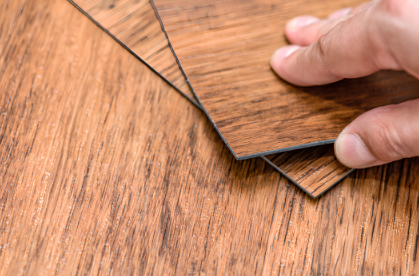
PVC offers extensive aesthetic customization. It is available in a wide range of colors, textures, and patterns, including wood or stone effects. This makes it suitable not only for technical areas but also for reception spaces, lounges, or transitional zones.
Beyond appearance, specific finishes can be selected: anti-slip, extra-resistant, matte, or glossy. This allows designers to create environments consistent with the fitness center’s identity while maintaining full functionality.
Comparison with other solutions: resin, rubber, low-cost materials
When PVC is more effective than resin
Resin is often considered a premium solution but has limitations in terms of comfort and elasticity. Compared to resin gym flooring, PVC provides a softer and more adaptable response underfoot, improving daily usability.
Additionally, resin surfaces require complex installation processes and longer downtime. PVC, on the other hand, can be installed quickly, even over existing floors. In case of damage, replacing individual sections is easier than repairing an entire resin surface.
Budget options: advantages and limits of low-cost flooring
Choosing cheap gym flooring may seem cost-effective initially but often leads to compromises in durability, safety, and hygiene. Low-quality materials tend to deform, fade, and become difficult to clean over time.
PVC offers an ideal balance between cost and performance. While more affordable than high-end solutions like technical rubber or professional wood, it delivers superior technical characteristics compared to low-cost alternatives, with an excellent price-performance ratio.
Alternatives for high-impact environments
In particularly demanding environments, such as heavy weight rooms or areas with frequent equipment drops, PVC can be combined with other materials or hybrid solutions. For example, rubber inserts or technical tiles can be added in critical zones.
This versatility allows for tailored solutions without sacrificing aesthetic and functional consistency. PVC gym flooring remains a solid and adaptable base for high-level technical projects.
Ideal applications of PVC flooring
Professional gyms and fitness centers
Vinyl flooring for gyms is perfectly suited to professional facilities, where high foot traffic requires top standards of safety, hygiene, and durability. Thanks to its ease of cleaning and wear resistance, PVC is ideal for group training rooms, functional areas, corridors, and locker rooms.
The ability to customize textures and colors also makes PVC ideal for reinforcing a facility’s visual identity, creating cohesive and professional environments. It is no coincidence that many fitness chains adopt PVC as a standard solution.
Schools and multifunctional spaces
Beyond commercial gyms, PVC is widely used in schools and multifunctional environments, where activities vary and users have different needs. In these contexts, flooring must be versatile, safe, and suitable for both sports and public events.
PVC’s adaptability makes it an optimal choice for school gyms, sports halls, and multipurpose spaces. Additionally, its easy maintenance significantly reduces operational costs for public institutions.
Renovations and custom architectural projects
In renovation projects, PVC flooring is often the most practical and efficient solution. It can be installed over existing surfaces without demolition, minimizing construction impact. For architects and designers, this means greater flexibility and faster project timelines.
Moreover, PVC’s modularity and aesthetic variety allow for custom designs even in complex or irregular spaces. In high-end fitness center projects, PVC combines functionality and elegance, delivering technically excellent and visually consistent results.
Comments (0)