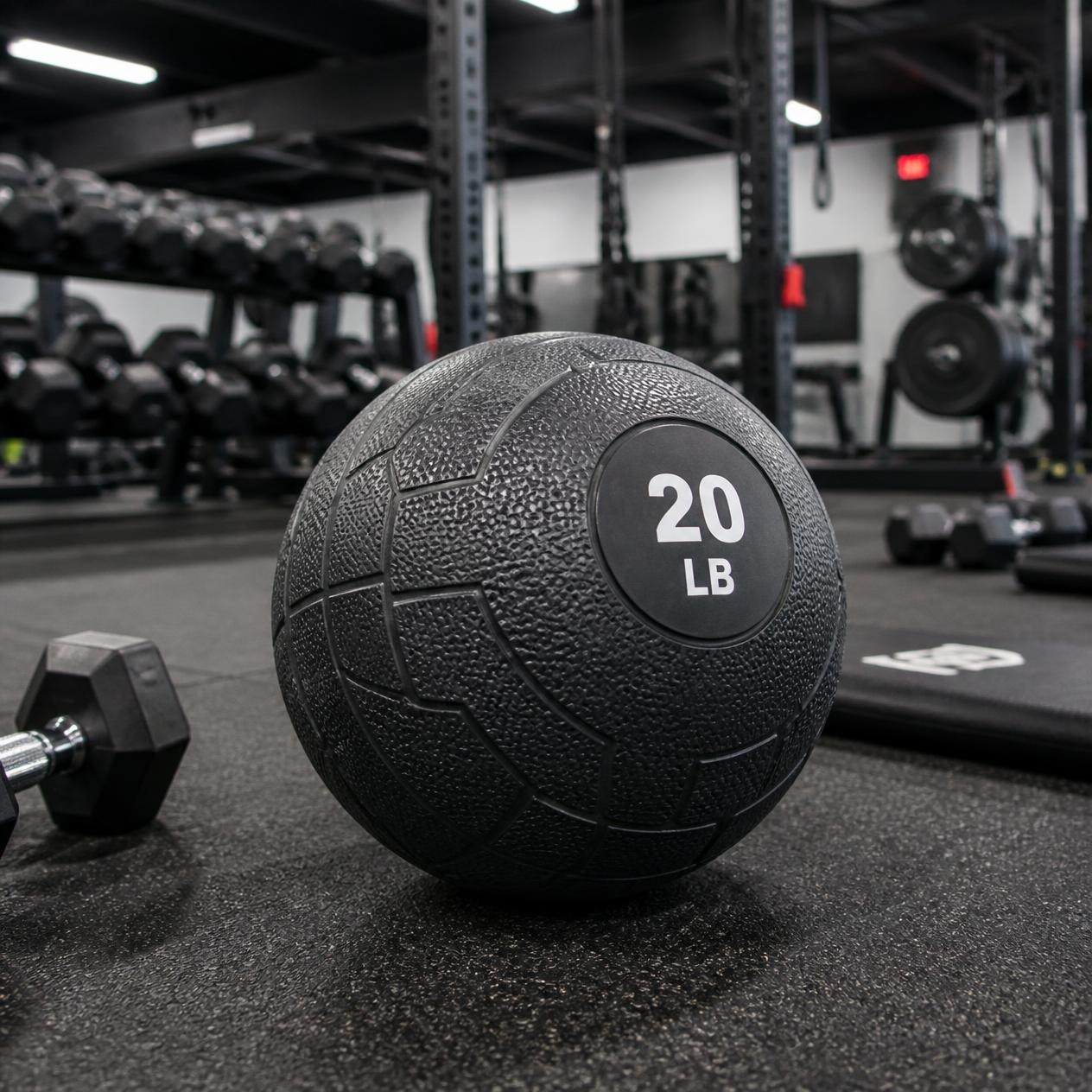
Those approaching functional training quickly discover that there are different types of weighted balls. At first glance, they may seem very similar, but in reality, each tool is designed for a specific purpose. Using the wrong one does not only mean achieving inferior results, but also increasing the risk of equipment wear and performing exercises less effectively.
The difference between a medicine ball and a slam ball represents one of the most frequent doubts among those who wish to set up a home gym or improve their functional training. To these two categories is added the wall ball, a specific tool for dynamic and high-intensity exercises that is often confused with the classic medicine ball.
In this guide, we will analyze in detail the materials, construction characteristics, methods of use, and advantages of each type, helping you choose the equipment best suited to your goals and avoid wrong purchases.
Why there are different types of balls
In functional training, every tool is created to meet specific biomechanical needs. Although all weighted balls are used to increase training intensity, they differ in behavior during impact, weight distribution, materials, and grip methods.
The design takes into account the type of exercises for which the tool is intended. A ball that must be thrown against the floor requires completely different characteristics compared to one intended for partner passes or throws against a wall.
Understanding these differences allows you to train safely, preserve the equipment, and achieve better results in the long run.
Every tool has a precise function
The choice should never be based exclusively on price or aesthetic appearance. Shape, coating, shock absorption, and weight distribution directly influence the quality of the training.
The most frequent mistakes
Many beginners buy only one ball thinking it can be used indiscriminately for any exercise. This choice often limits training possibilities and can damage the tool.
What is a medicine ball
The medicine ball is probably the most well-known tool. Used for decades in athletic preparation and rehabilitation, it allows for the development of explosive strength, coordination, and motor control.
It can be made of rubber, synthetic leather, or composite materials and generally features moderate bounce. Some models are smooth, others have non-slip surfaces, while there are also versions with integrated handles.
Its versatility makes it ideal for individual exercises, partner work, trunk rotations, controlled throws, and core-dedicated workouts.
When to choose a ball with handles
Medicine ball with handles represents an interesting solution for those who wish to perform exercises similar to those with a dumbbell, improving grip during dynamic movements.
The main advantages
The medicine ball allows for a great variety of exercises, is suitable for different levels of preparation, and constitutes a tool widely used both in general fitness and sports preparation.
What is a slam ball
The slam ball is created to withstand extremely violent impacts against the floor. Unlike the medicine ball, it almost never bounces because the internal material completely absorbs the energy of the impact.
This characteristic allows for the execution of the famous slams, movements in which the ball is lifted above the head and thrown with force toward the ground, involving practically the entire musculature.
The coating is generally very resistant and designed to withstand thousands of impacts without significant deformation.
When to choose a heavy slam ball
A 10 kg slam ball represents an ideal choice for athletes with good preparation who wish to increase intensity and power during metabolic workouts.
Why it doesn't bounce
The absence of bounce improves safety during high-intensity exercises and allows for quick recovery of the tool without unpredictable movements.
What is a wall ball
The wall ball is designed specifically to be thrown against a wall or a target placed at a height. Its larger diameter and uniform weight distribution facilitate grip and control during repeated movements.
It is one of the symbolic tools of functional training and is frequently used in metabolic circuits and high-intensity workouts.
The soft structure allows for the absorption of the impact against the wall while maintaining predictable behavior during the return.
The most common exercises
Wall ball exercises include squats with throws, explosive movements, cardiovascular work, and circuits that simultaneously involve strength and endurance.
Why it is so widely used
The wall ball allows you to train coordination, precision, muscular endurance, and cardiovascular capacity with a single complete exercise.
Direct comparison between medicine ball, slam ball, and wall ball
The differences become evident by observing the behavior of the three tools during use. The medicine ball prioritizes versatility, the slam ball is designed to absorb impacts, while the wall ball is optimized for throws against the wall.
The diameter also changes significantly. The wall ball maintains large dimensions regardless of weight, facilitating grip during squats with throws. The slam ball, on the other hand, tends to become more compact as the load increases.
Choosing the correct model means achieving more effective training and preserving the equipment from improper use.
Performance during training
Each tool offers completely different sensations and supports specific goals, from muscle strengthening to metabolic conditioning.
Durability over time
When used according to its intended purpose, each type guarantees high resistance and excellent reliability even in intensive training.
How to choose the right ball for your goal
The choice depends mainly on the type of training you wish to perform. If your focus is on explosive exercises against the floor, the slam ball is the ideal solution.
Those who are looking for a versatile tool for athletic preparation, core exercises, and partner work will find the medicine ball to be an extremely complete choice.
For functional circuits, Cross Training-style workouts, and metabolic work with vertical targets, the wall ball remains the reference tool.
Which one to choose to start
Beginners should evaluate the exercises they intend to perform most frequently before purchasing, avoiding being guided solely by the weight of the tool.
The choice for the home gym
To build a complete home gym, it is often advantageous to combine multiple types of balls, so as to cover all the main needs of functional training.
Materials, build quality, and durability
The quality of the materials directly influences the comfort, safety, and durability of the equipment. Abrasion-resistant coatings, reinforced stitching, and stable fillings allow for consistent performance even after thousands of uses.
A surface with good grip improves control during exercises and reduces the risk of slipping caused by sweat.
Investing in products made with professional standards means reducing wear and maintaining high performance over time.
The importance of grip
A non-slip coating promotes safety and precision during all dynamic movements.
Choosing professional products
To learn more about the best solutions dedicated to functional training equipment, it is useful to evaluate products designed for intensive use and made with high-quality materials.
Investing in the correct equipment to achieve better results
Buying the right ball means improving the quality of your training from the very first use. Each type has been designed for a specific purpose and offers advantages that cannot be replicated using a different model.
Understanding the difference between a medicine ball, a slam ball, and a wall ball allows you to plan more effective workouts, preserve your equipment, and make the most of every exercise. An informed choice reduces uncertainty, avoids unnecessary expenses, and guarantees a safer and more satisfying training experience.
Whether you are building a home gym or upgrading the equipment of a professional space, investing in products designed for their specific use always represents the most cost-effective decision in the long run, offering greater durability, better performance, and significantly superior training quality.


 Budgets
 Dumbers
 Discs
 Benches
 Racks and Rigs
 Weights Holders
 Isotonic machines
 Calisthenics
 Cardio
 Kettlebells
 Flooring
 Gym Set
 Accessories
 Combat
 ARTI MARZIALI
 CONTAINER GYM
 Tug-Of-War
 Used Gym Equipment
 PILATES MACCHINARI
 GINNASTICA ARTISTICA
 CAMPI DA PADEL
 Prodotti in Pronta Consegna
 Informazioni
 IRONMAN
 Gift Card