
Trolley
You have no items in your shopping cart

 Budgets
 Dumbers
 Discs
Discs
 Benches
 Racks and Rigs
 Weights Holders
 Isotonic machines
 Calisthenics
 Cardio
 Kettlebells
 Flooring
 Gym Set
 Accessories
 Combat
 ARTI MARZIALI
 CONTAINER GYM
 Tug-Of-War
 Used Gym Equipment
 PILATES MACCHINARI
 GINNASTICA ARTISTICA
 CAMPI DA PADEL
 Prodotti in Pronta Consegna
 Informazioni
 IRONMAN
 Gift Card
- Donatif
- Sports products
- 0 I like it
- 1309 Views
- 0 comments
- stress reduction, improved self-esteem, physical and mental well-being, gym training
READING TIME: 5 MINUTES ➤➤
Technical Flooring for Physiotherapy: Anti-Slip and Hygienic Standards
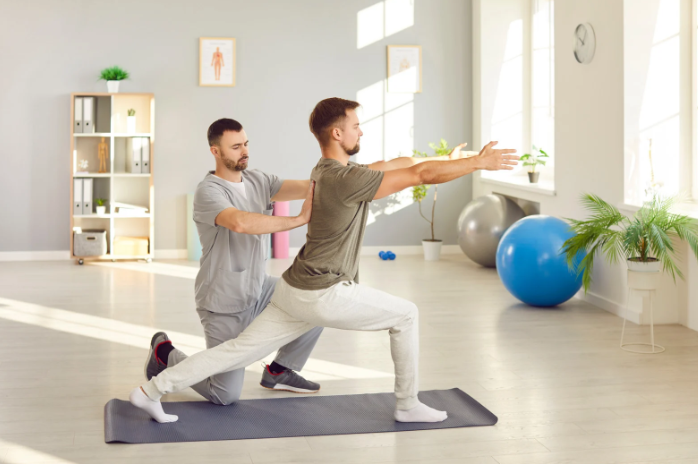
The choice of technical flooring for physiotherapy is a key element in designing professional environments dedicated to rehabilitation and well-being. It is not simply a surface to walk on, but an active component in ensuring safety, hygiene, and functionality within the space. In settings such as physiotherapy clinics, micro gyms, and medical fitness centers, every detail contributes to perceived quality and the protection of both professionals and patients.
A suitable floor must meet strict criteria: it must be anti-slip, easy to sanitize, fire-resistant, and certified. These requirements are not optional but represent essential technical standards to ensure a compliant environment capable of reducing operational risks.
- Key features of physiotherapy flooring
- Safety regulations and fire resistance
- Anti-slip surfaces and injury prevention
- Hygiene, sanitation, and washable surfaces
- How to choose the right technical flooring
Key features of physiotherapy flooring
Flooring designed for physiotherapy must ensure a balance between comfort, durability, and safety. The quality of materials directly impacts the lifespan of the surface and its ability to maintain performance over time, even under continuous and intensive use.
An often underestimated aspect is the floor’s ability to absorb impact and provide controlled elasticity. This is especially important during rehabilitation exercises or functional activities, where contact with the ground is frequent and must be managed safely and comfortably.
Technical materials and long-term performance
The most commonly used materials include rubber flooring certified, appreciated for its resilience and resistance. This type of surface is designed to withstand loads, impacts, and repeated movements without deforming or deteriorating quickly.
Durability is a key factor, especially for facilities operating daily with multiple users. Investing in high-quality materials reduces maintenance and replacement costs while ensuring uninterrupted operational continuity.
Importance of certified quality
Certifications represent a fundamental trust element when selecting flooring. They indicate that the material has been tested according to recognized standards and meets specific requirements in terms of safety, hygiene, and durability.
Relying on certified products allows businesses to demonstrate regulatory compliance and a strong focus on safety—factors that are increasingly important for both clients and industry professionals.
Safety regulations and fire resistance
Flooring for physiotherapy environments must comply with specific fire safety regulations, which govern how materials react to fire. This requirement is essential to ensure occupant safety in emergency situations.
The classification of materials based on their combustibility helps in selecting solutions suited to the environment, reducing fire spread risks and improving evacuation management.
Requirements for rehabilitation gyms
The requirements for rehabilitation gyms include not only structural aspects but also specific surface characteristics. Flooring must actively contribute to overall environmental safety, integrating with other preventive measures.
This means choosing materials that meet high standards and are compatible with equipment and devices commonly used in physiotherapy.
Fire reaction classification of materials
The European classification of materials based on fire reaction is an essential reference point. Flooring must be selected considering its behavior in case of fire, favoring solutions that limit smoke emissions and flame spread.
A conscious choice in this area contributes to creating a safer environment that complies with current regulations.
Anti-slip surfaces and injury prevention
Safety also depends on the floor’s ability to provide adequate grip. Anti-slip surfaces are essential to prevent falls and injuries, especially in environments where movements may be unstable or assisted.
This aspect is particularly relevant in physiotherapy, where patients with reduced mobility or in recovery phases require a controlled and safe environment.
Friction coefficients and operational safety
The friction coefficient is a technical parameter that measures a surface’s resistance to slipping. Adequate values ensure stability during exercises and reduce the risk of accidents.
Therefore, flooring selection must be based on verifiable technical data, avoiding solutions that do not guarantee performance.
The role of flooring in passive safety
Flooring contributes to passive safety, meaning all those features that reduce risks without requiring active intervention. A well-designed floor works silently but effectively, supporting every activity carried out in the space.
This approach helps create more reliable and professional environments where safety is integrated into the structure itself.
Hygiene, sanitation, and washable surfaces
Hygiene is a fundamental requirement in physiotherapy environments. Washable surfaces allow for effective and quick cleaning, reducing contamination risks and ensuring high sanitation standards.
Materials must withstand detergents and frequent cleaning procedures without deteriorating or losing their properties.
Antibacterial materials and certifications
Flooring with certified antibacterial properties offers an advanced solution to improve environmental hygiene. These materials are designed to limit the proliferation of microorganisms on the surface.
Certifications in this area provide concrete proof of effectiveness, helping create safer environments for both professionals and patients.
Ease of cleaning and daily management
Easy-to-clean flooring simplifies daily space management, reducing operational time and costs. Seamless surfaces and low porosity facilitate sanitation procedures.
This results in an environment that is always orderly and compliant with required standards, also improving user perception.
How to choose the right technical flooring
Choosing the right flooring means carefully evaluating the specific needs of the space. There is no universal solution; it is necessary to consider intended use, type of activities, and operational intensity.
A thorough analysis helps identify the most suitable product, avoiding compromises that could affect safety and functionality.
Evaluation based on use
Each environment has different needs: a micro gym dedicated to rehabilitation requires different features compared to a traditional physiotherapy clinic. The choice must reflect these aspects to ensure adequate performance.
Considering exercise types, user flow, and equipment helps guide the selection toward truly effective solutions.
Durability, maintenance, and long-term investment
The floor lifespan is a key factor in overall evaluation. A higher initial investment can lead to long-term savings thanks to reduced maintenance and replacement needs.
Choosing quality materials means focusing on reliability and operational continuity—essential elements for any professional activity in the physiotherapy sector.
Comments (0)