
Trolley
You have no items in your shopping cart

 Budgets
 Dumbers
 Discs
Discs
 Benches
 Racks and Rigs
 Weights Holders
 Isotonic machines
 Calisthenics
 Cardio
 Kettlebells
 Flooring
 Gym Set
 Accessories
 Combat
 ARTI MARZIALI
 CONTAINER GYM
 Tug-Of-War
 Used Gym Equipment
 PILATES MACCHINARI
 GINNASTICA ARTISTICA
 CAMPI DA PADEL
 Prodotti in Pronta Consegna
 Informazioni
 IRONMAN
 Gift Card
- Donatif
- Fitness recipes
- 0 I like it
- 5583 Views
- 0 comments
READING TIME: 7 MINUTES ➤➤
How to Build Balanced Meals for Weight Loss
Losing weight does not necessarily mean counting every calorie or following rigid rules. There is a simpler and more sustainable approach: learning how to properly balance your meals. This guide is designed for people who want to lose weight without stress by creating healthy, tasty, and well-proportioned meals every day. Together, we will explore how the plate method works, what macronutrients are, and how to easily integrate them into your daily routine, even if you are starting from zero.
- Why balancing meals is the key to sustainable weight loss
- Ideal composition of a healthy meal
- Macronutrients: the secret behind every balanced plate
- Balanced diet and lifestyle: beyond a single meal
Why Balancing Meals Is the Key to Sustainable Weight Loss
The Concept of Balance: Beyond Calories
Many people associate weight loss with extreme diets or constant deprivation. In reality, the key lies in the balance between different nutrients. A well-composed meal provides steady energy, prevents blood sugar spikes, and keeps hunger levels stable. Rather than removing foods, the goal is to learn how to add the right elements: a source of protein, whole carbohydrates, healthy fats, and plenty of vegetables. When the body receives what it truly needs, it stops sending constant hunger signals.
Losing Weight Without Stress: The Role of Simplicity
The real breakthrough comes when you understand that it is not necessary to calculate everything down to the gram. Using a visual and intuitive method — such as the plate method — allows you to create healthy meals in just a few seconds, wherever you are. This simplified approach is perfect for beginners who want results without feeling trapped in a diet. Weight loss then becomes the natural consequence of smart food choices rather than a temporary restriction.
Ideal Composition of a Healthy Meal
What Is a Balanced Meal?
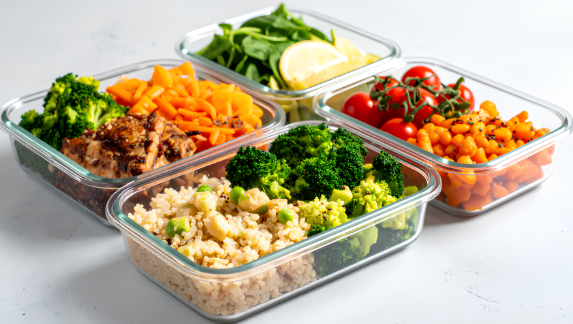
A balanced meal is one that contains all the main macronutrients in the right proportions. This means including a portion of complex carbohydrates (such as brown rice or potatoes), a good protein source (such as legumes, tofu, eggs, lean meat, or fish), a portion of healthy fats (extra virgin olive oil, nuts, or avocado), and a generous amount of vegetables. Each component has a specific function and contributes to overall well-being.
The Plate Method: An Effective Visual Guide
For beginners, the balanced plate method is a simple and effective visual solution. Imagine your plate divided into three sections: half of the plate for vegetables, one quarter for proteins, and one quarter for carbohydrates. Add a small portion of healthy fats, often used as a dressing or topping. This model can be adapted to any cuisine, personal taste, or situation — at home, in a restaurant, or even with a quick meal on the go.
How to Avoid Common Mistakes When Building Your Plate
One of the most common mistakes is underestimating protein intake or overdoing simple carbohydrates. In a healthy plate, proteins should always be present, because they help maintain muscle mass and prolong the feeling of fullness. Fats should also be chosen carefully: do not eliminate them completely, but prefer high-quality options such as olive oil or seeds. Finally, pay attention to portion sizes: using smaller plates or bowls can help prevent overeating without realizing it.
Macronutrients: The Secret Behind Every Balanced Plate
Understanding the Functions of Proteins, Carbohydrates, and Fats
Macronutrients are the “building blocks” of nutrition. Proteins are essential for building and repairing tissues, supporting the immune system, and promoting metabolism. Carbohydrates provide immediate energy and should preferably be chosen from whole or complex sources to avoid blood sugar fluctuations. Fats are fundamental for vitamin absorption and proper hormonal function. None of these nutrients should be excluded — they simply need to be balanced wisely.
How to Distribute Macronutrients in Main Meals
Every meal should include all three macronutrients, but in proportions that vary depending on personal goals. For those aiming for sustainable weight loss, a useful guideline is: 40% carbohydrates, 30% proteins, and 30% fats. There is no need to be perfectly precise down to the gram: using the plate method as a reference is enough. Over time, this structure will become an automatic habit.
Practical Tips for Choosing the Right Foods
Start by choosing whole carbohydrates such as oats, spelt, quinoa, potatoes, or brown rice. For protein sources, alternate legumes, tofu, eggs, lean meat, and fish. Healthy fats can be found in foods such as avocado, walnuts, almonds, olive oil, or seeds. Do not forget vegetables: fresh, cooked, or raw, they should always be present in generous amounts. The more colorful your plate is, the better.
Balanced Diet and Lifestyle: Beyond a Single Meal
Creating a Sustainable Eating Routine
Real transformation happens when the balanced meal becomes a daily routine, not a temporary effort. Planning meals, shopping consciously, and always having healthy foods available are essential habits. Preparing basic ingredients in advance — such as cooked grains, grilled vegetables, or ready-to-use protein sources — can make a huge difference. This way, even during busy moments, it becomes easier to stay on the right path.
How to Adapt Meal Balance to Everyday Life
There is no need to be perfect. The strength of this approach lies in its flexibility. Even when eating out or dealing with busy schedules, you can still make smart choices. A sandwich can become balanced if it contains a good protein source and is paired with vegetables. Even a snack can be healthy if it includes proteins and fiber. With a little practice, everything can be adapted to your lifestyle.
The Importance of Listening to Your Body
Finally, no rule is effective if it ignores your body’s signals. Learning to listen to hunger, fullness, energy levels, and digestion is an essential part of a balanced diet. The perfect meal is the one that makes you feel good, not the one that follows a rigid formula. Over time, you will naturally understand what truly nourishes you and what weighs you down. This is the real secret to losing weight without stress — and without going backward again.
Comments (0)