Resistance bands are among the most practical tools for training at home, improving mobility, building strength and adding light rehab exercises to your routine. Because they seem simple, they raise a lot of questions: which resistance to choose, how to use them without getting hurt, how long they last and when it makes sense to buy a full set.
This guide covers the most frequently asked resistance band questions with direct but well-reasoned answers, written for beginners, home gym users and anyone who wants to use a band more intelligently. The goal is to cut through the confusion and help you choose and use bands with greater confidence.
How do you use resistance bands correctly?
Resistance bands should always be used with control, progressive tension and a stable posture. The main rule is to avoid sudden movements: a resistance band should not pull your body off alignment, but guide the movement by creating resistance you can manage. For a start, choose simple exercises such as rows, curls, presses, lateral raises or mobility work, focusing on technique first and intensity second.
A common mistake is thinking the more stretched the band, the better the workout. In reality, movement quality matters more than maximum tension. If you lose balance, compensate with your back or feel joint discomfort, the resistance is probably too high. To learn the basic exercises, you can check out a dedicated guide to resistance band exercises.
Which band should a beginner choose?
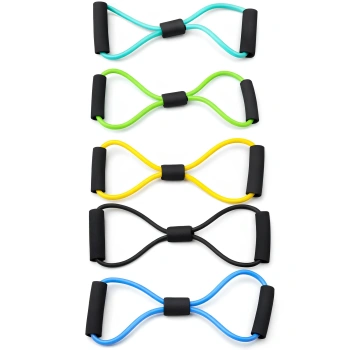
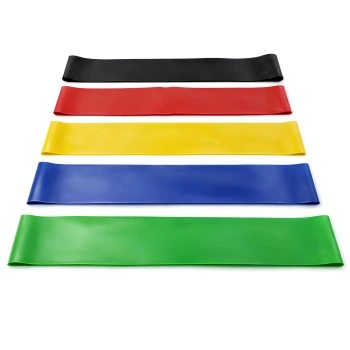
For a beginner, the best option is often a set of resistance bands with different levels. Having several strengths lets you match the intensity to the exercise: a light band can be useful for shoulders and mobility, while a stronger one can work for legs, assisted pull-ups or strength exercises. A single band may be enough to get started, but it quickly becomes limiting.
If you train at home, also consider space, goals and how often you'll train. For general toning and light home training, versatile bands that are easy to handle are enough. For more demanding work, opt for sturdy bands with good elasticity and compatible accessories. When buying, a varied resistance band set reduces the risk of choosing the wrong strength.
How do you know if the resistance level is right?
The right level is the one that lets you complete the exercise with control right up to the last reps, without losing form. If you can perform many reps without feeling any effort, the band is too light. If you have to jerk the band, arch your back or shorten the movement too much, the resistance is too high. The tension should be challenging but never chaotic.
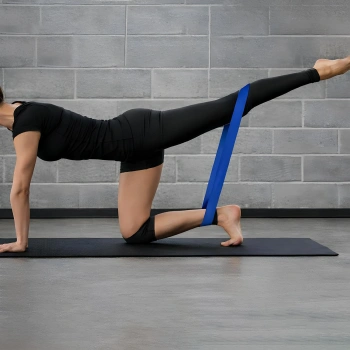
A practical rule is to match different resistances to different muscle groups. Shoulders, arms and postural work often need lighter bands. Legs, glutes and pulling exercises can handle higher resistance. This progression makes exercise bands useful for both beginners and more experienced users, since you can increase the load without completely changing your equipment.
Are resistance bands safe for physiotherapy and recovery?
Resistance bands can be useful in mobility programmes, muscle reactivation and controlled strength work, but when it comes to physiotherapy it's important to distinguish between generic exercise and professional advice. If you have pain, a recent injury or joint conditions, the choice of exercises should be guided by a physiotherapist or another qualified professional.
For cautious use, start with light resistance, slow movements and comfortable ranges of motion. The band should never cause sharp pain or a feeling of instability. When used for rehab or prevention, its value lies in progression: it lets you work with adjustable, gentler loads than many other tools, as long as it is chosen and handled correctly.
How long do resistance bands last and how should you store them?
How long a band lasts depends on material quality, how often you use it, how you stretch it and how you store it. A band used correctly can last a long time, but it should be checked regularly. Small cracks, faded areas, cuts or a clear loss of elasticity are warning signs you shouldn't ignore, as they may indicate that the band could snap during use.
To store them better, keep them away from direct sunlight, heat sources, abrasive surfaces and excessive humidity. After training, wipe them with a slightly damp cloth and dry them thoroughly. Avoiding tight knots and prolonged stretching also helps preserve the material. Good maintenance increases safety and reliability over time.
Which accessories make training more comfortable?
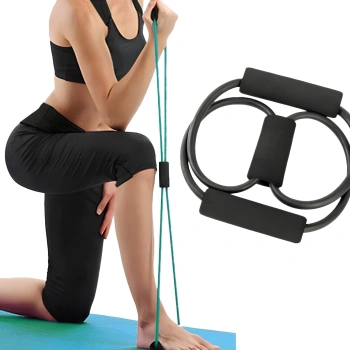
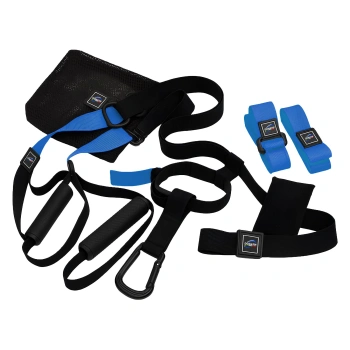
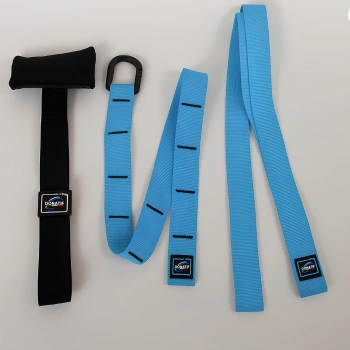
Accessories can make using resistance bands more stable, practical and varied. Handles, ankle straps, carabiners and anchoring systems let you mimic many movements typical of gym machines, especially pulling, pressing and lower-body work for legs and glutes. For home training, a good anchor can turn a simple band into a much more complete tool.
The right resistance band accessories depend on the type of training. If you do general exercises, start with handles and a door anchor, while those focusing on glutes or the lower body may find ankle straps and specific bands useful. Always check compatibility, stability and the quality of attachment points, because safety also depends on these details.
When is it worth buying a full set?
A complete set is worth buying when you want to use bands regularly, train several muscle groups or have room to progress. A set lets you move from light exercises to more demanding work without forcing unsuitable movements. It's a sensible choice for beginners, home trainers and anyone looking for equipment that is compact yet flexible.
When buying, look for a varied resistance band set with several resistance levels and accessories that match your goal. If you only want mobility work, simple light bands are fine. If you want a more complete workout, consider sturdier bands, handles and anchoring systems. This way the band stops being an occasional accessory and becomes a real part of your training routine.


 Budgets
 Dumbers
 Discs
 Benches
 Racks and Rigs
 Weights Holders
 Isotonic machines
 Calisthenics
 Cardio
 Kettlebells
 Flooring
 Gym Set
 Accessories
 Combat
 ARTI MARZIALI
 CONTAINER GYM
 Tug-Of-War
 Used Gym Equipment
 PILATES MACCHINARI
 GINNASTICA ARTISTICA
 CAMPI DA PADEL
 Prodotti in Pronta Consegna
 Informazioni
 IRONMAN
 Gift Card