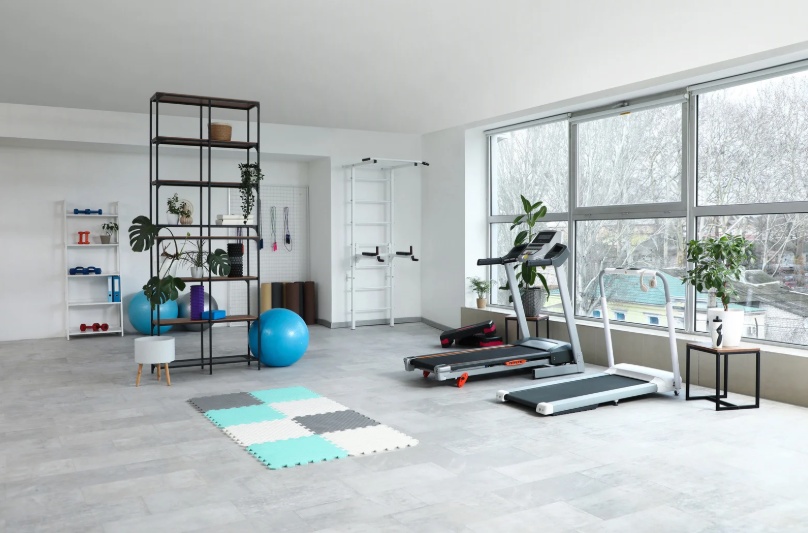
In an advanced home gym, the question is no longer “what to buy”, but how to make everything work together coherently. As the setup grows, complexity grows too: every choice starts to affect the next ones. This is when a very concrete doubt emerges: will introducing custom elements risk compromising modularity and upgrade options?
The answer is neither entirely positive nor entirely negative. The point is not to avoid custom, but to understand when it is compatible with the growth logic of the setup. An advanced home gym should not be rigid, but it should not lose structure either. This is where a more technical and conscious reading of compatibility comes into play.
The real problem is not custom, but compatibility
Where the fear of losing modularity comes from
Many advanced users associate custom with a loss of flexibility. This happens because a tailor-made solution, by definition, is less replicable and less standardized. The perceived risk is “locking in” the setup.
In reality, this problem arises more from uncoordinated choices than from custom itself. It is the lack of compatibility criteria that creates rigidity, not the presence of personalized elements.
Compatibility as a design criterion
Compatibility must become a central criterion. It is not only about measurements, but also about logic of use, proportions and expansion possibilities. Every element, standard or custom, must be able to interact with the others.
An advanced home gym works when it maintains design continuity. This allows different elements to be integrated without compromising the overall structure.
When standard and custom work together
Technical compatibility conditions
Standard and custom coexist well when they meet a few conditions: dimensional consistency, compatibility of connection points and respect for clearances. These aspects ensure every component remains integrable into the system.
Not everything needs to be identical, but everything must be functionally compatible. This is the difference between an advanced setup and one that is simply complex.
Continuity between different components
A custom element can work perfectly if it maintains continuity with what already exists. This means respecting heights, depths and usage logic already present in the setup.
When this continuity is maintained, custom does not break modularity, but extends it in a targeted way.
Where real integration problems arise
Errors in measurements, spacing and proportions
Most problems come from seemingly small errors: misaligned holes, incompatible distances, unbalanced proportions. These details compromise the ability to integrate new elements.
An error of a few centimeters can turn into a structural limit. This is where compatibility stops being theoretical and becomes concrete.
Interference with workflow
Another problem concerns the workflow. Even when elements are technically compatible, they can interfere with each other during training.
An advanced home gym must maintain operational fluidity. If a custom element obstructs movements or access, it breaks the balance of the setup.
Sensitive components: where to evaluate carefully
Racks, storage and structural points
The most critical points are structural. Racks and storage systems define the backbone of the home gym. Here every custom intervention must be evaluated with precision.
An error on these elements affects the entire system. For this reason it is essential to maintain reference standards even when introducing customization.
Flooring and custom accessories
Other elements, such as flooring and accessories, are more flexible. Here custom can be introduced with fewer risks, as long as it does not interfere with stability and use.
These components often represent the ideal entry point for integrating personalization without compromising the setup.
Practical compatibility scheme between standard and custom
Reading by setup areas
An effective way to assess compatibility is to divide the setup into areas: structure, use, support. Each area has a different level of criticality and requires different choices.
This reading helps understand where custom is sustainable and where standardization must be maintained.
How to decide without blocking evolution
The decision must always consider the future. Every element added today must leave room for expansion tomorrow. This means avoiding overly restrictive solutions.
A correct choice is one that keeps the possibility of growth open, without compromising what comes next.
A concrete example of successful integration
Custom element that improves without constraining
A typical example is a custom storage unit integrated into a wall. If designed respecting the dimensions of the rack and standard plates, it improves order and accessibility without creating constraints.
This type of intervention adds value without interfering with the rest of the setup.
Why it remains scalable over time
The key is that it does not modify the main structures. It remains an integrated but non-invasive element. This allows new components to be added in the future without rethinking everything.
This is the principle of an advanced home gym: growing without losing consistency.
How to keep an advanced home gym consistent and open
Control and design continuity
Maintaining consistency means having control. Every choice must be part of a broader vision, not an isolated decision.
This approach reduces errors and allows building a solid setup over time.
Integrating without compromising
Custom is not a limit, but a tool. If used correctly, it allows improving the setup without blocking its evolution.
The difference lies entirely here: don't add more, integrate better.


 Budgets
 Dumbers
 Discs
 Benches
 Racks and Rigs
 Weights Holders
 Isotonic machines
 Calisthenics
 Cardio
 Kettlebells
 Flooring
 Gym Set
 Accessories
 Combat
 ARTI MARZIALI
 CONTAINER GYM
 Tug-Of-War
 Used Gym Equipment
 PILATES MACCHINARI
 GINNASTICA ARTISTICA
 CAMPI DA PADEL
 Prodotti in Pronta Consegna
 Informazioni
 IRONMAN
 Gift Card