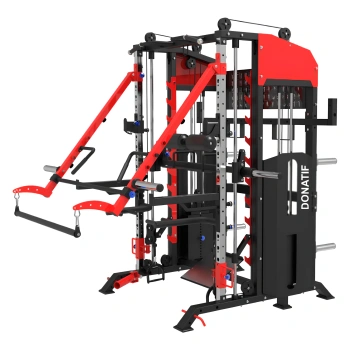
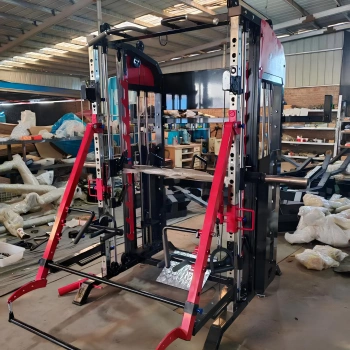
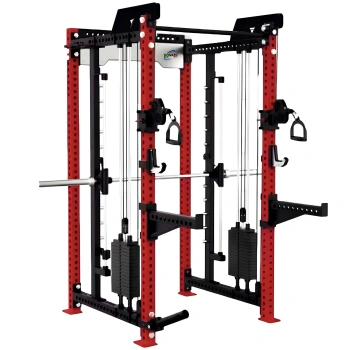
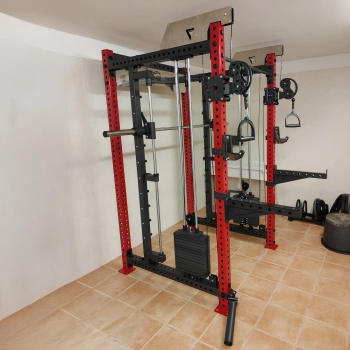
In the professional fitness sector, the concept of modular structure is often associated with a higher level of quality, organization and positioning. This perception is understandable: articulated rigs, expandable configurations and multifunctional areas immediately convey a technical and advanced image. However, this association can generate a very common evaluation error, especially in small and medium-sized fitness center projects.
Not all modular structures are automatically a better choice than a multi-station or a more compact solution. In many cases, the risk is building an area that is more eye-catching than truly efficient, increasing costs, complexity and space occupation without a concrete advantage for users or day-to-day operations. A clearer reading requires separating the real technical value from the reputational effect that certain equipment generates.
When modular is chosen for perception
The automatic link between modular and professionalism
One of the most common mistakes in designing a fitness area is associating the concept of modular with an absolute professional level. In many B2B negotiations, the client tends to perceive an articulated structure as inevitably superior to a single machine or a multi-station. This reading often stems from the visual impact of the product, the commercial language used in the industry and the spread of layouts strongly oriented toward functional training.
The problem emerges when the choice is driven mainly by the image the equipment conveys rather than by the actual use planned for the fitness center. A gym with moderate traffic, non-simultaneous workouts and a general target audience may gain no concrete operational benefit from a more complex structure. In these cases, modular risks becoming an aspirational response rather than a truly functional solution.
How commercial framing influences evaluation
In the fitness market, the way a piece of equipment is presented strongly changes its perceived value. Labels such as "professional setup", "premium configuration" or "performance zone" can create a positioning effect that leads to automatically considering a more compact solution inferior. This mechanism is particularly frequent in projects where the owner fears appearing unsophisticated in the eyes of clients.
After any commercial evaluation, it is useful to apply a very simple check: is the equipment chosen because it genuinely improves daily work, or because it communicates a higher technical status? This filter helps reduce the risk of decisions driven by status bias and brings the project back to more measurable criteria such as usage density, available space and the predominant type of training.
Signs of an oversized design
When space is occupied without increasing efficiency
A modular structure requires adequate surfaces, smooth traffic flows and a precise logic in distributing the stations. Installing an articulated rig in a room with limited square footage can produce the opposite effect of what was intended: the area appears more professional aesthetically, but becomes less efficient in everyday use. This happens especially when the number of simultaneous users does not truly justify modularity.
A typical sign of over-engineering appears when part of the structure remains unused for much of the day. In these cases, the project is probably responding more to an idea of positioning than to a concrete operational need. As a practical note, it is useful to compare the expected real utilization rate with the number of stations actually installed.
The risk of increasing unnecessary complexity and costs
A modular configuration typically involves more accessories, more components and a more complex management of the training area. This is not a problem when the fitness center runs simultaneous workouts, functional classes or advanced users. It becomes a limitation when the structure introduces complexity that the business model cannot make the most of.
Many installers report cases where a simpler solution would have improved the readability of the space and reduced maintenance, assembly and reconfiguration costs. The point is not to avoid modular equipment altogether, but to avoid building a project by imitating other layouts without a real assessment of the fitness center's operational needs.
When multi-station remains more consistent
A single machine is not automatically an inferior solution
In the comparison between modular and multi-station, the latter is sometimes perceived as a less sophisticated choice. In reality, many modern multi-stations offer high levels of robustness, accessibility and space optimization. For gyms with a general target audience, personal training studios or centers with limited square footage, a single machine can ensure a more consistent balance between functionality and area management.
This is especially true when the main goal is to maintain order, operational simplicity and intuitive access to exercises. A more compact configuration often reduces wasted space and improves the perception of organization among end users. As a practical note, it is useful to verify whether the modularity introduced actually creates new usage scenarios or merely a different aesthetic for the training area.
The relationship between real target audience and installed equipment
A fitness center aimed at a mainstream clientele has very different needs from a facility dedicated to athletic preparation, advanced functional training or high-turnover workouts. Installing a highly technical configuration in a context that works mainly with guided use and standardized routines can create a gap between the equipment and the real behavior of users.
Multi-station often remains the more sensible choice when the main focus is immediate usability. In many projects, a compact and well-integrated solution delivers a clearer experience than a highly articulated area that is underused. This approach also helps protect the investment by avoiding budget allocation on elements that do not genuinely improve the quality of the service.
Criteria that help you choose with clarity
The technical questions that reduce the risk of error
To avoid decisions driven by image, it is useful to apply concrete evaluation criteria. How many users will use the structure at the same time? What is the average technical level of the target audience? Will the area need to evolve over time or will it remain stable? These are simple but fundamental questions for understanding whether a modular configuration truly represents an advantage.
Another central element concerns the relationship between space and training flows. A gym that is highly fragmented or has unclear pathways risks reducing operational efficiency, even when high-level equipment is installed. As a practical note, it is always advisable to verify the expected real usage density before increasing the number of modules or accessories.
Why the correct comparison is functional, not aesthetic
Many market comparisons are still based on visual perception: large structure versus compact structure, showcase area versus integrated machine. In reality, the most useful parameter remains the consistency between equipment, target audience and usage model. A well-sized project tends to maintain a balance between investment, functionality and management simplicity.
A more objective reading of the design also helps protect the credibility of the brand. Avoiding technical overselling means building spaces that are genuinely sustainable and understandable for the end user. This approach reduces the risk of configurations built more for their reputational effect than for real operational effectiveness.
When modular is truly an evolutionary choice
The contexts in which modularity creates concrete value
There are situations in which a modular structure represents a genuinely significant qualitative leap. Gyms with high user turnover, high-intensity functional areas, simultaneous training and the need for progressive expansion can concretely benefit from modularity. In these contexts, the ability to customize configurations and integrate accessories becomes a real operational advantage.
Modular is the right choice when it increases the area's usage capacity, improves flow management and supports a specific training model. Here, the complexity of the structure finds a clear technical justification and not merely an aesthetic one. As a practical note, the decisive criterion always remains the relationship between the configuration and the expected actual use.
The difference between technical evolution and aspirational choice
The most useful distinction is not between modular and multi-station, but between a coherent solution and a solution built through imitation. A gym can appear highly professional even with a compact configuration, as long as the layout is rational and the equipment is chosen according to the service offered.
When the project is built starting from users' real behavior, the risk of oversizing is significantly reduced. The final result is not a less ambitious structure, but a more readable, more sustainable and technically more credible environment in the long term.


 Budgets
 Dumbers
 Discs
 Benches
 Racks and Rigs
 Weights Holders
 Isotonic machines
 Calisthenics
 Cardio
 Kettlebells
 Flooring
 Gym Set
 Accessories
 Combat
 ARTI MARZIALI
 CONTAINER GYM
 Tug-Of-War
 Used Gym Equipment
 PILATES MACCHINARI
 GINNASTICA ARTISTICA
 CAMPI DA PADEL
 Prodotti in Pronta Consegna
 Informazioni
 IRONMAN
 Gift Card