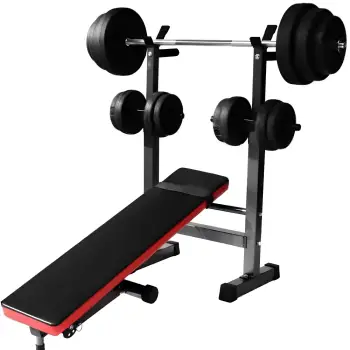
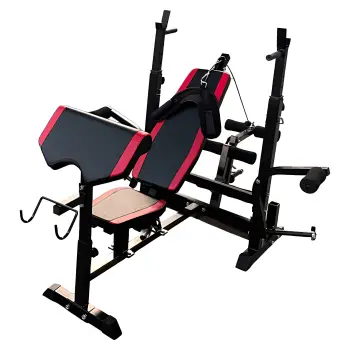
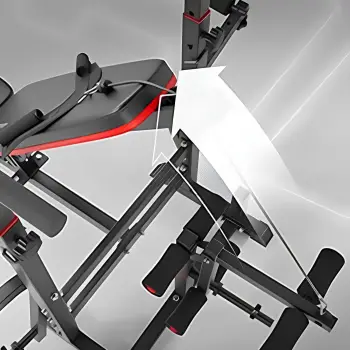
When a home gym is used frequently, the topic of budgeting changes dramatically. It’s no longer just about saving money or choosing cheaper options, but about understanding where it truly makes sense to invest more. The most common mistake is assuming that intensive use automatically justifies any premium upgrade, without a clear sense of priorities.
In reality, an effective approach requires a more structured perspective: a incremental budget based on the real impact of equipment over time. This article explores exactly this shift, helping you turn a vague intuition into a concrete and sustainable strategy.
Usage frequency and incremental budget logic
Training often means subjecting equipment to continuous and repeated stress. This completely changes the relationship between cost and value, because factors such as stability, durability, and precision become essential. However, this does not mean that every component must be premium.
The real difference lies in adopting a progressive budget allocation, where extra spending is directed only toward categories that truly benefit from an upgrade. This approach protects your investment and reduces the risk of unnecessary expenses.
Why “I train a lot, so I spend more” is a risky simplification
Automatically linking usage frequency to increased budget is a mental shortcut. It often leads to prestige bias, the tendency to choose premium products based on perceived quality rather than actual need.
This approach creates two opposite risks: on one side, overspending on marginal elements, and on the other, neglecting the equipment that most impacts your daily experience. The result is an expensive but inefficient setup.
The concept of progressive budgeting based on usage intensity
A more effective model involves increasing the budget selectively, based on frequency, load, and equipment criticality. Not all categories respond equally to a premium upgrade.
The principle is simple: the more an item is used, and the more it affects safety and performance, the more sense it makes to invest in it. This allows you to build a home gym truly aligned with your usage.
Entry-level vs premium: where value really changes
The difference between entry-level and premium is not just about price, but about build quality, tolerances, and long-term durability. However, these advantages are not perceived equally across all categories.
Understanding where premium truly makes a difference means distinguishing between tangible improvements and marginal upgrades that don’t change the experience. This is the key to making informed decisions.
Real difference between price and performance
In some equipment, the price increase corresponds to a clear improvement in safety and stability. In others, it only translates into aesthetic details or secondary sensations.
For this reason, it’s essential to evaluate the real cost-benefit ratio, rather than being guided solely by market positioning or branding.
When premium impacts everyday experience
Premium equipment makes sense when it improves elements like smoothness, solidity, and precision, especially in high-frequency use contexts. These factors directly affect training quality.
If the improvement is only occasionally noticeable, the investment risks becoming disproportionate to actual usage.
The categories most sensitive to intensive use
Not all equipment responds the same way to increased usage. Some categories are particularly exposed to wear and mechanical stress, and therefore benefit more from premium quality.
Identifying these categories is essential for a proper allocation of extra budget, avoiding waste.
Rack, bench, and barbell: structure and safety
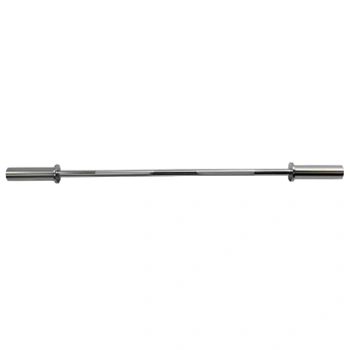
These elements represent the core of a home gym. A premium upgrade in these categories improves stability, safety, and load reliability, especially under intensive use.
Over time, this translates into greater durability and a sense of solidity that impacts every training session.
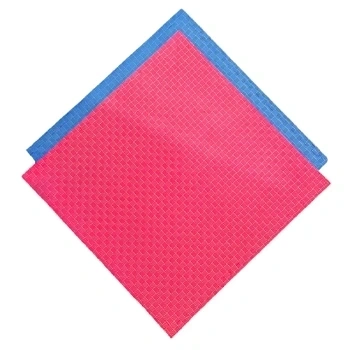
Dumbbells and flooring: wear and comfort
Dumbbells and flooring are subject to repeated use and frequent impacts. Investing here means improving comfort, protection, and overall longevity of the setup.
In particular, high-quality flooring reduces noise, vibrations, and wear, contributing to a more functional and sustainable training environment.
Incremental budget simulation in a high-frequency home gym
If a home gym is used 4–5 times per week, it makes sense to plan a selective budget increase rather than a uniform upgrade across all categories.
An effective approach is to allocate extra budget to the most frequently used equipment, while keeping more basic solutions where the impact is lower.
Base scenario vs selective premium scenario
When moving from a basic setup to a more advanced one, the budget increase should not be linear. A targeted increase allows you to achieve real benefits without multiplying costs.
This approach reduces the risk of inefficient investment and improves the overall quality of the training experience.
How to distribute extra budget rationally
The most effective logic is to assign priorities based on usage and criticality. Structural and heavily used categories should absorb the largest share of the premium budget.
This makes it possible to build a balanced home gym, where every euro invested has a real and measurable impact.
Common mistakes in managing a premium budget
Even experienced users can make mistakes in budget management, especially when emotional factors like the desire to have the “best” come into play.
Recognizing these mistakes is essential to maintain a rational and sustainable approach.
Overspending where it’s not needed
One of the most common mistakes is allocating premium budget to low-impact categories. This leads to a limited and often invisible return on investment.
Over time, this type of choice reduces the overall efficiency of the setup.
Underestimating critical categories
At the same time, saving on structural elements can compromise safety and durability. This is particularly risky in high-frequency usage contexts.
A proper budget allocation instead allows you to protect your investment and ensure consistent quality over time.


 Budgets
 Dumbers
 Discs
 Benches
 Racks and Rigs
 Weights Holders
 Isotonic machines
 Calisthenics
 Cardio
 Kettlebells
 Flooring
 Gym Set
 Accessories
 Combat
 ARTI MARZIALI
 CONTAINER GYM
 Tug-Of-War
 Used Gym Equipment
 PILATES MACCHINARI
 GINNASTICA ARTISTICA
 CAMPI DA PADEL
 Prodotti in Pronta Consegna
 Informazioni
 IRONMAN
 Gift Card