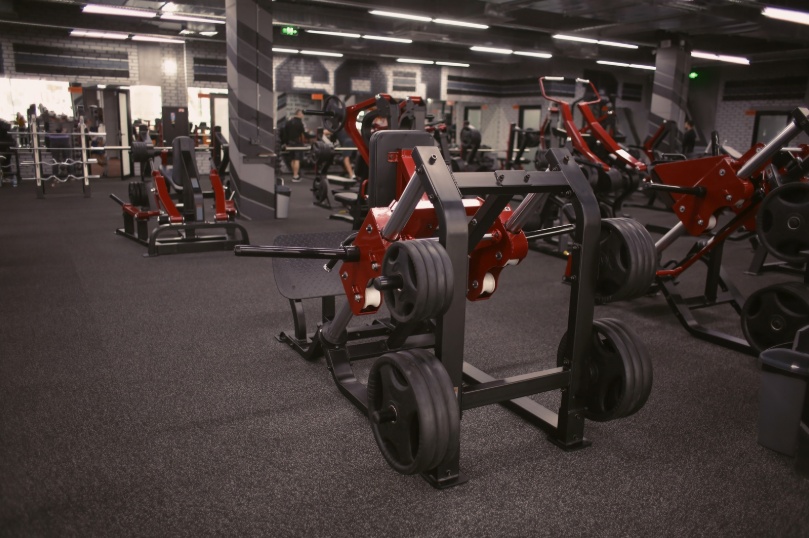
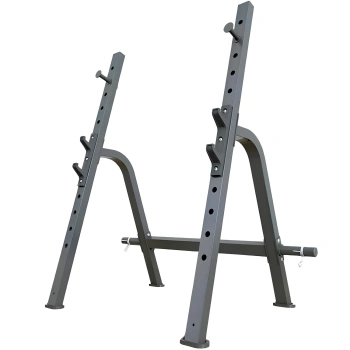
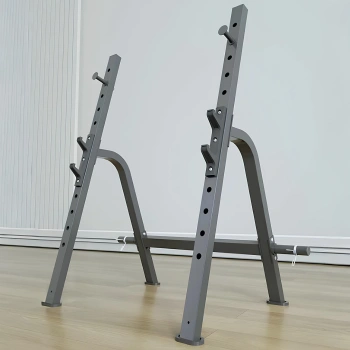
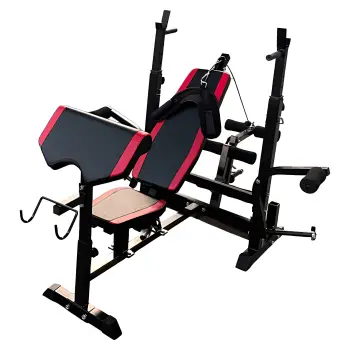
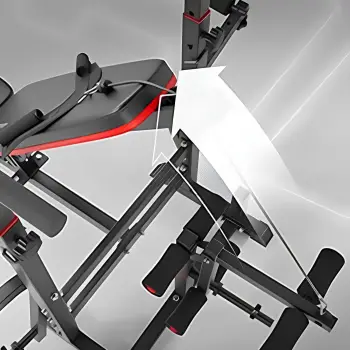
In the world of advanced home gyms, the modular system is often seen as the natural next step after a multi-station. Just look at social media content, advanced setups or home training videos: racks, standalone benches, barbells and separate accessories are associated with a higher level of training. This leads many users to think that, as soon as their motivation grows, they need to completely change their setup.
In reality, one of the most common problems in growing home gyms is precisely the timing of the upgrade. Switching to modular too early can create clutter, increase costs and complicate space management without producing any real improvement in training quality. Understanding when the change is justified helps protect your budget, your organization and your consistency over the long term.
When modular seems like the obvious next step
Why the modular system is associated with more serious training
Many beginners start with a multi-station because it is a practical, compact and relatively easy solution to manage. Over time, however, exposure to content about advanced home gyms increases, and the modular system starts to be perceived as a symbol of technical progress. Power racks, Olympic barbells and professional benches convey a sense of completeness that is often confused with a real need.
The problem arises when the desire to "get serious" is interpreted as an immediate obligation to change your setup. In many cases the multi-station has not yet reached its limits, but the user develops the feeling of being behind an ideal standard seen online. This leads to an upgrade driven more by emotion than by function.
The risk of confusing motivation with a real technical need
Motivation is useful, but it does not always go hand in hand with the technical maturity needed to manage a modular home gym. A system made of separate components requires organization, purchase planning and the ability to build coherent progressions over time. If these aspects are not yet established, a modular setup risks increasing complexity instead of improving the quality of your training.
One of the most common mistakes is thinking that equipment can replace method and consistency. In reality, many progressions can be developed effectively even with a well-used multi-station. Rushing the switch often means introducing variables that distract from the main goal: training regularly.
The most common mistakes when switching to modular too early
Buying a rack without a stable training program
The rack is often the first symbolic purchase of the move to modular. However, buying it without a stable training program frequently leads to inconsistent use. The user keeps changing exercises, modifies the setup every week and ends up scattering their effort instead of consolidating movements and progressions.
A modular system works best when a clear training structure already exists. If your weekly frequency is still irregular or your goals keep changing, a single unit may be more efficient. At this stage, keeping things operationally simple often helps more than increasing the number of available components.
Adding components without improving training quality
Many premature upgrades stem from the idea that more accessories automatically mean better results. In practice, adding barbells, benches, dumbbells and racks does not improve your training if technical control and consistent progression are still missing. The risk is ending up with a home gym full of equipment but lacking structure.
Another underestimated aspect is operational time. More separate modules mean more adjustments, more organization and more daily management. If you have not yet developed a stable routine, this added complexity can reduce consistency instead of supporting it.
Underestimating space management and operational order
Modular setups require a very different approach to space management compared to a compact multi-station. It is not enough to consider the footprint of the rack: you also need to evaluate movement area, weight plate storage, safety clearances and easy access to equipment. In small spaces, a premature switch can turn your home gym into an impractical room.
When operational order declines, the training experience tends to suffer as well. Constantly moving equipment, poorly placed components or congested areas reduce flow and convenience. Before switching to modular, it is worth checking whether your home environment is truly ready to accommodate a more complex setup.
Spreading the budget across too many separate items
A frequent mistake is splitting the budget across many mid-range purchases instead of gradually building a coherent setup. Modular systems easily push you toward an accumulation logic: first the rack, then the bench, then the storage, then the plates, then the accessories. Without a precise strategy, the result can be financially wasteful.
In many cases, continuing with a complete multi-station for a while allows you to gain experience and understand which components will really be priorities in the future. This approach protects your investment and avoids impulse purchases driven more by the aesthetics of a home gym than by concrete needs.
Signs that your multi-station is still adequate
Progressions still compatible with a single unit
If your training keeps progressing steadily, the multi-station may not yet be a real limitation. Many users switch to modular without having exhausted the possibilities of their current setup. As long as your loads, frequency and technical quality keep improving, changing the architecture may be premature.
Having a multi-station does not necessarily prevent you from building strength, consistency or improving body composition. In some contexts, a compact structure even helps you focus on essential work, reducing distractions and constant exercise changes.
Training frequency and consistency still unstable
One of the most important conditions before switching to modular concerns the stability of your habits. If your workouts are still sporadic or heavily dependent on how motivated you feel at the time, increasing the complexity of your home gym rarely solves the problem.
On the contrary, consolidating a stable routine first allows you to approach a future upgrade with greater awareness. A modular home gym requires method, order and planning. Without these elements, the risk is turning initial enthusiasm into an unsustainable setup.
When switching to modular truly makes sense
Structural limitations of the multi-station
Moving to modular becomes more logical when the multi-station starts to concretely limit exercises, progressions or loads. At this point, the user notices specific operational constraints rather than a generic desire to evolve. The difference is substantial, because the change stems from verifiable technical needs.
For example, some multi-stations can become restrictive for free barbell work, advanced load management or customization of working heights. When these limits genuinely affect the quality of your training, a modular system takes on a practical function rather than just an aspirational one.
The need for training personalization
Over time, some users develop more specific needs: strength work, particular technical progressions or differentiated training programs. In these cases, a modular structure offers greater adaptability and operational freedom. However, this advantage only becomes useful when you already have a clear direction.
Modularity offers the most value to those who already know how to use that flexibility. Without a defined program, the risk is turning variety into scattered effort. For this reason, the switch should be the result of a concrete evolution, not a simple perception of status.
A practical example of an upgrade postponed to the right moment
Why staying on a multi-station for a while can improve the final result
A common case involves users who start considering a rack after just a few months of home training. Their motivation grows quickly, but frequency and organization are still unstable. In these situations, temporarily keeping a multi-station can help consolidate method and consistency before tackling a more complex investment.
After several months of steady use, the user gains a clearer picture of available space, the exercises they actually perform and their operational priorities. At that point, the move to modular becomes more orderly, selective and sustainable. This approach reduces buying mistakes and makes it possible to build a more coherent home gym over the long term.
How to make the switch to modular more organized and sustainable
Buying by priority, not by impulse
An effective transition to modular rarely happens all at once. In most cases, it is more useful to build the new setup by operational priority, choosing first the items you truly need. This allows you to distribute your budget better and maintain greater control over how your home gym evolves.
Proceeding gradually also lets you check how each component fits into your available space. A considered purchase tends to produce a more balanced structure than a rushed upgrade driven by the urge to "make the jump".
Building a home gym that matches your real level
An effective home gym does not depend on the number of modules it contains, but on the coherence between equipment, goals and the user's level. A modular system can be a very useful evolution, but only when it arrives at the right moment. Anticipating it too much often means adding complexity before the operational basics are consolidated.
Honestly assessing your real level helps you avoid scattered upgrades and impulsive choices. In many cases, staying a while longer with a well-organized multi-station allows you to reach the modular stage with greater clarity, more experience and a more sustainable vision of your entire home gym.


 Budgets
 Dumbers
 Discs
 Benches
 Racks and Rigs
 Weights Holders
 Isotonic machines
 Calisthenics
 Cardio
 Kettlebells
 Flooring
 Gym Set
 Accessories
 Combat
 ARTI MARZIALI
 CONTAINER GYM
 Tug-Of-War
 Used Gym Equipment
 PILATES MACCHINARI
 GINNASTICA ARTISTICA
 CAMPI DA PADEL
 Prodotti in Pronta Consegna
 Informazioni
 IRONMAN
 Gift Card