
Trolley
You have no items in your shopping cart

 Budgets
 Dumbers
 Discs
Discs
 Benches
 Racks and Rigs
 Weights Holders
 Isotonic machines
 Calisthenics
 Cardio
 Kettlebells
 Flooring
 Gym Set
 Accessories
 Combat
 ARTI MARZIALI
 CONTAINER GYM
 Tug-Of-War
 Used Gym Equipment
 PILATES MACCHINARI
 GINNASTICA ARTISTICA
 CAMPI DA PADEL
 Prodotti in Pronta Consegna
 Informazioni
 IRONMAN
 Gift Card
- Donatif
- Training and exercises
- 0 I like it
- 2742 Views
- 0 comments
READING TIME: 9 MINUTES ➤➤
Anyone over the age of 50 who enjoys walking knows how much this activity can contribute to both physical and mental well-being. However, it is equally common to experience some hip stiffness or fatigue in the pelvic area after long walks. As we age, joints naturally tend to lose elasticity and responsiveness, especially if they are not supported by targeted exercises. A good hip mobility routine can make a significant difference, helping to keep the hips fluid and light, preventing tension and improving post-activity recovery.
In this article, you will discover how to address these issues effectively through a series of exercises tailored to your body and your needs. If you identify as someone who walks frequently but has started to notice that your hips feel a little “stuck,” this guide will take you step by step toward greater joint well-being.
- Why the hip becomes stiff after long walks
- Benefits of a targeted hip routine
- Mobility exercises for adults over 50
- Post-walk routine: what to do immediately
- Tips to keep your hips feeling light over time
Why the Hip Becomes Stiff After Long Walks
The Role of Age and Joint Mobility
As the years go by, joints naturally begin to lose elasticity. Connective tissue becomes stiffer, joint lubrication decreases, and the surrounding muscles become less responsive. This leads to a greater sensation of hip stiffness, even in physically active individuals. Although walking is a low-impact activity, it can amplify these sensations if the hips are not adequately prepared to support prolonged movement.
In addition, the lack of exercises specifically designed for this joint can cause muscular imbalances that also affect the pelvis and lower back. This is why hip mobility is a key factor for anyone who wants to continue walking comfortably and freely after the age of 50.
The Effects of Prolonged Walking on the Hips and Pelvis
After a long walk, many adults over 50 report localized fatigue in the lower part of the body. This is often caused by excessive stress on the hip joints and pelvic muscles, especially when walking on uneven terrain or at a brisk pace. The hip joint works in synergy with the pelvis and core muscles to stabilize the body during movement.
Without adequate preparation, walking can lead to subtle postural compensations that gradually create chronic tension. The result? Hips that feel heavy or restricted, along with a sense of muscular tightness that can affect your next walk as well.
Benefits of a Targeted Hip Routine
Improved Freedom of Movement
Incorporating targeted exercises into your routine can provide an immediate sense of relief and smoother movement. A more mobile hip improves your stride, reduces effort while walking, and increases confidence in daily movements. The feeling of tightness or heaviness often begins to diminish after just a few days of consistent practice.
Beyond the physical benefits, this renewed mobility also enhances overall quality of life. You may feel more active, lighter, and more confident in your movements, with positive effects on posture, breathing, and general well-being.
Reduced Tension and Fatigue
One of the main causes of post-walk fatigue and muscle tension is the lack of proper release and recovery. Mobility routines promote recovery, improve circulation, and help release tightness in the pelvic area. The body begins to perceive movement not as something that “drains” energy, but as something that nourishes and regenerates.
These effects become especially noticeable over time, as walking frequency increases while negative sensations decrease. The hip transforms from a weak point into a valuable ally in your daily activities.
Mobility Exercises for Adults Over 50
Gentle Movements to Free the Joint
The key to good hip mobility is gradual progression. Exercises should be gentle, controlled, and progressive. Begin with movements performed lying on your back, such as butterfly hip openings, and then progress to controlled rotations and standing hip swings. The goal is not to force the joint but to “invite” it to move more freely and with a greater range of motion.
With consistency, even a few minutes a day are enough to notice a tangible difference. These exercises help activate the deep hip muscles, which are often neglected, and improve the body's response to movement.
Specific Pelvic Activation Exercises
In addition to joint mobility, it is important to stimulate the muscles that stabilize the pelvis, including the gluteus medius, adductors, and pelvic floor muscles. Working on these muscle groups improves balance and reduces the risk of compensatory movements that may lead to lower back or knee pain.
These activation exercises can be incorporated before or after walking through simple movements performed at home, such as glute bridges, isometric contractions, and seated pelvic rotations. The key is to perform them mindfully, breathing deeply and respecting your body's limits.
Post-Walk Routine: What to Do Immediately
Targeted Stretching for the Hips and Pelvic Area
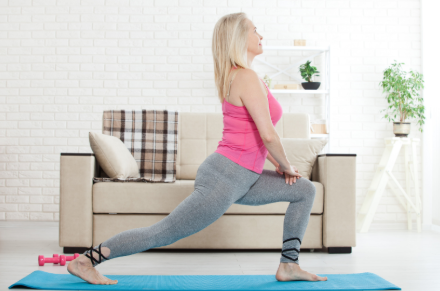
After a long walk, the body needs time to slow down and release tension. A dedicated stretching session is essential for easing tightness in the hips and pelvis. Among the most effective exercises are the static lunge with torso rotation, the seated piriformis stretch, and the standing quadriceps stretch using a wall for support.
Each position should be held for at least 30 seconds while breathing deeply and steadily. This approach helps the body transition out of a contracted state and regain a feeling of lightness in the lower body, accelerating recovery.
Breathing and Myofascial Release
Often overlooked, breathing has a direct impact on mobility and tension release. After walking, spending a few minutes practicing deep diaphragmatic breathing promotes tissue oxygenation and creates a calming effect on the nervous system. This encourages muscular release in the pelvic area, which is often tense after prolonged exertion.
Another useful tool is myofascial release using massage balls or a foam roller, applied to key areas such as the glutes, tensor fasciae latae, and lower back. It is a simple practice, yet extremely effective for relieving tension throughout the entire joint system.
Tips to Keep Your Hips Feeling Light Over Time
Practice Frequency and Consistency
Like any process of physical adaptation, joint mobility requires consistency. There is no need for long daily sessions; simply dedicating a small amount of time each day or every other day is enough. Just 10–15 minutes of exercises can help keep the hips active, preventing the buildup of tension and movement restrictions.
The secret lies in continuity. A routine maintained over time can help prevent future joint issues, allowing you to continue enjoying walking as a source of pleasure and well-being without fear of discomfort or stiffness.
Integrating Mobility Work into Daily Walking
Finally, it is important not to view mobility exercises as a separate activity. Instead, they should be integrated synergistically with walking. Some exercises can be performed as a warm-up before heading out, while others can be used as a cool-down afterward. This approach makes the routine feel more natural and less demanding, turning hip care into a daily habit.
As a result, the body responds better to physical demands, fatigue decreases, and the feeling of lightness and well-being increases. The hips become more fluid and mobile, effectively supporting every step. With each walk, feeling freer and more energized will no longer be a dream but a realistic and achievable experience at any age.
Comments (0)