
Trolley
You have no items in your shopping cart

 Budgets
 Dumbers
 Discs
Discs
 Benches
 Racks and Rigs
 Weights Holders
 Isotonic machines
 Calisthenics
 Cardio
 Kettlebells
 Flooring
 Gym Set
 Accessories
 Combat
 ARTI MARZIALI
 CONTAINER GYM
 Tug-Of-War
 Used Gym Equipment
 PILATES MACCHINARI
 GINNASTICA ARTISTICA
 CAMPI DA PADEL
 Prodotti in Pronta Consegna
 Informazioni
 IRONMAN
 Gift Card
- Donatif
- Training and exercises
- 0 I like it
- 3027 Views
- 0 comments
READING TIME: 5 MINUTES ➤➤
Anterior Shoulder Stretching for People Who Work at a Computer
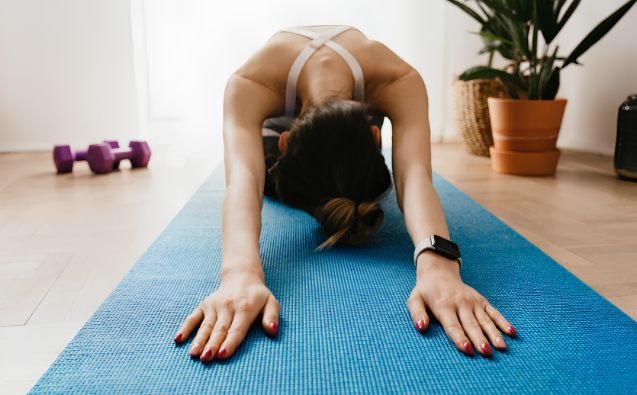
People who spend many hours at a computer often unknowingly develop a closed posture, with their shoulders rounding forward and their chest collapsing inward. This position not only negatively affects appearance and overall posture but also hinders deep breathing and a sense of openness and well-being. In this article, we’ll explore how a simple chest stretching routine can make a difference by helping to open the chest, improve shoulder mobility, and restore a more natural and relaxed postural balance.
- Why the chest closes: posture and digital habits
- The benefits of opening the chest
- How to tell if you have tight chest muscles or rounded shoulders
- Chest stretching to improve shoulder opening
- Practical tips for maintaining a more open posture
Why the chest closes: posture and digital habits
The consequences of a sedentary posture
Sitting for long hours in front of a screen causes the body to adopt an unnatural position. The shoulders tend to rotate forward, the chest closes, and the cervical spine curves. This condition, often unnoticed, becomes chronic over time, reducing the elasticity of the anterior muscles and causing discomfort in the neck and back. The lack of movement and prolonged static posture restrict the natural expansion of the chest, leading to progressive shortening of the pectoral muscles.
How computer work affects the chest muscles
The constant use of a keyboard and mouse further accentuates this forward-rounded posture. The pectoral muscles become shortened and tight, limiting shoulder opening. This postural pattern also compromises breathing, making it shallower and less efficient. Over time, this situation can create a series of muscular compensations that increase feelings of tightness, stiffness, and general tension throughout the upper body.
The benefits of opening the chest
Deeper and more natural breathing
Opening the chest changes the way you breathe. An expanded rib cage allows the lungs to function more effectively, improving oxygen intake and promoting a sense of calm and well-being. With more flexible chest muscles, the diaphragm can move freely, encouraging more efficient diaphragmatic breathing. This effect translates into greater mental energy, reduced fatigue, and a visibly more balanced posture.
Impact on mobility and overall well-being
Chest stretching is not just about appearance. Improving chest opening enhances joint mobility in the shoulders, reduces neck-related muscle pain, and counteracts stiffness caused by long periods of inactivity. The feeling of openness also influences psychological well-being: an open and free chest conveys confidence, presence, and vitality.
How to tell if you have tight chest muscles or rounded shoulders
Postural signs to observe in the mirror
You can determine whether you need to work on shoulder opening simply by looking at yourself in a mirror. Do your shoulders fall forward? Does your chest appear compressed or sunken? Is your head positioned forward in relation to your body? These are all signs of a posture altered by excessive sedentary behavior and tight anterior muscles.
Simple tests to assess tightness and restriction
Try lying on a flat surface with your arms extended out to the sides at a 90-degree angle. If you feel significant tension or struggle to rest your elbows on the floor, your pectoral muscles are likely shortened. Another effective test is to raise your arms laterally and observe how far you can open them without lifting your shoulders. The more restricted the movement, the greater the chest tightness.
Chest stretching to improve shoulder opening
A guided sequence for people who work at a computer
A good chest-stretching routine can take less than 10 minutes yet provide lasting benefits. Start with a simple exercise: stand next to a wall, place your forearm against it at a right angle, and slowly rotate your torso away from the wall. Hold the position for at least 30 seconds and repeat on the other side. This helps relax the chest muscles and gradually open the rib cage.
Recommended exercises to relax the chest and shoulders
Among the most effective exercises are prone chest-opening stretches with arm rotation, lying along a foam roller placed lengthwise under the spine, and the classic “heart-opening yoga pose” (supported supta baddha konasana). The key is to perform all movements slowly and mindfully, focusing on breathing to support the stretch.
Practical tips for maintaining a more open posture
Daily routines to incorporate at your desk
To counteract the tendency to collapse forward, small adjustments to your work routine can make a big difference. Set a reminder every 45 minutes to stand up and move, perform 2–3 chest-opening exercises between meetings, or use your breaks for a short chest-stretching session. Even just 2 minutes can have a significant impact when practiced consistently.
Preventing closure through movement and awareness
The key is awareness: noticing your posture throughout the day is the first step toward changing it. Add activities that encourage chest opening, such as swimming, yoga, or resistance band exercises. Remember that a more open posture is not only about appearance—it improves breathing, mood, and the way you approach your day.
Comments (0)