
Trolley
You have no items in your shopping cart

 Budgets
 Dumbers
 Discs
Discs
 Benches
 Racks and Rigs
 Weights Holders
 Isotonic machines
 Calisthenics
 Cardio
 Kettlebells
 Flooring
 Gym Set
 Accessories
 Combat
 ARTI MARZIALI
 CONTAINER GYM
 Tug-Of-War
 Used Gym Equipment
 PILATES MACCHINARI
 GINNASTICA ARTISTICA
 CAMPI DA PADEL
 Prodotti in Pronta Consegna
 Informazioni
 IRONMAN
 Gift Card
- Donatif
- Training and exercises
- 0 I like it
- 3328 Views
- 0 comments
READING TIME: 5 MINUTES ➤➤
The Anti-Office-Back Micro-Routine: 3 Invisible Exercises to Reduce Lower Back Stiffness
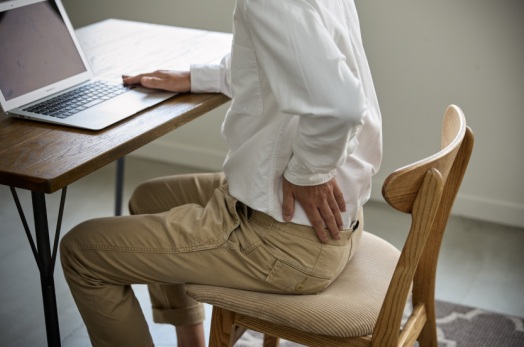
Sitting for hours in front of a screen may seem harmless, but over time it can cause uncomfortable issues, especially in the lower back. Fortunately, there are simple and almost invisible solutions that can be integrated into your daily routine. In this article, you will discover a micro-routine made up of 3 discreet movements that you can perform without leaving your chair, perfect for reducing back stiffness while you work.
No equipment is needed, and no extra time is required: just a few minutes, several times a day, can help improve postural well-being and counteract the aches and pains typical of office life. It is a low-friction, zero-embarrassment approach, designed for people who want to feel better without drawing attention to themselves.
- Why Your Back Suffers in the Office
- Invisible Exercises: Moving Without Being Noticed
- The 3 Movements You Can Do Without Standing Up
- When and How Often to Do Them for Results
- Small Actions, Big Impact on Health
Why Your Back Suffers in the Office
Causes of Lower Back Stiffness at a Fixed Workstation
Spending the day in front of a computer involves maintaining a static position that significantly affects back health. The main causes of lower back stiffness include prolonged inactivity, poor posture, and a lack of active movement. The lumbar area, in particular, suffers the most because of compression and insufficient muscular activation.
The human body is not designed to remain still. Every minute spent sitting without moving contributes to an accumulation of tension that gradually becomes uncomfortable. This is not just about temporary aches but about a postural vicious cycle that can lead to more serious issues if ignored.
Long-Term Consequences of a Sedentary Lifestyle
When lower back stiffness becomes chronic, it can develop into more complex problems such as recurring lower back pain, sciatica, and postural imbalances. The risk increases with age and with the number of hours spent sitting each day, especially without active breaks.
Working in a seated position does not necessarily mean compromising your health. In fact, with a few simple daily habits, many of the negative consequences can be prevented. The key is to integrate movement into periods of stillness, even in subtle ways.
Invisible Exercises: Moving Without Being Noticed
What Does “Invisible Exercise” Mean?
An invisible exercise is a targeted movement that you can perform without leaving your desk and without attracting the attention of those around you. It is designed to be discreet, quick, and above all effective at keeping the muscle groups involved in posture active.
These exercises do not require a change of clothes, exercise mats, or extra space. They have been designed to fit perfectly into the work routine of people who spend long hours at a computer, often in shared environments where unusual movements may feel awkward.
Why Discretion Matters in the Workplace
Many employees avoid moving because they fear distracting colleagues or appearing out of place. This leads to a gradual adaptation to harmful sedentary habits. Invisible exercises remove this barrier: they are designed to be performed with minimal but strategic movements, without interfering with ongoing work activities.
In this context, discretion becomes a key factor for consistency. The easier an exercise is to perform without interrupting workflow, the more likely it is to become a habit. This is exactly how you create a micro-environment of well-being in the office.
The 3 Movements You Can Do Without Standing Up
1. Seated Pelvic Activation
How to Perform It
Sit upright with your feet firmly planted on the floor. Contract your pelvic floor muscles and glutes as if you wanted to slightly lift yourself from the chair, without actually doing so. Hold the contraction for 5–7 seconds, then slowly release. Repeat 10 times while breathing normally.
Postural and Muscular Benefits
This exercise promotes the reactivation of the deep muscles in the pelvic and lumbar regions, helping to stabilize posture and improve circulation. It also enhances body awareness and helps counteract the muscular atrophy associated with prolonged sitting.
2. Scapular Squeeze Against the Backrest
Practical Instructions
Sit with your back against the chair and your arms relaxed. Imagine trying to “squeeze” your shoulder blades together by gently pulling them toward the center of your back. Hold the contraction for 6–8 seconds, then relax. Repeat 8–10 times.
Why It Improves Posture
This activation targets the postural muscles of the upper back, which are often weakened by the rounded position commonly adopted while working at a computer. It helps to open the chest, lower the shoulders, and reduce neck tension.
3. Seated Lumbar Stretch with Deep Breathing
Guide to Discreet Execution
Slowly lean your torso forward while remaining seated until you feel a gentle stretch in your lower back. Combine the movement with slow, deep breathing, holding the position for approximately 10 seconds before returning upright. Repeat 3–5 times.
Effects on Relaxation and Mobility
This movement has an immediate effect on the decompression of the lumbar spine, helping to release accumulated tension. Deep breathing promotes relaxation of the diaphragm and improves oxygenation, creating a general sense of well-being.
When and How Often to Do Them for Results
Recommended Frequency
The key to effectiveness is consistency. Each exercise can be performed at least 2–3 times per day, ideally spread between the morning and afternoon. They do not need to be performed together; even doing one exercise every hour is an excellent result.
Integrating the Micro-Routine into the Workday
You can pair these exercises with specific moments throughout your day: during a phone call, after sending an email, or before a coffee break. The important thing is that they become a habit—a simple action naturally integrated into your workflow.
Small Actions, Big Impact on Health
Why Consistency Beats Quantity
Doing a little, but often, is better than doing a lot just once. Micro-routines have the advantage of being sustainable and achievable even on the busiest days. Over time, these actions become a beneficial ritual that helps relieve both body and mind.
Start Today to Prevent Problems Tomorrow
Do not wait until back pain becomes chronic: start today with these simple exercises. It only takes a few days to notice the first benefits. Your back will thank you every day for dedicating even a few minutes to its well-being.
Comments (0)