
Trolley
You have no items in your shopping cart

 Budgets
 Dumbers
 Discs
Discs
 Benches
 Racks and Rigs
 Weights Holders
 Isotonic machines
 Calisthenics
 Cardio
 Kettlebells
 Flooring
 Gym Set
 Accessories
 Combat
 ARTI MARZIALI
 CONTAINER GYM
 Tug-Of-War
 Used Gym Equipment
 PILATES MACCHINARI
 GINNASTICA ARTISTICA
 CAMPI DA PADEL
 Prodotti in Pronta Consegna
 Informazioni
 IRONMAN
 Gift Card
- Donatif
- Training and exercises
- 0 I like it
- 2637 Views
- 0 comments
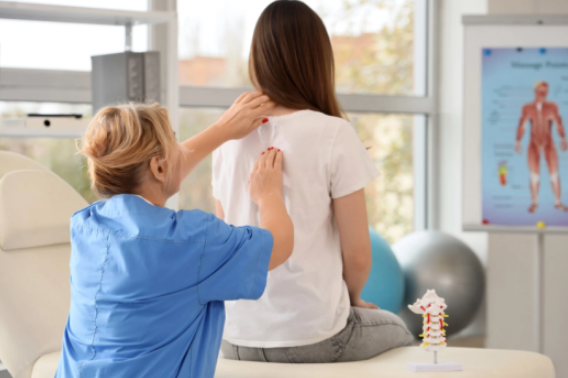
READING TIME: 5 MINUTES ➤➤
Posture and Mild Scoliosis: How Movement Can Really Help
When discussing posture and mild scoliosis, the biggest risk is falling into misleading oversimplifications. On one hand, there's the belief that exercise can "cure" scoliosis; on the other, the assumption that physical activity is always risky. The reality is far more balanced. Movement can be a valuable ally, but only when it is properly understood and not expected to fulfill roles beyond its scope.
Training with mild scoliosis is not only possible but often recommended. However, it requires clarity, body awareness, and a clear understanding of the boundaries between fitness and healthcare. Knowing what exercise can genuinely help with—and what falls outside its purpose—is the first step toward protecting your health and making informed decisions.
- Mild scoliosis and posture
- Structural scoliosis vs. postural scoliosis
- The role of movement
- Training safely
- The limits of exercise
- Professional roles and responsibilities
Mild Scoliosis and Posture: What It Really Means
Mild scoliosis is often automatically associated with "poor posture," but this assumption is misleading. Posture is an adaptive behavior influenced by habits, physical loads, environmental factors, and motor control, whereas scoliosis is a spinal condition that can have many different causes and characteristics.
In many cases—especially mild ones—what is observed is not a severe structural deformity but rather a series of postural compensations. Movement can improve body awareness and the management of these adaptations, but it should not be confused with a structural correction of the spine.
Structural Scoliosis vs. Postural Scoliosis: An Essential Distinction
Understanding the difference between structural scoliosis and postural scoliosis is essential. Structural scoliosis is a medical condition characterized by a stable, measurable spinal curvature that requires clinical assessment and ongoing monitoring.
Postural scoliosis, on the other hand, is often a functional and reversible deviation related to movement patterns, muscular imbalances, or postural habits. In this case, movement and exercise can have a more direct impact by improving motor control, balance, and body awareness—without replacing a proper medical diagnosis.
The Role of Movement in Mild Scoliosis
Movement is not a miracle treatment, but it can be a powerful supportive tool. For people with mild scoliosis, regular exercise helps maintain strength, mobility, and load tolerance—essential components of an active and functional lifestyle.
A well-designed exercise program can help reduce stiffness, improve the management of asymmetries, and increase confidence in your body's abilities. The primary benefit is not to "straighten" the spine but to improve movement quality and enhance the body's ability to adapt to everyday demands.
Training Safely with Scoliosis
When discussing exercise with scoliosis, safety should always come first. In the absence of medical contraindications, many forms of physical activity are compatible with mild scoliosis, especially when they are tailored to the individual rather than based on rigid or standardized training methods.
The priority should be developing motor control, gradually progressing training loads, and listening to the body's signals. Safe exercises for scoliosis are not defined by a universal list but by professional reasoning that takes into account an individual's medical history and physical capabilities.
What Exercise Cannot Do
It's important to clarify what exercise cannot and should not do. Fitness cannot correct structural scoliosis, replace specialized physiotherapy, or provide medical diagnoses. Promising structural changes through exercise creates false expectations and risks undermining people's trust.
The role of movement is to support—not to cure. Recognizing this limitation is a matter of professional responsibility that protects both the individual exercising and the professional guiding them.
Trainer, Physiotherapist, and Physician: Roles and Responsibilities
The difference between a physiotherapist and a personal trainer is not a matter of hierarchy but of professional expertise. Physiotherapists and physicians work within the healthcare system, assessing and managing medical conditions. Trainers focus on movement, exercise programming, and maintaining or improving physical fitness.
When persistent pain, worsening spinal curvature, or diagnostic uncertainty arises, referring the individual to a healthcare professional is not a failure—it's the correct course of action. Only clear collaboration between different professionals allows movement to become a valuable ally without expecting it to be something it is not.
Comments (0)