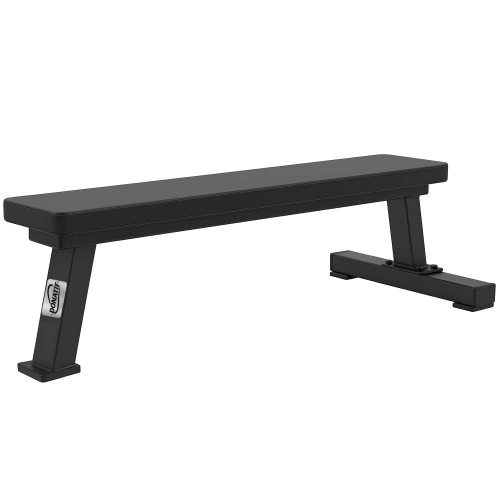
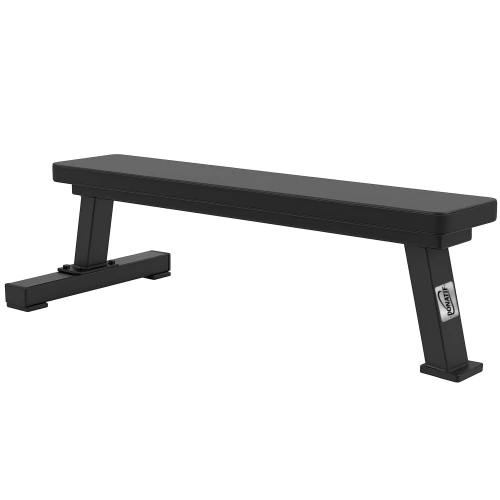
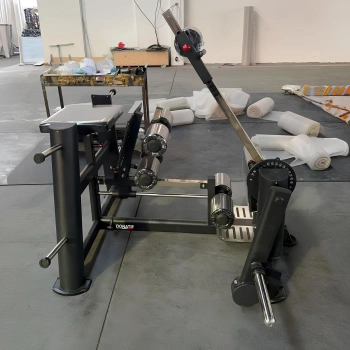
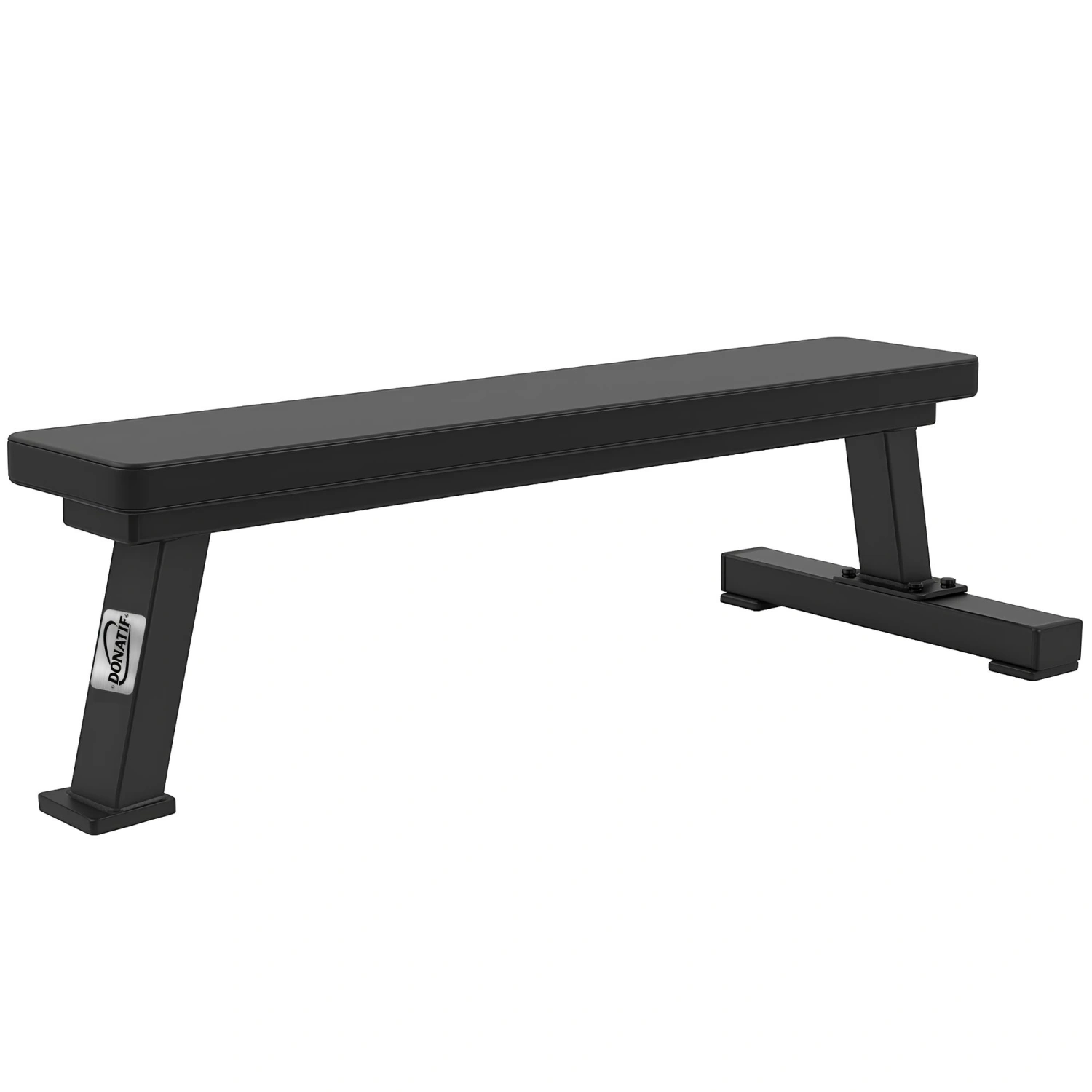
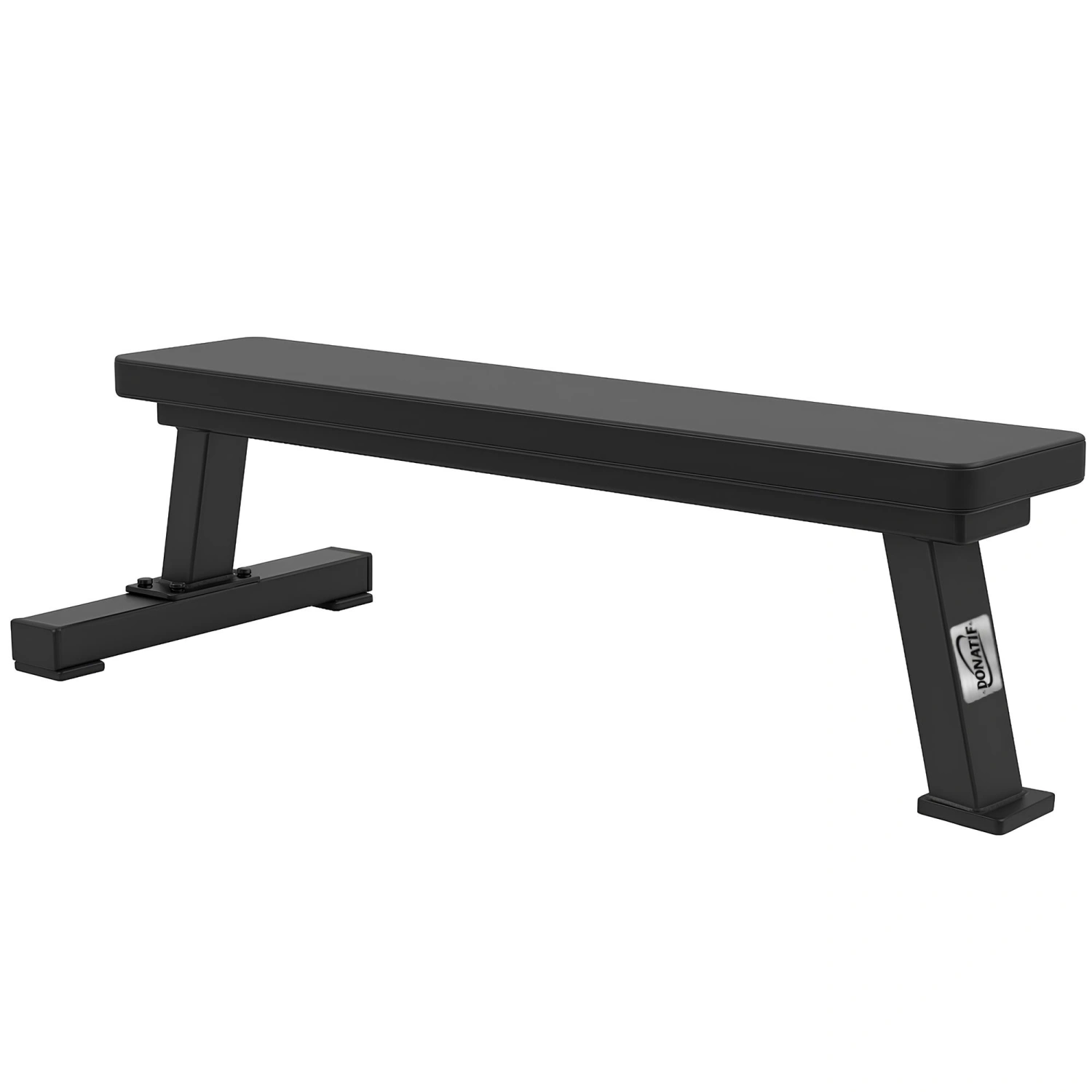
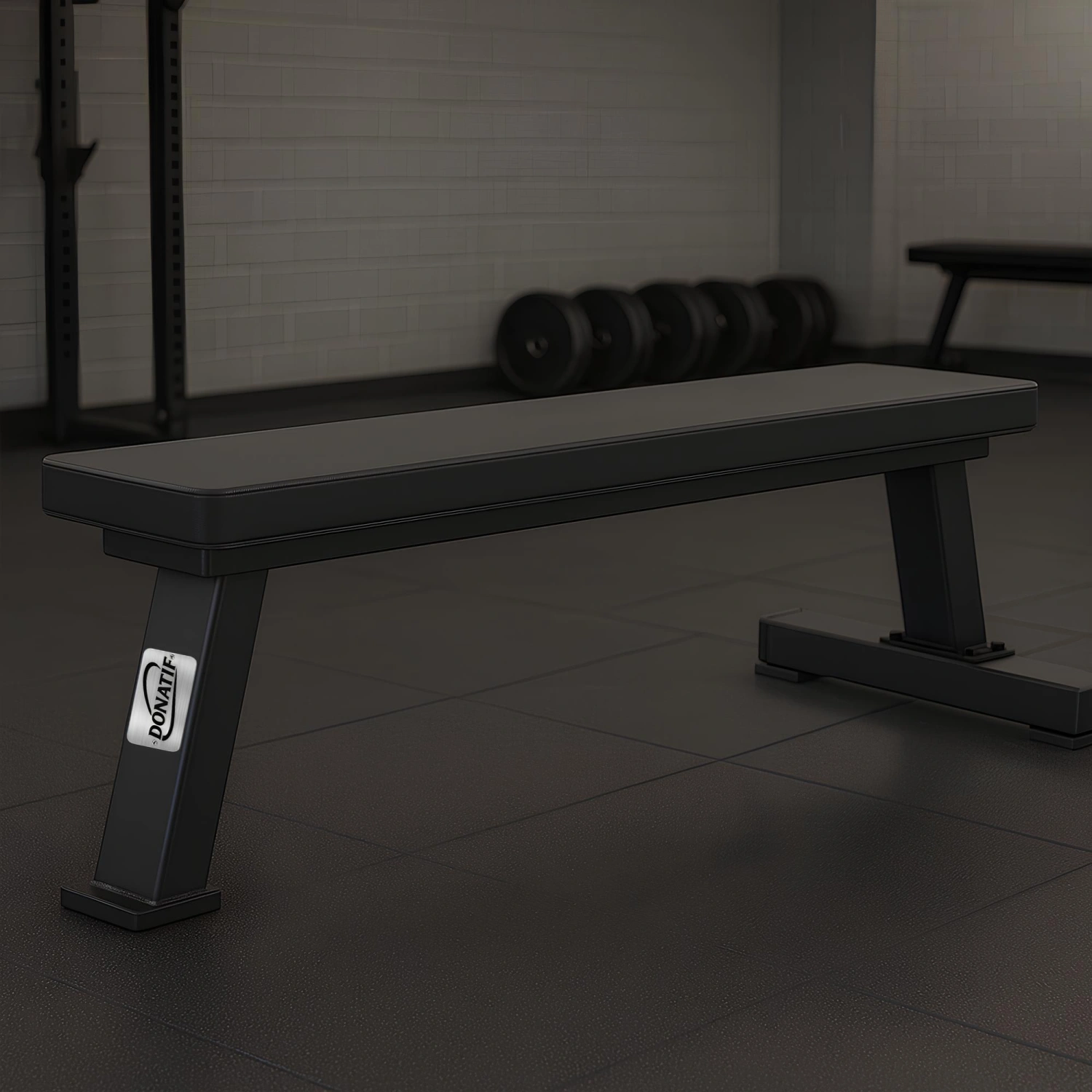
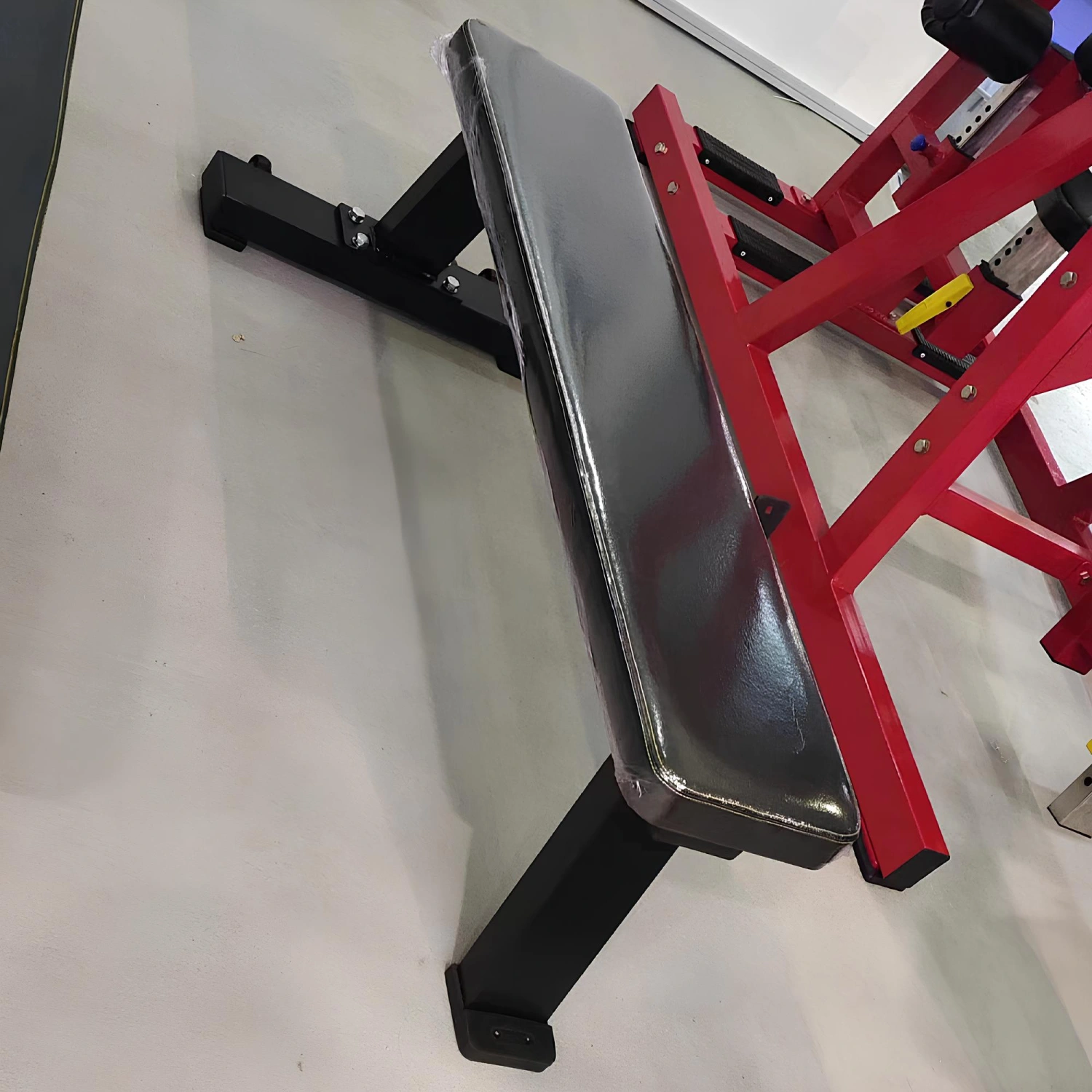
The features of our Flat Bench with Adjustable Declination | Professional
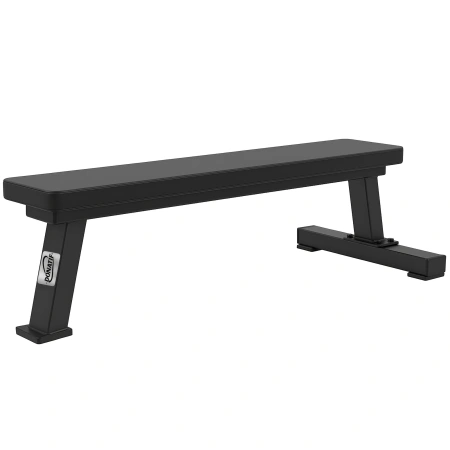
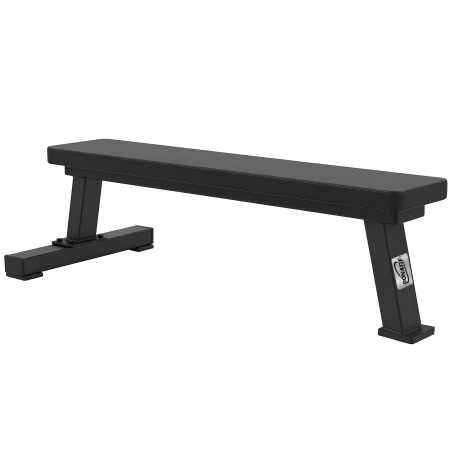
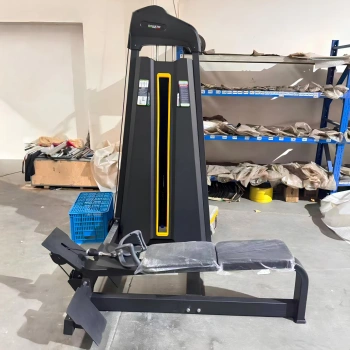
Structure, size and build quality. The frame of the Flat Bench with Adjustable Declination is made of steel with a 100×50×2.5 mm square profile, a specification that combines load-bearing capacity and vibration control under stress. The overall dimensions (about 167×66×82 cm) allow a natural posture in declined stretches and easy management of room accessories, reducing obstacles in the passage areas. The bench weighs 36 kg, a value that improves the feeling of anchoring without compromising handling in the room.
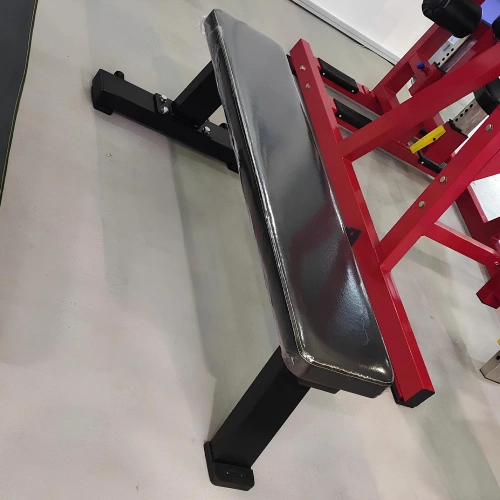
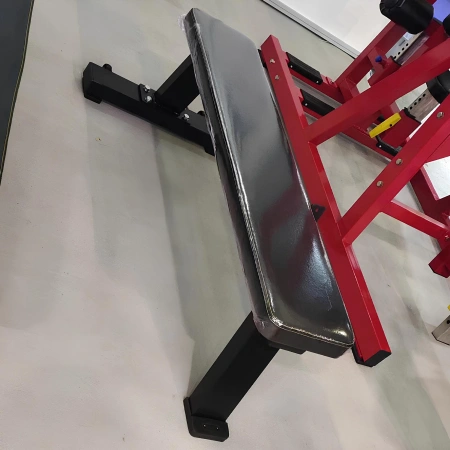
Ergonomics, stability and adjustments. The declination angle is adjustable on several levels to adapt to different anthropometries and specific objectives (hypertrophy, strength, core work). The high-density padding supports the spine while maintaining comfort even in long series. Feet with non-slip tips improve grip and protect surfaces; any handles/wheels (if installed) facilitate internal movement. The whole generates a feeling of security and control that encourages the quality of the execution.
How and where to use our Flat Bench with Adjustable Declination | Professional
Main exercises and execution suggestions. The bench is ideal for declined presses with barbells or dumbbells, useful for emphasizing the work on the lower bundles of the pectoral, and for abdominals in declination with crunch variants and controlled rotations. The angle adjustment allows you to modulate muscle intensity and involvement: more marked levels increase the demand on the core and reduce ROM on pushes, while moderate inclinations favor motor control and time under tension.
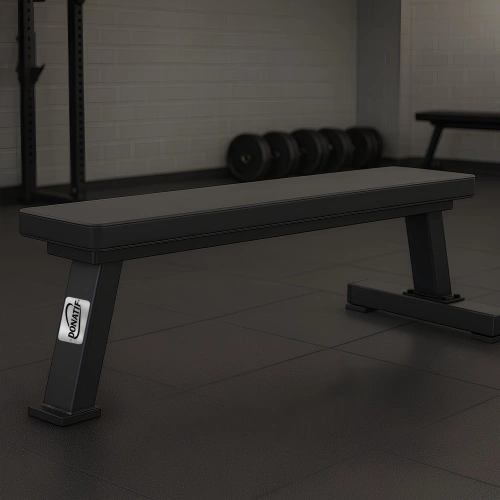
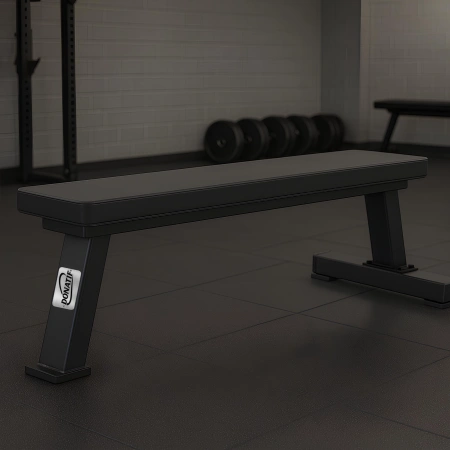
Contexts of use: gyms, PT studios, premium home gyms. The Flat Bench with Adjustable Declination was created for professional use: weight room in fitness centers, personal training studios or hotel gyms that require robust, reliable and cleanly designed equipment. The small footprint makes it easy to place between racks and push stations, while easy adjustment management reduces downtime between exercises. In advanced home gyms, it becomes the "specialist" bench to complete the bench park (flat/inclined), expanding the training stimuli without sacrificing space.
Why choose our Flat Bench with Adjustable Declination | Professional
Benefits of training in decline. The declined position favors greater recruitment of the lower pectoral and, in many cases, less involvement of the anterior deltoids compared to a flat/inclined bench. For many users, this translates into a perception of less stress on the shoulders and the possibility of working with loads perceived as more manageable, while maintaining technical quality and effective repetitions. From a programming perspective, the cyclical insertion of declined stretches flanks the work on flat and inclined to complete the stimulation of the chest and enrich the thrust variants.
Durability, maintenance and references. Routine maintenance is limited to cleaning the coatings and periodically checking screws and contact points. For professional contexts, the reference to the family of standards for stationary equipment (e.g. ISO 20957-4 for benches) represents a useful compliance framework to inspire internal verification and safety procedures. In short: a reliable, versatile bench that's built to last.


 Budgets
 Dumbers
 Discs
Discs
 Benches
 Racks and Rigs
 Weights Holders
 Isotonic machines
 Calisthenics
 Cardio
 Kettlebells
 Flooring
 Gym Set
 Accessories
 Combat
 ARTI MARZIALI
 CONTAINER GYM
 Tug-Of-War
 Used Gym Equipment
 PILATES MACCHINARI
 GINNASTICA ARTISTICA
 CAMPI DA PADEL
 Prodotti in Pronta Consegna
 Informazioni
 IRONMAN
 Gift Card