
Trolley
You have no items in your shopping cart

 Budgets
 Dumbers
 Discs
 Benches
 Racks and Rigs
 Weights Holders
 Isotonic machines
 Calisthenics
 Cardio
 Kettlebells
 Flooring
 Gym Set
 Accessories
 Combat
 ARTI MARZIALI
 CONTAINER GYM
 Tug-Of-War
 Used Gym Equipment
 PILATES MACCHINARI
 GINNASTICA ARTISTICA
 CAMPI DA PADEL
 Prodotti in Pronta Consegna
 Informazioni
 IRONMAN
 Gift Card
- Donatif
- Training and exercises
- 0 I like it
- 1457 Views
- 0 comments
- gym flooring, safety flooring, gym safety, shock-absorbing materials
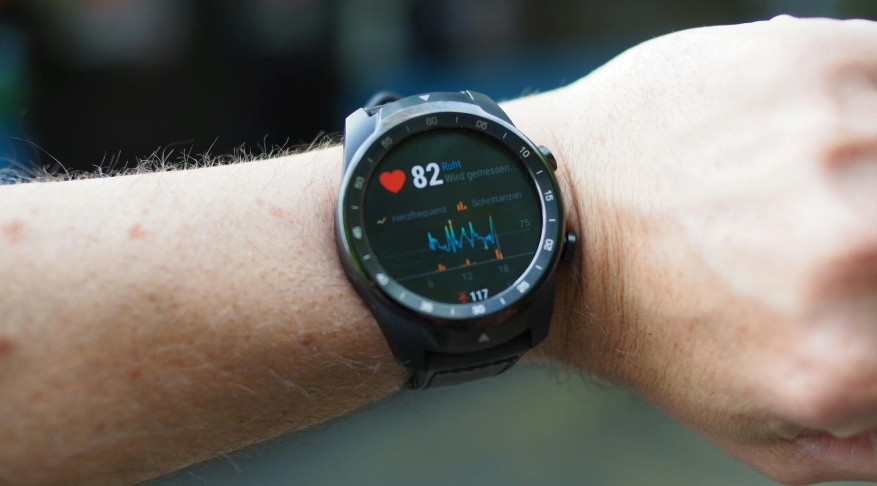
Getting started with a heart rate watch for beginners can seem more complicated than it really is. Many people buy a device to track their physical activity and find themselves facing screens full of numbers, charts and indicators they don't know how to interpret. In reality, you don't need to become an expert in physiology or data analysis to get real benefits.
A modern heart rate monitor can become a useful tool for understanding your body better, managing workout intensity and monitoring recovery. The goal is not to collect information, but to learn to recognize a few simple signals that help you exercise with greater awareness.
- Why monitor your heart rate
- How a heart rate watch works
- Heart rate zones explained simply
- The metrics that really matter
- A practical usage example
- Useful tools to get started
- How to avoid the most common mistakes
Why monitor your heart rate during training
Your heart rate is the number of times your heart beats per minute. During physical activity this value rises because your body needs to deliver more oxygen to your muscles. Monitoring this parameter helps you understand whether you are working at an appropriate intensity for your goals and your fitness level.
For a beginner, the main advantage is avoiding both workouts that are too easy and sessions that are excessively demanding. Many people rely only on how they feel, but an objective data point can help you maintain a more consistent and sustainable effort over time. This approach helps reduce anxiety and builds confidence in your progress.
How a heart rate watch works
What data it actually collects
Most heart rate watches use optical sensors placed on the wrist. These sensors detect changes in blood flow and estimate your beats per minute throughout the day or during a workout. The result is shown in real time on simple screens that are easy to check.
Besides instant heart rate, many devices show information such as average heart rate, time spent in each intensity zone and recovery trends. If you are just starting out, you don't need to analyze everything. Focusing on a few essential indicators lets you get real benefits without feeling overwhelmed by data.
Heart rate watch vs. chest strap: main differences
A heart rate watch offers convenience and ease of use. Just put it on and start your activity to immediately access the main information. This solution is ideal for anyone who wants to track their workout without technical complications.
A chest strap, on the other hand, is worn around the chest and tends to provide very accurate measurements, especially during intense activities. For a beginner, the choice depends on personal preference. In most cases, a good heart rate watch is more than adequate as a starting point.
Heart rate zones explained simply
Light zone
The light zone corresponds to low effort. In this range you can talk comfortably and your breathing stays under control. It is an ideal condition for walks, recovery sessions and first cardiovascular training experiences.
Many beginners spend most of their sessions in this zone. Don't see it as a limitation. Building a solid aerobic base is one of the most important steps to gradually improve your fitness.
Moderate zone
The moderate zone is the one most used during workouts focused on general wellness. Breathing becomes more demanding, but you can still hold a conversation in short sentences. This range builds endurance and improves cardiovascular efficiency.
For those getting back into running or looking to increase their activity level, this is often the reference zone. A heart rate watch helps you stay in it with greater precision than relying on feelings alone.
Intense zone
When your heart rate rises further, you enter the more demanding zones. Here breathing is fast and talking becomes difficult. These intensity levels are generally used in specific or interval-based training.
A beginner doesn't need to worry about spending much time in this range. In the early stages, it is more useful to learn to control your pace rather than chasing high numbers.
The metrics that really matter for beginners
Average heart rate
Average heart rate gives you an overview of the entire session. It is one of the simplest data points to interpret because it shows the overall intensity of your workout.
By comparing this value across similar sessions, you can notice small improvements over time. Better cardiovascular efficiency can translate into lower perceived effort for the same activity.
Maximum heart rate
Maximum heart rate is the highest value reached during a workout. For a newcomer, it should not become a number to chase, but a simple reference to understand how hard you worked.
When interpreted correctly, this information helps you avoid overdoing it and build a gradual path. Consistency remains much more important than occasionally hitting high peaks.
Heart rate recovery
Heart rate recovery indicates how quickly your heart returns to lower values after effort. Many devices automatically show this data at the end of the session.
A progressively faster recovery can be a positive sign of your body adapting to training. For this reason, it is a useful and easy-to-understand metric, even for those with no experience.
A practical example during a session
Brisk walk
Let's imagine a thirty-minute walk. After the first few minutes of warm-up, you only need to glance at the watch occasionally to check that you stay in the light or moderate zone. If your heart rate climbs too quickly, you can slightly reduce your pace.
At the end of the session, it is useful to look at your average heart rate and heart rate recovery. A few seconds are enough to get valuable information without having to interpret complex charts.
Easy run
During a slow run, the heart rate monitor helps you avoid the common mistake of starting too fast. Many beginners discover that by slowing down a little, they can keep moving for longer and with greater comfort.
After a few weeks, you can compare sessions and notice how, at the same pace, your heart works more efficiently. This kind of feedback boosts motivation and makes your progress more visible.
Useful tools to track your progress
To get started you don't need a complex setup. A reliable heart rate watch is already a complete solution for tracking activity, heart rate and recovery. Some users later choose to add a chest strap when they want even more precise measurements.
The best choice is the one that encourages consistent use. A device that is easy to wear and check gets used more regularly and produces more useful results in the long run.
How to avoid the most common mistakes
The most frequent mistake is focusing on every single piece of available data. Too much information can create confusion and reduce motivation. For this reason, it is advisable to start by only looking at heart rate, overall intensity and recovery.
Another common mistake is comparing your numbers with those of other people. Everyone has different characteristics and responds to training in their own way. Using your heart rate watch as a way to compare yourself with your past self, rather than with others, makes the experience more useful, relaxed and sustainable over time.
Comments (0)