
Trolley
You have no items in your shopping cart

 Budgets
 Dumbers
 Discs
Discs
 Benches
 Racks and Rigs
 Weights Holders
 Isotonic machines
 Calisthenics
 Cardio
 Kettlebells
 Flooring
 Gym Set
 Accessories
 Combat
 ARTI MARZIALI
 CONTAINER GYM
 Tug-Of-War
 Used Gym Equipment
 PILATES MACCHINARI
 GINNASTICA ARTISTICA
 CAMPI DA PADEL
 Prodotti in Pronta Consegna
 Informazioni
 IRONMAN
 Gift Card
- Donatif
- General information
- 0 I like it
- 553 Views
- 0 comments
- gym flooring, safety flooring, gym safety, shock-absorbing materials
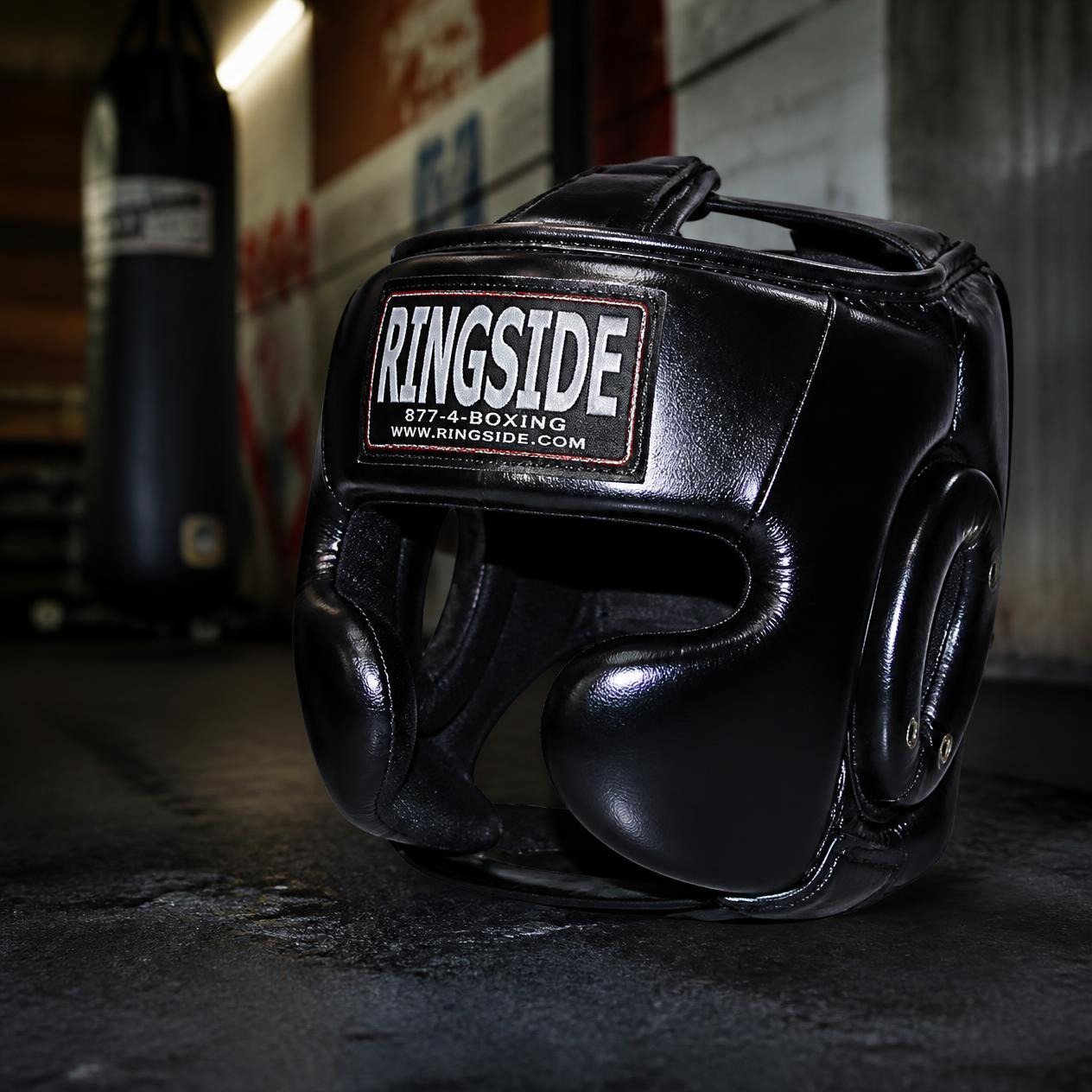
Boxing Headgear with Bar vs. Open-Face Headgear: Which Protects Better?
During sparring, head protection is one of the most important aspects for ensuring safe, continuous, and productive training. Choosing the right headgear does not only influence the reduction of the risk of cuts or bruises, but also the quality of the session, the athlete's confidence, and the ability to train consistently without having to interrupt preparation due to minor injuries. For this reason, many practitioners wonder what the best boxing protection headgear is and whether a model with a bar or a traditional open-face headgear is preferable.
Both solutions present specific advantages and are used by beginners, competitors, and instructors depending on the type of training. The headgear with a bar offers superior protection for the central area of the face, while the open model guarantees a wider field of view and greater freedom of movement. Understanding the differences allows you to choose the device most suitable for your technical level, the discipline practiced, and the intensity of the sparring.
In this guide, we analyze in detail the structure, materials, protective capacity, comfort, and intended use of the main types of headgear for boxing and combat sports, helping fighters, coaches, and gym owners to make a truly informed choice.
- Why headgear is fundamental in sparring
- Characteristics of the headgear with a bar
- Advantages of open-face headgear
- Comparison between bar and open models
- Headgear for MMA and contact disciplines
- How to choose the right model
- Cleaning and maintenance
- Why invest in quality headgear
Why headgear is fundamental in sparring
Sparring aims to simulate combat while maintaining a level of control sufficient to allow for continuous technical improvement. Even when athletes work with moderate intensity, accidental blows to the face, forehead, or cheekbones can occur. A properly designed headgear helps absorb part of the impact energy, reducing the risk of superficial cuts, bruises, and swelling.
It is important to remember that no headgear completely eliminates the risk of head trauma or concussion. Its main role consists of protecting the external structures of the face and limiting the consequences of superficial impacts, allowing athletes to train with greater continuity.
For this reason, instructors and trainers always recommend using adequate headgear during sparring sessions, especially when intensity, frequency, and the level of opponents increase.
Reducing the risk of injury
Good padding protects the forehead, temples, cheekbones, and part of the chin, helping to limit the damage caused by accidental impacts.
Training more often
Reducing minor injuries means being able to follow consistent training programs without having to suspend sessions for prolonged periods.
The characteristics of the headgear with a bar
The boxing headgear with a bar is recognizable by the metal or composite structure that protects the central part of the face. The bar creates a distance between the face and the point of impact, limiting the risk of direct blows to the nose and distributing part of the force onto the structure of the headgear.
This type of protection is particularly appreciated by athletes who face intense sparring sessions or are recovering from previous facial trauma. The presence of the bar also reduces the probability of cuts in the nasal and cheekbone area.
However, the increased protection entails a slight increase in weight and a reduction in visibility at very close range, an aspect that requires a short period of adaptation.
Nose protection
The front bar constitutes an effective boxing nose protection system, particularly useful during close-range exchanges and matches with very aggressive opponents.
When to choose it
It is indicated for high-intensity sparring, competitive preparation, and athletes who wish to reduce the risk of facial injuries.
The advantages of open-face headgear
Open-face headgear represents the traditional model used in most boxing gyms. The absence of the bar guarantees a very wide field of view and allows you to perceive distance, movements, and strike trajectories with greater precision.
This characteristic makes it particularly appreciated by experienced athletes who wish to develop timing, reflexes, and defensive skills without visual obstacles. Furthermore, the generally lower weight improves comfort and mobility during long training sessions.
While offering excellent protection for the forehead, temples, and the side of the face, it leaves the nose more exposed compared to models with a bar.
Superior field of view
A wider view facilitates reading the opponent, managing distances, and speed in dodging.
Comfort during sparring
The low weight makes the headgear pleasant even during prolonged and high-intensity training.
Comparison between headgear with a bar and open-face
The choice does not depend exclusively on the level of protection. The headgear with a bar prioritizes facial safety, while the open-face one favors technical performance, speed, and natural movement.
Those who train frequently with high-level opponents or wish to limit the risk of aesthetic injuries can lean towards the model with a bar. Those who instead focus primarily on the development of defensive skills often prefer open-face headgear.
Both solutions can offer excellent results if made with quality materials, high-density padding, and stable adjustment systems.
Level of safety
The bar increases facial protection, while the open model guarantees greater visual freedom.
Technical performance
The ideal choice depends on the type of training and the specific goals of the athlete.
Headgear for MMA and contact disciplines
In mixed martial arts, specific models are used that take into account the presence of clinching, wrestling, and ground work. The best MMA headgear must offer effective protection without hindering rapid movements, grips, and transitions.
Headgear intended for MMA is generally more compact compared to boxing models and features a structure designed to limit shifting during grappling phases.
In this case as well, the quality of the padding, ergonomics, and stability of the closure represent fundamental elements for ensuring comfort and safety.
Compatibility with grappling
A compact structure avoids interference during clinches, takedowns, and ground work.
Stable fit
Headgear that stays in place during movements protects better and improves the athlete's concentration.
How to choose the most suitable headgear
Before purchasing, it is appropriate to evaluate the frequency of training, the discipline practiced, and the level of experience. A beginner may prefer greater protection, while a competitor might prioritize visibility and mobility.
It is necessary to verify the quality of the stitching, the density of the padding, the resistance of the materials, and the adjustment system. Well-designed headgear distributes pressure evenly without creating uncomfortable pressure points.
To compare models dedicated to sparring and combat sports, you can consult the selection of boxing protection headgear available in the Donatif catalog.
Choosing the correct size
Headgear that is too loose tends to move during strikes, while one that is excessively tight reduces comfort and concentration.
Quality materials
Resistant linings and high-density foams contribute to ensuring high performance even after numerous training sessions.
Cleaning and maintenance
Proper maintenance prolongs the life of the headgear and maintains high hygienic standards. After every training session, it is advisable to dry the headgear completely and clean the surfaces with mild products.
The padding must be checked periodically to verify the absence of permanent deformations that could compromise the ability to absorb impacts.
Laces, Velcro, and adjustment systems also deserve regular checks, as headgear that is not perfectly stable loses part of its protective effectiveness.
Constant cleaning
Regular maintenance reduces the formation of bad odors and preserves materials and linings.
Check the condition of the headgear
Replacing a worn-out device is a fundamental choice for maintaining a high level of safety during every session.
Why invest in quality headgear
Headgear designed with premium materials offers greater comfort, better impact distribution, and superior durability compared to cheap products. For those who train regularly, it represents an investment that helps reduce interruptions in preparation and improve the overall quality of sparring.
Coaches and gym owners should also consider headgear as an integral part of the culture of safety, promoting the use of adequate equipment in every training session.
Whether you choose a model with a bar or open-face headgear, the decision should always be based on the type of use, the intensity of the sparring, and the construction quality of the product, favoring reliable solutions capable of accompanying the athlete over the long term.
Comments (0)