
Trolley
You have no items in your shopping cart

 Budgets
 Dumbers
 Discs
Discs
 Benches
 Racks and Rigs
 Weights Holders
 Isotonic machines
 Calisthenics
 Cardio
 Kettlebells
 Flooring
 Gym Set
 Accessories
 Combat
 ARTI MARZIALI
 CONTAINER GYM
 Tug-Of-War
 Used Gym Equipment
 PILATES MACCHINARI
 GINNASTICA ARTISTICA
 CAMPI DA PADEL
 Prodotti in Pronta Consegna
 Informazioni
 IRONMAN
 Gift Card
- Donatif
- General information
- 0 I like it
- 469 Views
- 0 comments
- gym flooring, safety flooring, gym safety, shock-absorbing materials
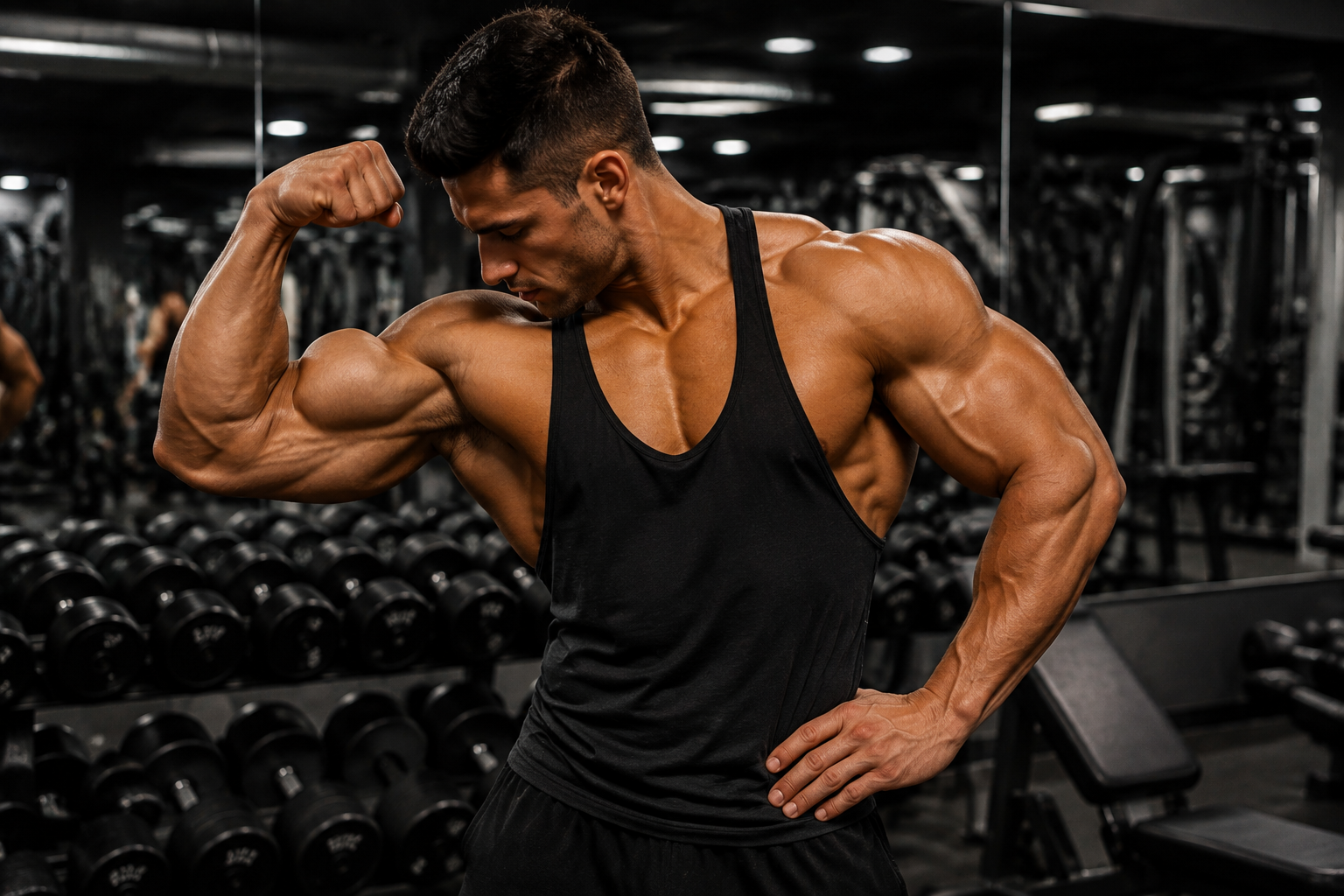
Calisthenics vs Bodybuilding: Which to Choose for Your Physique?
Calisthenics workouts and bodybuilding are often presented as two opposite, almost incompatible disciplines. On one hand, calisthenics is associated with relative strength, body control, and technical skills; on the other, bodybuilding is traditionally considered the gold standard for developing muscle mass and aesthetic definition. In reality, both disciplines share numerous training principles and can be extremely effective tools, depending on personal goals.
Many athletes wonder whether it is better to train in the gym with barbells and machines or to dedicate themselves exclusively to bodyweight exercises. The answer is not universal, because it depends on the result you wish to achieve, the time available, the space to train, and the type of experience you are looking for during each session.
In recent years, a third path has also emerged: hybrid training. More and more practitioners are combining calisthenics exercises and resistance training, achieving a balance between aesthetics, strength, mobility, and functionality. In this guide, we will analyze the advantages, limitations, and differences between bodybuilding and calisthenics to help you choose the path best suited to your needs.
- The main differences
- Aesthetic goals and muscle mass
- Strength and performance
- Functionality and body control
- Hybrid training
- The necessary equipment
- How to choose the right path
- Which investment is worth making
The main differences
The most obvious difference between calisthenics and bodybuilding concerns the way overload is applied. In bodybuilding, the load is managed mainly through barbells, dumbbells, and machines, while calisthenics uses body weight as the primary resistance, potentially integrating it with weights in the more advanced phases.
The goal of the training also changes. Bodybuilding focuses primarily on the development of muscle mass and aesthetic symmetry, while calisthenics simultaneously seeks relative strength, coordination, mobility, and the ability to control the body in space.
These differences do not make one discipline superior to the other, but simply more suitable for certain goals and personal preferences.
Training approach
Bodybuilding allows for very precise management of loads and muscle isolation, while calisthenics favors multi-joint movements that involve numerous muscle groups simultaneously.
Different goals
Those who are looking exclusively for maximum muscle development might prefer bodybuilding, while those who wish to combine strength, control, and technical skills might lean towards calisthenics.
Aesthetic goals and muscle mass
One of the most widespread clichés claims that calisthenics does not allow for building muscle mass. In reality, growth depends above all on the principle of progressive overload, which can also be applied through bodyweight work.
Calisthenics muscle mass can be developed effectively thanks to exercises like pull-ups, dips, push-ups, and squats, especially if integrated with weights as the strength level increases.
Bodybuilding, however, remains particularly effective for isolating specific muscle groups and maximizing the training volume dedicated to hypertrophy.
Building muscle
Both disciplines allow for increasing muscle mass if load progression, adequate nutrition, and sufficient recovery are respected.
Two different physiques?
Many high-level athletes demonstrate that it is possible to develop an extremely muscular physique even through calisthenics, especially in weighted variations.
Strength and performance
The concept of strength takes on different meanings in the two disciplines. In bodybuilding, the goal is often to increase the load moved while maintaining high muscle quality, while in calisthenics, strength is expressed through the control of one's own body weight.
Skills like the Front Lever, Planche, Muscle-Up, and Human Flag require a combination of strength, balance, and coordination that is difficult to replicate with traditional gym exercises.
Both approaches develop high levels of strength, but in different ways and with specific adaptations to the demands of the discipline.
Relative strength
Calisthenics emphasizes the relationship between strength and body weight, improving the ability to control the body during complex movements.
Absolute strength
Bodybuilding allows for progressively increasing external loads, facilitating very precise management of the training stimulus.
Functionality and body control
One of the main strengths of calisthenics concerns the development of motor control. Each exercise involves numerous joints and requires constant activation of the stabilizing musculature.
This characteristic improves balance, coordination, and awareness of movement, making calisthenics particularly interesting even for those who practice other sports.
Bodybuilding can still integrate very effective multi-joint exercises, especially when free movements are prioritized over guided machines alone.
Core and stability
Bodyweight exercises require continuous activation of the core, promoting better posture control during every movement.
Joint mobility
Calisthenics progressions often encourage the maintenance of good mobility, an important element for correctly performing advanced skills.
Hybrid training: the best of both
In recent years, more and more athletes have chosen not to limit themselves to a single methodology. Hybrid training combines the advantages of bodybuilding with those of calisthenics, creating complete programs oriented towards both strength and aesthetics.
A hybrid program can include fundamental bodyweight exercises, weighted work, and complementary exercises with barbells or dumbbells to develop all muscle groups in a balanced way.
This approach allows for simultaneously improving hypertrophy, relative strength, mobility, and motor control, easily adapting to the goals of most enthusiasts.
Why it works
Integrating the two disciplines allows you to exploit the strengths of both, avoiding many of the limitations typical of an exclusively specialized approach.
How to organize workouts
Alternating sessions dedicated to skills with sessions oriented towards hypertrophy represents an effective strategy for developing a complete and high-performing physique.
The necessary equipment
The choice of equipment depends on the type of training you wish to perform. A pull-up bar, parallel bars, and rings represent the ideal base for calisthenics, while barbells, dumbbells, and plates allow for more precise load management in bodybuilding.
Those who choose a hybrid approach can benefit from modular structures capable of supporting both methodologies, optimizing the space available in their home gym.
A modular home gym structure allows you to perform pull-ups, dips, squats, barbell exercises, and numerous other variations without having to create two separate training areas.
Why choose a modular structure
A versatile solution allows you to adapt your home gym to the evolution of your goals, integrating new accessories without replacing existing equipment.
Thinking about the future
Investing in expandable products allows you to gradually build a complete home gym while maintaining high quality and maximum flexibility.
How to choose the right path
The choice between calisthenics or the gym depends mainly on your priorities. Those who want to learn spectacular skills, improve body control, and train with essential equipment will find calisthenics an extremely stimulating path.
Those who instead want to focus primarily on the development of muscle mass through precise load control might prefer traditional bodybuilding.
In most cases, however, there is no definitive choice: goals can evolve over time and the training program can be modified accordingly.
For beginners
Both disciplines are accessible to beginners if approached with adequate progressions and correct technique from the very first sessions.
Adapting the path
Training should always follow your personal needs, without feeling obligated to choose only one philosophy for your entire sporting life.
Which investment is worth making
Calisthenics and bodybuilding do not represent two incompatible worlds, but different tools for achieving specific results. Both allow you to develop strength, improve body composition, and build an athletic physique if programmed with method and consistency.
The evolution of modern training is showing that the figure of the hybrid athlete is increasingly widespread: combining bodyweight exercises, resistance training, and technical progressions allows you to achieve an excellent balance between aesthetics, functionality, and performance.
Investing in modular, high-quality equipment offers the maximum freedom to adapt your program over time, allowing you to experiment with both disciplines and build a home gym capable of accompanying any evolution in your training journey.
Comments (0)