
Trolley
You have no items in your shopping cart

 Budgets
 Dumbers
 Discs
Discs
 Benches
 Racks and Rigs
 Weights Holders
 Isotonic machines
 Calisthenics
 Cardio
 Kettlebells
 Flooring
 Gym Set
 Accessories
 Combat
 ARTI MARZIALI
 CONTAINER GYM
 Tug-Of-War
 Used Gym Equipment
 PILATES MACCHINARI
 GINNASTICA ARTISTICA
 CAMPI DA PADEL
 Prodotti in Pronta Consegna
 Informazioni
 IRONMAN
 Gift Card
- Donatif
- General information
- 0 I like it
- 766 Views
- 0 comments
- gym flooring, safety flooring, gym safety, shock-absorbing materials
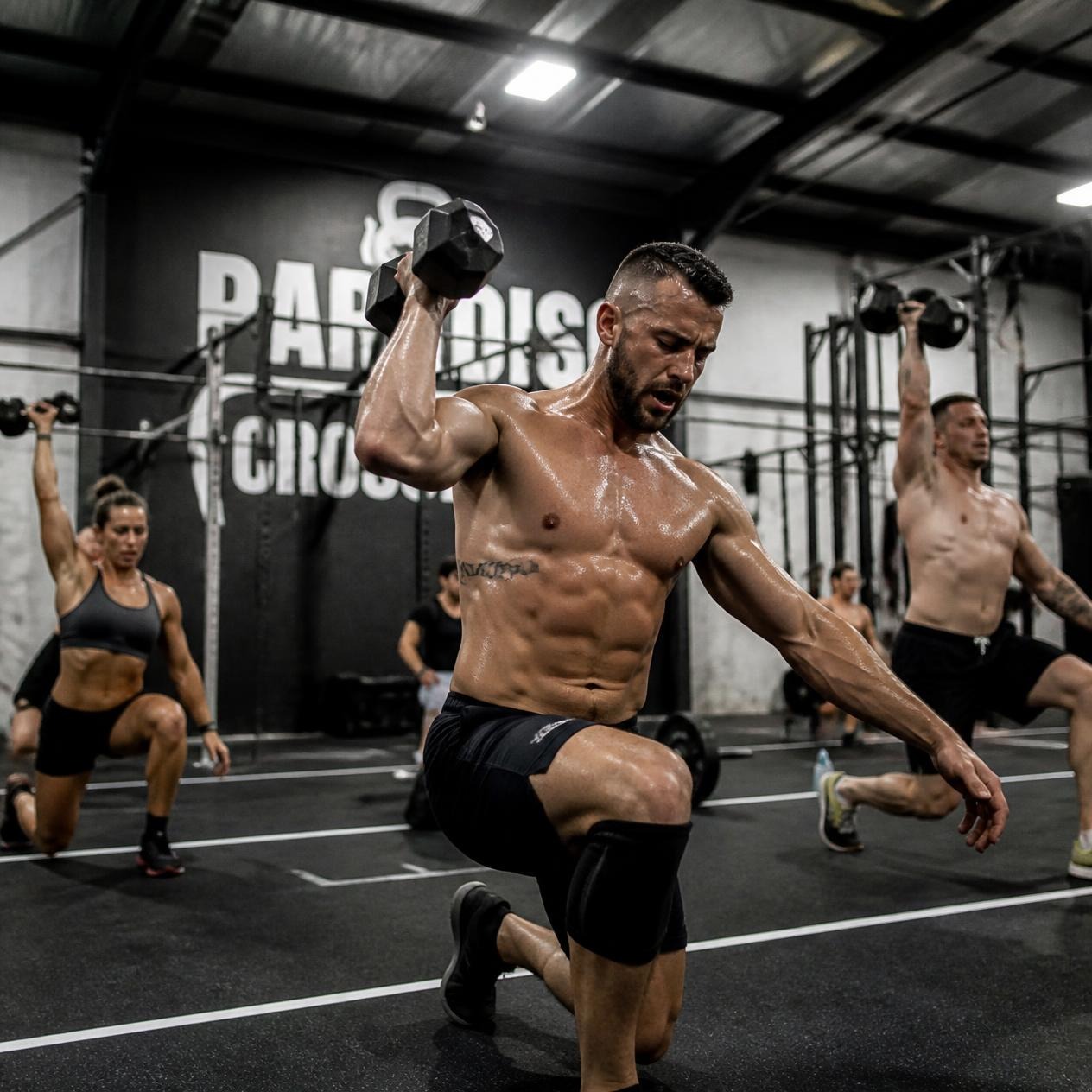
Calisthenics vs CrossFit: Which to Choose for Your Home Gym?
When the time comes to set up a home gym, one of the most frequent questions concerns the comparison between calisthenics vs CrossFit. Both disciplines allow you to improve strength, coordination, body composition, and athletic ability, but they do so through different approaches, with different needs in terms of space, equipment, and financial investment.
Many enthusiasts face a concrete dilemma: invest in a structure dedicated to calisthenics or build a CrossFit-oriented home gym? The answer does not depend on which discipline is better in absolute terms, but on personal goals, available budget, and the possibility of evolving your equipment over time.
In this guide, we will analyze the main differences, compare costs, benefits, necessary space, and type of training, also highlighting how a modular structure can represent the ideal solution for those who wish to keep both possibilities open without having to choose definitively from the start.
- How the two disciplines work
- The main differences
- Space and necessary equipment
- Training benefits
- Cost comparison
- The ideal hybrid setup
- How to choose based on your goals
- Which investment is worthwhile in the long term
How the two disciplines work
Calisthenics is a discipline based primarily on body control in space. Exercises mainly use body weight and are progressively made more complex through variations, biomechanical levers, and the development of relative strength. Skills like muscle-ups, front levers, planches, and handstands represent some of the most sought-after goals.
CrossFit, on the other hand, was born as a functional training methodology that combines gymnastics exercises, Olympic weightlifting, and high-intensity metabolic work. Sessions, often called WODs (Workout of the Day), alternate different movements with the goal of developing complete physical capabilities.
Both approaches share many fundamental exercises, but differ in training philosophy and priorities. Calisthenics favors motor control and relative strength, while CrossFit focuses on variety and the simultaneous improvement of numerous athletic capabilities.
What is calisthenics
Training focuses on bodyweight movements, technical progressions, and strength development through the control of one's own body weight.
What is CrossFit
Programming integrates weightlifting, gymnastic exercises, and cardiovascular work into intense and highly varied workouts.
The difference between calisthenics and CrossFit
The main difference concerns the way strength is developed. In calisthenics, the main load coincides with body weight, while in CrossFit, barbells, kettlebells, dumbbells, and other external loads are frequently used.
Goals also change. Those who practice calisthenics often seek the execution of advanced skills, the improvement of technique, and body control. In CrossFit, however, the priority is overall performance, measured through times, repetitions, and the ability to sustain high levels of intensity.
From a programming point of view, calisthenics tends to have more linear and technical progressions, while CrossFit introduces a greater variety of stimuli during the week.
Relative strength or absolute strength
Calisthenics mainly develops the ability to manage one's own body, while CrossFit devotes more space to the production of strength through external loads.
Technique and intensity
Both disciplines require precision, but calisthenics generally devotes more time to learning technical progressions.
Space and necessary equipment
One of the most important aspects in designing a home gym concerns the available space. Those who have a garage or a dedicated room must carefully evaluate the type of equipment needed and the possibility of expanding the setup over time.
A calisthenics-oriented station generally requires a structure with a pull-up bar, parallel bars, rings, and some accessories. CrossFit also requires an Olympic barbell, plates, a rack, technical flooring, and additional free space for dynamic movements.
Fortunately, today there are modular solutions that allow you to integrate both disciplines within the same structure, avoiding having to choose a single direction from the beginning.
Equipment for calisthenics
A stable bar, parallel bars, gymnastic rings, and some accessories are enough to tackle most progressions.
The CrossFit home equipment
Olympic barbell, rack, plates, kettlebells, plyometric box, and ropes represent some of the most used tools in a CrossFit-oriented home gym.
What benefits each discipline offers
Both approaches improve strength, body composition, and coordination, but emphasize different aspects of physical preparation.
Calisthenics develops high motor control, mobility, joint stability, and relative strength. CrossFit, on the other hand, offers an extremely complete workout, combining cardiovascular endurance, strength, power, and metabolic capacity.
From the point of view of general health, both disciplines can produce excellent results if practiced with adequate programming and correct technique.
Why choose calisthenics
Those who love to gradually improve technique and master complex movements will find calisthenics an extremely stimulating path.
The functional training benefits
CrossFit allows you to simultaneously develop numerous athletic qualities while maintaining high variety in workouts.
Cost comparison
Budget often represents the deciding factor in choosing a home gym. An essential station for calisthenics can be created with a relatively modest initial investment, expanding it progressively with new accessories.
A complete home gym for CrossFit generally requires a higher investment due to the presence of barbells, bumper plates, professional racks, and additional dedicated equipment.
However, it is important to evaluate the overall cost in the long term. Purchasing a modular structure allows you to avoid future replacements and adapt the gym to your goals without starting from scratch.
Evaluate the available budget
Buying only what you really need allows you to distribute the investment over time while maintaining high quality.
Think about future expansion
A structure prepared for new accessories protects the investment and increases the flexibility of the home gym.
The ideal hybrid setup
Many users discover over time that they appreciate both calisthenics and CrossFit. In these cases, a hybrid solution often represents the smartest choice.
A modular power rack allows you to install pull-up bars, barbell supports, gymnastic rings, and numerous accessories, creating an environment capable of hosting both disciplines without compromise.
This solution allows you to alternate skill-oriented workouts with traditional strength sessions, adapting the program to the goals of the moment.
The advantage of modularity
An expandable structure avoids duplicate purchases and makes it possible to modify the gym configuration by following the evolution of your training.
Training without limitations
Integrating bodyweight and weightlifting allows you to build extremely complete programs while maintaining optimal use of space.
How to choose based on your goals
Those who wish to master spectacular skills, improve body control, and train mainly with body weight will find calisthenics the most consistent solution.
Those who love highly varied workouts, competitions, barbell exercises, and high intensity might prefer CrossFit.
For many enthusiasts, however, the best choice consists of not giving up either possibility, designing a home gym that can evolve along with their interests.
Define priorities
Before purchasing equipment, it is useful to clarify which physical capabilities you wish to develop in the coming years.
Leave multiple possibilities open
A versatile structure allows you to easily modify the program without having to replace the entire home gym.
Which investment is worthwhile in the long term
The calisthenics vs CrossFit comparison should not turn into a competition between disciplines. Both offer concrete advantages and can contribute to building complete physical preparation. The choice depends mainly on personal goals, available time, and the type of training you wish to practice with greater consistency.
For those with limited budget and space, investing in a modular structure for a home gym often represents the smartest solution. An evolutionary power rack allows you to integrate bars, barbells, gymnastic rings, and numerous accessories, offering maximum flexibility without forcing you to choose definitively between one discipline and the other.
A home gym designed with modularity criteria allows you to start with the equipment you really need, progressively expand the setup, and adapt workouts to your athletic evolution. In this way, the investment maintains value over time and accompanies every phase of the journey, regardless of the direction your passion for fitness will take.
Comments (0)