
Trolley
You have no items in your shopping cart

 Budgets
 Dumbers
 Discs
Discs
 Benches
 Racks and Rigs
 Weights Holders
 Isotonic machines
 Calisthenics
 Cardio
 Kettlebells
 Flooring
 Gym Set
 Accessories
 Combat
 ARTI MARZIALI
 CONTAINER GYM
 Tug-Of-War
 Used Gym Equipment
 PILATES MACCHINARI
 GINNASTICA ARTISTICA
 CAMPI DA PADEL
 Prodotti in Pronta Consegna
 Informazioni
 IRONMAN
 Gift Card
- Donatif
- General information
- 0 I like it
- 634 Views
- 0 comments
- gym flooring, safety flooring, gym safety, shock-absorbing materials
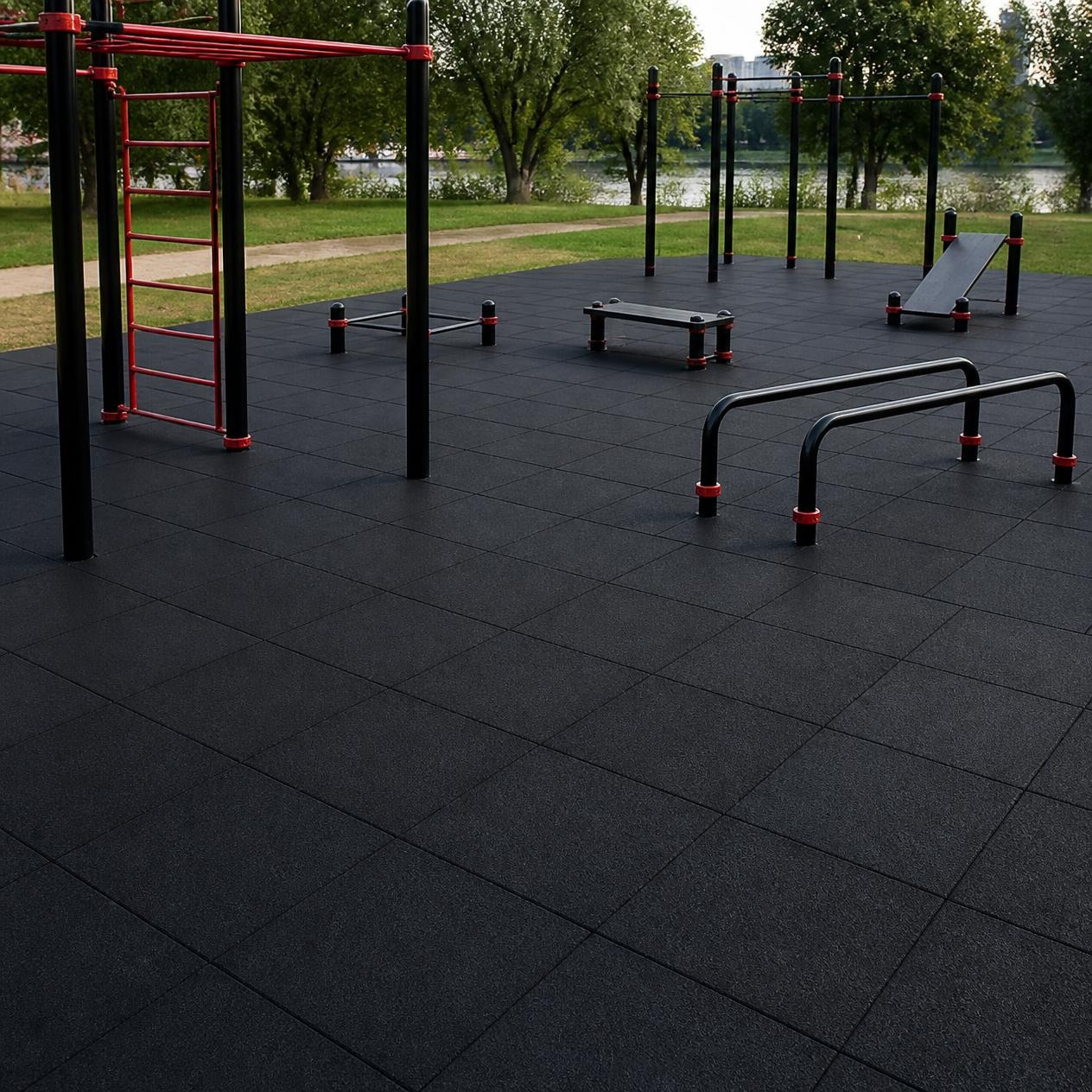
Rubber Flooring for Calisthenics: Safety, Grip, and Performance
Choosing calisthenics rubber flooring is one of the most underrated aspects when designing a gym, a home gym, or an area dedicated to calisthenics. Many practitioners invest in professional bars, parallels, and high-quality racks, but continue to train on unsuitable surfaces, compromising safety, stability, and the quality of technical execution.
Technical flooring is not just for cushioning potential falls. It directly influences grip during handstands, stability in static skills, joint protection, and even the longevity of the equipment. A properly designed surface improves the athlete's confidence and allows them to focus exclusively on executing the movement.
In this guide, we will analyze the characteristics of professional calisthenics flooring, the differences compared to common domestic surfaces, recommended thicknesses, the best materials, and all the aspects to evaluate before purchasing to create a truly safe and high-performance training space.
- Why the floor is fundamental
- Safety during training
- Grip and stability in skills
- How to choose the correct thickness
- Materials and rubber quality
- Installation and maintenance
- How to choose the ideal flooring
- An investment that improves every workout
Why the floor is an essential part of training
Every exercise performed in calisthenics starts from the contact between the body and the ground. During a handstand, a planche, a handstand push-up, or a simple mobility exercise, hands and feet continuously transmit force to the surface below. If this does not offer sufficient stability, the entire kinetic chain is affected.
Inadequate flooring can cause micro-slips, instability, loss of balance, and increased muscle fatigue. The athlete is forced to continuously compensate for these variations, reducing the quality of execution and increasing the risk of error.
For this reason, flooring must be considered an integral part of the equipment and not just a simple aesthetic element of the environment.
A stable base for every exercise
A homogeneous surface allows for better force distribution and ensures greater precision in technical movements, especially during isometric skills.
Comfort during long workouts
The ability to absorb part of the stress reduces fatigue in joints, wrists, ankles, and knees during prolonged sessions.
Safety and impact protection
One of the main advantages of technical flooring is its ability to attenuate accidental impacts. Although calisthenics prioritizes movement control, even the most experienced athletes can lose their balance while learning new skills.
A rubberized surface reduces the force transmitted to the body in the event of a fall and helps limit the risk of superficial or joint trauma. This aspect is particularly important in areas dedicated to beginners or while learning advanced exercises.
Proper protection also increases the athlete's confidence, fostering a safer and more gradual technical progression.
Protection during falls
High-density materials absorb part of the impact energy without compromising the stability required during training.
Joint protection
Technical flooring helps reduce repetitive loading on wrists, elbows, shoulders, knees, and ankles during bodyweight exercises.
Grip and stability in handstands and skills
One of the most important aspects of professional flooring concerns the level of grip. Proper handstand floor grip allows you to maintain the position with greater safety and reduces the risk of sudden slips.
During a handstand, the contact between the hand and the surface must remain constant. Flooring that is too smooth can compromise control, while an excessively rough surface can increase friction and cause abrasions.
The best surfaces for calisthenics offer the right compromise between grip, comfort, and ease of movement, adapting to both dynamic exercises and isometric holds.
Performance during handstands
A stable surface allows for better weight distribution on the hands and facilitates maintaining balance during handstands.
Explosive movements
In jumps, transitions, and dynamic exercises, the quality of the grip helps improve control, precision, and safety.
Which thickness to choose
The thickness of the flooring depends on the type of intended use, the weight of the installed equipment, and the intensity of the training. There is no universal solution, but it is essential to choose a product designed for sports applications.
For indoor calisthenics, surfaces between 15 and 30 mm are frequently used, while areas with heavy equipment or intended for intensive use may require greater thicknesses.
The choice must also consider the underlying support and the surface's ability to maintain stability without permanent deformation.
Home training
In a home gym, an adequate thickness allows for protecting both the body and the underlying surface, improving the overall comfort of the environment.
Sports centers and gyms
Professional installations require materials designed to support continuous use while maintaining elasticity and resistance.
Materials and construction quality
The best flooring is made with high-density rubber granules or specific compounds designed for sports use. The quality of the raw materials directly influences durability, shock absorption capacity, and wear resistance.
The precision of the workmanship is also important. Perfectly calibrated tiles allow for uniform installation and reduce the formation of gaps or unevenness that could compromise safety.
Those wishing to install indoor safety tiles should prioritize certified products designed specifically for sports environments.
Rubber density
Higher density improves surface stability and increases its durability even in the presence of heavy loads.
Quality certifications
Certified products offer greater guarantees in terms of safety, performance, and consistent quality over time.
Installation and maintenance of the flooring
Correct installation is fundamental to taking advantage of all the floor's features. Even the best material loses effectiveness if installed on an irregular base or without the correct coupling between elements.
Modular surfaces allow for simple installation and facilitate localized replacements in case of wear or damage.
Routine maintenance generally requires only periodic cleaning and checking the condition of the joints, making this type of flooring extremely practical even for professional use.
Importance of installation
A perfectly leveled surface improves stability, comfort, and the durability of the entire facility.
Daily cleaning
Regular maintenance keeps anti-slip properties high and helps preserve the aesthetic appearance of the flooring.
How to choose the most suitable flooring
The choice depends on the type of training, available space, budget, and intensity of use. An athlete who mainly focuses on static skills might prioritize grip, while a commercial gym will also need to consider wear resistance and ease of maintenance.
It is important to evaluate the overall quality of the product and not just the price. Inexpensive but less durable flooring might require early replacement, increasing the total cost of the investment.
The presence of heavy equipment, racks, and multi-function stations also influences the choice of rubber thickness and density.
For the home gym
Those creating a home space should also evaluate the surface's ability to offer valid home gym floor protection, avoiding damage to the subfloor and improving acoustic comfort.
For professional facilities
In commercial structures, it is advisable to opt for certified flooring designed to support intensive use without loss of mechanical characteristics.
Professional flooring enhances every workout
Investing in calisthenics rubber flooring means creating the ideal conditions to train safely, improve movement control, and increase the overall quality of the sports experience. The surface on which hands and feet rest represents the starting point of every exercise and directly influences stability, athlete confidence, and technical precision.
For gyms, fitness centers, and enthusiasts who want to create a high-level home gym, choosing certified, durable materials designed specifically for calisthenics allows for a safer, more comfortable environment capable of supporting technical growth in the long term, while protecting both users and installed equipment.
Comments (0)