
Trolley
You have no items in your shopping cart

 Budgets
 Dumbers
 Discs
 Benches
 Racks and Rigs
 Weights Holders
 Isotonic machines
 Calisthenics
 Cardio
 Kettlebells
 Flooring
 Gym Set
 Accessories
 Combat
 ARTI MARZIALI
 CONTAINER GYM
 Tug-Of-War
 Used Gym Equipment
 PILATES MACCHINARI
 GINNASTICA ARTISTICA
 CAMPI DA PADEL
 Prodotti in Pronta Consegna
 Informazioni
 IRONMAN
 Gift Card
- Donatif
- General information
- 0 I like it
- 75 Views
- 0 comments
- gym flooring, safety flooring, gym safety, shock-absorbing materials
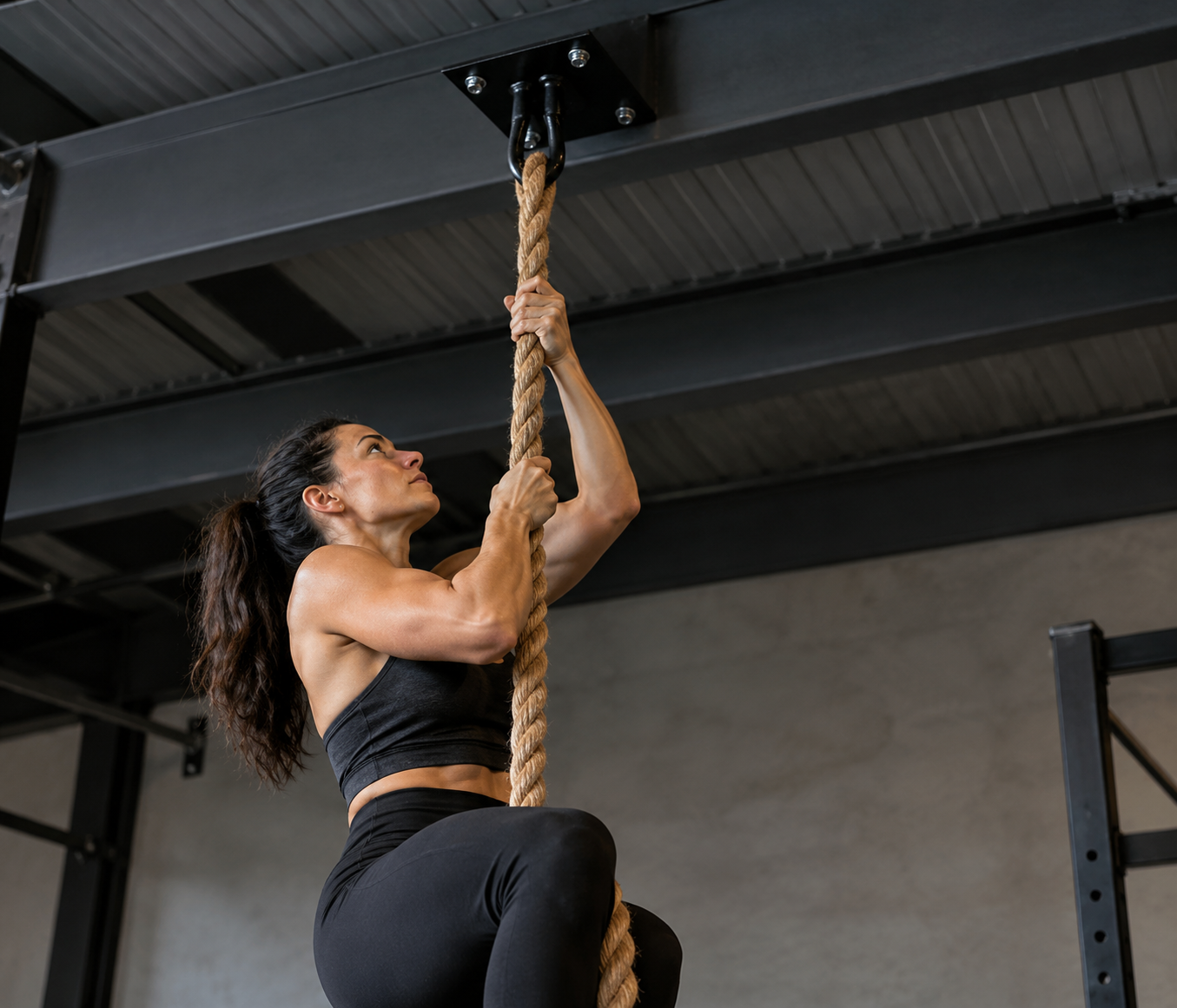
Ceiling-mounted climbing rope: a selection guide for professional gyms
The ceiling-mounted climbing rope is equipment used in professional gyms, athletic training centers, and spaces dedicated to functional training. It allows for the development of grip strength, coordination, and body control skills through exercises that simultaneously engage different muscle groups. For a gym manager or purchasing officer, however, the choice requires attention not only to the characteristics of the rope but also to the support structure and the intended conditions of use.
Unlike equipment that transfers the load directly to the floor, a suspended rope requires an anchoring system capable of withstanding the stresses generated during ascent, descent, and any oscillating movements. The quality of the material, the length of the rope, the top attachment, and compatibility with the structural support are therefore fundamental aspects. A seemingly simple product can require significant technical checks before installation.
This selection guide analyzes the main practical criteria for evaluating a rope intended for professional use. The goal is to help those managing a sports facility define technical requirements, compare equipment features, and organize a purchase consistent with the available spaces, without basing the decision solely on the product's price or appearance.
- Define the intended use of the climbing rope
- Evaluate materials, diameter, and rope characteristics
- Check the ceiling mounting system
- Size the height and training space
- Organize safety during use
- Evaluate durability, inspections, and maintenance
- Select the supplier and verify documentation
- Plan an investment consistent with the gym
Define the intended use of the climbing rope
The first selection criterion concerns the activity that will be performed with the rope. A gym that offers climbing exercises within functional circuits has different needs compared to a center dedicated to preparing expert athletes. Frequency of use, intensity of sessions, and characteristics of the users affect the choice of the rope and the checks necessary for the support system.
The rope can be used for full climbs, partial pull exercises, technical progressions, and conditioning activities. Each mode produces different stresses and requires specific management of the space. Before purchasing the equipment, it is appropriate to define which exercises will actually be permitted, avoiding the assumption that all applications involving a suspended rope are automatically compatible.
For purchasing officers, this analysis allows for the establishment of verifiable minimum requirements. A rope intended for a professional environment must be accompanied by clear indications of the intended use and the limits declared by the manufacturer. Compatibility with the gym's project must be evaluated before the commercial choice.
Use in functional training
In functional circuits, the rope is often used to develop upper body strength, coordination between upper and lower limbs, and the ability to maintain control during pulling. The equipment must be suitable for repeated sessions and for users with different levels of preparation. It is important to plan educational progressions and verify that the exercises are compatible with the available height and the safety conditions of the area.
Frequency of use and user characteristics
A facility with high member turnover must consider the wear caused by repeated grips, contact with footwear, and handling operations. The weight of the users and the methods of execution also influence the stresses transmitted to the anchor. The definition of the design load should not be based solely on the maximum expected body weight, but on a technical evaluation of the actions actually generated during the permitted exercises.
Evaluate materials, diameter, and rope characteristics
The choice of material constitutes one of the main practical selection criteria. Climbing ropes for gyms can be made of natural or synthetic fibers, characterized by different grip properties, wear behavior, and sensitivity to environmental conditions. The composition must be evaluated together with the construction of the rope and the manufacturer's instructions.
Natural fibers can offer a grip sensation appreciated in traditional training, while some synthetic fibers have different characteristics in terms of moisture absorption and abrasion resistance. It is incorrect to assume that an entire category of materials is always superior to another. Performance depends on the quality of the fibers, the manufacturing, and the declared intended use.
The diameter affects the grip and the difficulty of the exercise. A thicker rope generally requires a wider hand opening, while a thinner rope can change the pressure distribution on the fingers. The choice should consider the gym's audience and the type of training, avoiding using the diameter as the only indicator of load capacity.
Differences between natural and synthetic fibers
Ropes made of natural fibers may require special attention to moisture, residue formation, and storage conditions. Synthetic versions can offer interesting characteristics in certain environments, but behave differently regarding heat, abrasion, and grip surface. It is appropriate to check the actual composition and maintenance instructions, especially when the equipment is used daily by numerous members.
Diameter, weave, and grip quality
Beyond the nominal diameter, it is important to examine the regularity of the weave and the consistency of the surface. A uniform construction helps make the grip along the rope predictable, while irregularities, protruding threads, or deformations can compromise comfort and indicate deterioration. When comparing products, the purchasing officer should request information on the structure of the rope and its compatibility with the intended sports use.
Check the ceiling mounting system
The ceiling anchoring system represents one of the most delicate aspects of the entire project. The presence of a beam, floor slab, or metal element does not automatically guarantee that it is possible to install a climbing rope. It is necessary to verify the structure's ability to withstand the expected actions, considering both the vertical load and any dynamic and lateral components.
The assessment must be carried out by a competent technician, based on the building's characteristics, available documentation, and the specifications of the mounting system. The choice of anchors, plates, eye bolts, or other components cannot be made solely by observing the apparent material of the ceiling. The type of support, geometry, condition of conservation, and installation methods affect overall safety.
It is fundamental to distinguish the declared capacity of the rope from that of the entire installed system. Even a rope with high mechanical characteristics can be unsuitable if connected to an incompatible terminal or an insufficient structural support. The verification must therefore cover all elements that transfer the load from the user's hand to the load-bearing structure.
Verification of the load-bearing structure
Before installation, it is necessary to identify the structural element actually intended to support the equipment. Suspended ceilings, claddings, and non-load-bearing components must not be considered anchor points. A qualified professional can evaluate the condition of the support, design actions, and any necessary interventions. Verification must take into account the specific characteristics of the building and cannot be replaced by generic indications regarding the capacity of a single accessory.
Terminals, connections, and compatibility
The top terminal can include eyelets, metal elements, or connection systems provided by the manufacturer. It is important to verify that each component is compatible with the others and with the intended load directions. Improvised connections, unauthorized knots, or modifications to the terminals can alter the behavior of the equipment. Mounting methods must follow the manufacturer's instructions and the indications of the technician responsible for the installation.
Size the height and training space
A suspended rope requires careful evaluation of the environment in which it will be used. The available height determines the useful length of the rope and influences the difficulty of the exercises, while the surrounding space must allow for controlled movements without interference with other equipment. The design must consider the entire activity area and not just the fixation point.
The nominal length of the rope does not necessarily coincide with the height effectively usable. Terminals, connections, and the configuration of the anchor can reduce the available length. It is therefore advisable to measure the distance between the suspension point and the floor, subsequently verifying the functional length provided by the manufacturer.
For a gym manager, correct sizing also contributes to the organization of user flows. A rope placed near pathways, machines, or training stations can create operational interference. The position should be identified by considering the potential oscillation of the rope, access procedures, and the need to keep the area clear during exercise.
How to determine the appropriate length
The choice of length must start from the actual height of the room and the type of exercise planned. An excessively long rope can accumulate on the floor and require specific management of the terminal part, while insufficient length can limit technical progressions. It is important to avoid cuts or modifications not provided for by the manufacturer, especially when they could compromise the construction of the rope or the finish of the ends.
Free space and interference with other equipment
The area intended for climbing must be separated from areas where other users perform exercises incompatible with the presence of a suspended person. Lateral distances, possible oscillations, and the presence of obstacles must be evaluated. The configuration of the space should be defined through a specific risk assessment, also considering supervision methods and any planned protective measures.
Organize safety during use
The safety of a climbing rope depends on the integration between equipment, installation, and operating procedures. A correctly made rope does not eliminate the risks associated with falls, loss of grip, or improper use. For this reason, the management of the activity must provide for clear rules, adequate supervision, and progressions consistent with the users' capabilities.
The definition of procedures should consider the experience level of the members and the presence of qualified staff. Vertical climbing requires technical skills and physical capabilities that cannot be taken for granted. Before authorizing full exercises, it is appropriate to verify that the user possesses the necessary skills and understands the execution methods provided by the facility.
Another element concerns the surfaces present in the activity area. The choice of any protection systems must derive from an assessment of the risk of falling, the height, and the method of use. A common shock-absorbing floor should not be considered automatically sufficient to protect against a fall from a height. Any mats or specific systems must be designed and selected according to the actual risk.
Operating rules and teaching progressions
An internal procedure can define who is authorized to use the rope, which exercises are permitted, and when the presence of an instructor is required. Progressions can include preparatory gripping and pulling activities before full climbing. It is important to avoid dynamic exercises not provided for by the installation design, as sudden movements and oscillations can significantly change the actions transmitted to the fixation point.
Area control before sessions
Before use, it is appropriate to visually check the rope, the accessible terminal, and the absence of obstacles in the training zone. Obvious signs of deterioration, deformations, or anomalies in the connections should result in the suspension of use until an appropriate verification. Staff should know the conditions that require taking the equipment out of service and the procedures for reporting any problems.
Evaluate durability, inspections, and maintenance
The maintenance of professional fitness equipment helps to preserve the reliability of the investment and reduce the risk of using deteriorated components. A climbing rope is subjected to repeated pulling, friction, and contact with hands, footwear, and surfaces. Deterioration can affect both the rope and the connecting elements.
The frequency of inspections must be defined considering the manufacturer's instructions, the intensity of use, and environmental conditions. A gym with daily sessions may require more frequent checks than a facility that occasionally uses the same equipment. It is not appropriate to establish universal intervals without knowing the product and the related operational context.
Maintenance also includes correct cleaning and storage. Aggressive chemical products, unauthorized treatments, or environmental exposures incompatible with the material can compromise the rope's characteristics. The facility manager should therefore prepare simple instructions for the staff and keep the documentation related to the checks performed.
Visual inspection and wear detection
During inspections, it is important to look for the presence of damaged fibers, localized abrasions, deformations, surface alterations, and anomalies in the terminals. The evaluation must follow the criteria indicated by the manufacturer and, when necessary, involve competent personnel. A rope that shows suspicious signs should not be kept in service just because it continues to support weight during an informal test.
Check logging and replacement
An internal log can record the installation date, product identification, checks performed, anomalies found, and authorized interventions. This documentation facilitates the management of equipment and allows for the reconstruction of operational conditions over time. Replacement must take place according to the manufacturer's criteria or when a technical assessment highlights the need, without waiting for a component to fail.
Select the supplier and verify documentation
The choice of supplier represents an important step for those buying equipment for a professional gym. Beyond price, it is necessary to evaluate the clarity of technical information, the availability of instructions, and the possibility of obtaining clarifications on the intended use. A brief commercial sheet does not always contain all the elements necessary to design the installation correctly.
A purchasing officer should request information on the composition of the rope, diameter, length, terminal characteristics, and declared usage limits. It is also appropriate to check which components are included in the supply and which must be purchased separately. The presence of a mounting accessory in the package does not automatically prove compatibility with the gym's ceiling.
When the rope is placed in an area dedicated to bodyweight or functional training, it may also be useful to compare relevant professional calisthenics equipment for the planned configuration. The goal is to verify the consistency between elements of the training area, without assuming that different structures and accessories are automatically compatible with each other.
Information to request before ordering
Documentation should allow the product to be identified and its conditions of use understood. It is useful to verify any declared load values, specifying whether they refer to the rope, the terminal, or a complete system. Installation methods, permitted environmental conditions, and any limitations must also be clarified. Any declaration of conformity must be evaluated with respect to the provisions actually applicable to the product and its intended use.
Warranty, availability, and commercial terms
Economic comparison must consider the final price, transport, included components, delivery times, and warranty conditions. It is important to check if the supplier offers documentary support and what responsibilities remain with the buyer for design and installation. An apparently cheap proposal may require further purchases or technical interventions that must be budgeted before approval.
Plan an investment consistent with the gym
The choice of a ceiling-mounted climbing rope should be included in an overall economic and technical evaluation. The price of the rope represents only part of the project cost. Structural verification, anchoring system, professional installation, any protection, and maintenance can significantly affect the initial investment and subsequent costs.
To compare alternatives, it is useful to prepare a matrix with mandatory requirements and preferred features. Among the former are compatibility with the intended use, adequate documentation, the possibility of creating a verified anchor, and availability of the necessary space. Among the latter can be grip characteristics, ease of cleaning, and uniformity with other equipment present in the facility. This method allows prioritizing aspects that really affect use.
The evaluation should involve the purchasing officer, the technical staff responsible for structural verification, and the instructors who will supervise the activity. Each figure helps to identify different needs: economic sustainability, installation feasibility, and sports functionality. A preliminary comparison reduces the risk of buying a product that requires unforeseen modifications or cannot be used in the desired conditions.
Calculate the total project cost
The total cost should include the rope, connection components, technical checks, installation, and any protective measures. It is also appropriate to consider inspection activities and the future replacement of wear-prone components. For a reliable comparison, all offers must be evaluated using the same cost scope, clearly distinguishing included from excluded performance.
Define checks before approval
Before confirming the purchase, the manager should verify that the selected product meets sports requirements and that a technically feasible mounting solution exists. The supplier's documentation must be available to those who will design or verify the installation. It is also useful to define in advance who will be responsible for subsequent checks and which procedures will regulate the use of the rope.
Careful planning allows the equipment to be integrated into the gym's programming without introducing organizational criticalities. The ability to use the rope continuously, the clarity of responsibilities, and the preventive management of maintenance represent elements of value that go beyond the initial cost. For a professional facility, the most appropriate investment is one that combines documented technical characteristics, verified installation, and operational sustainability over time.
Comments (0)