
Trolley
You have no items in your shopping cart

 Budgets
 Dumbers
 Discs
Discs
 Benches
 Racks and Rigs
 Weights Holders
 Isotonic machines
 Calisthenics
 Cardio
 Kettlebells
 Flooring
 Gym Set
 Accessories
 Combat
 ARTI MARZIALI
 CONTAINER GYM
 Tug-Of-War
 Used Gym Equipment
 PILATES MACCHINARI
 GINNASTICA ARTISTICA
 CAMPI DA PADEL
 Prodotti in Pronta Consegna
 Informazioni
 IRONMAN
 Gift Card
- Donatif
- General information
- 0 I like it
- 30 Views
- 0 comments
- gym flooring, safety flooring, gym safety, shock-absorbing materials
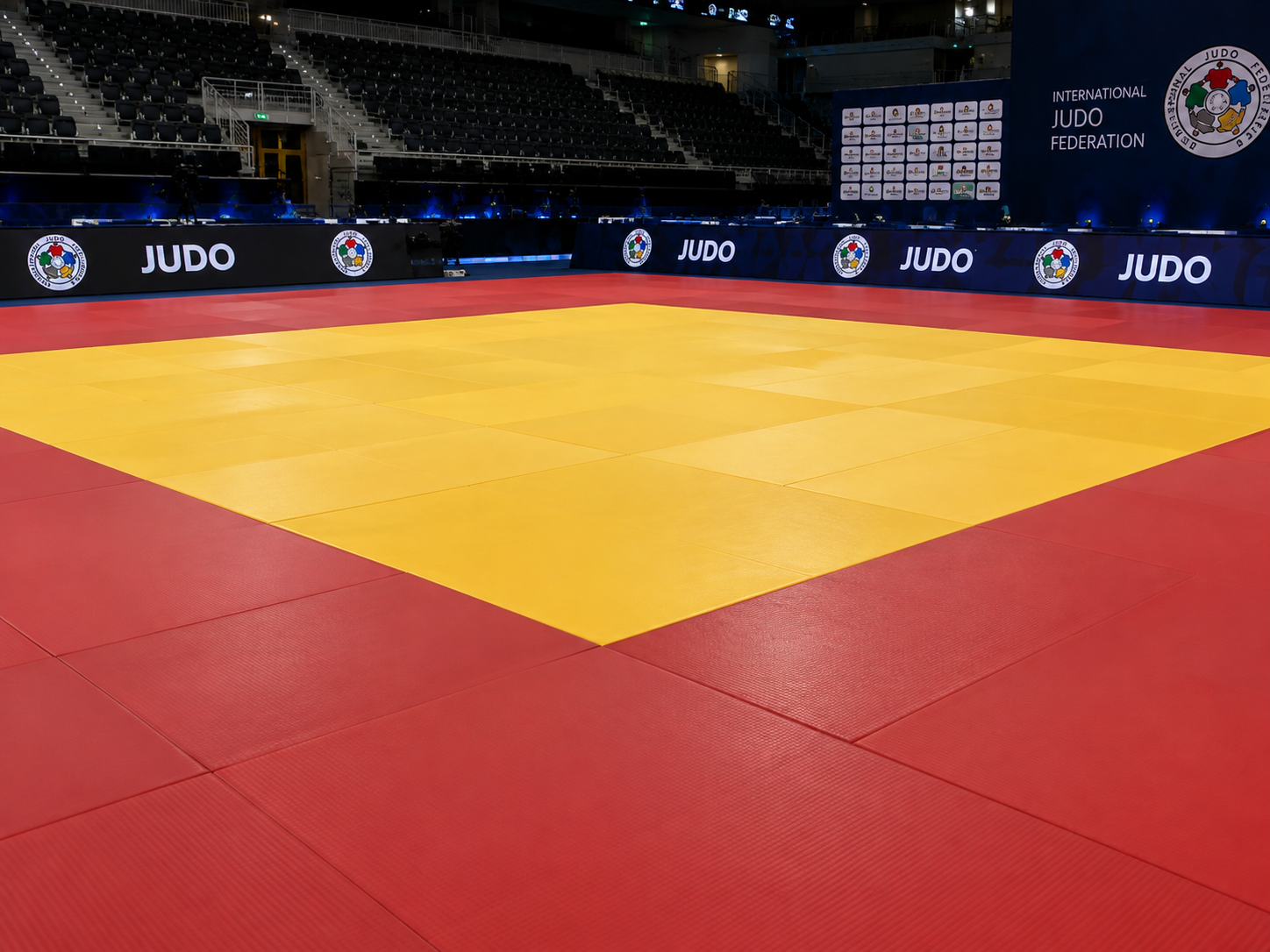
Judo Tatami Maintenance: Professional Cleaning and Disinfection
judo tatami requires scheduled maintenance to preserve the functional characteristics of the flooring over time and ensure an orderly and safe training environment. Cleaning, disinfection, and periodic checks represent complementary activities that should be integrated into a documented procedure for the gym or sports association.
Proper maintenance does not consist solely of removing dirt. It is necessary to check the condition of the modules, joints, edges, and the entire surface, promptly identifying any anomalies before they can affect the daily use of the dojo.
This guide proposes operational criteria for organizing judo tatami maintenance, with particular attention to the planning of interventions, routine cleaning, disinfection, and technical checks, without replacing the specific instructions provided by the flooring manufacturer.
- Quick Answer
- What to check during maintenance?
- What frequencies to adopt?
- How to perform cleaning and disinfection?
- What signs of wear to monitor?
- What preventive actions to adopt?
- FAQ
- Professional maintenance management
How to keep a judo tatami efficient?
The maintenance of a judo tatami should include routine cleaning, disinfection according to the manufacturer's instructions, inspection of joints, verification of module stability, and recording of interventions carried out. Each procedure must comply with the manufacturer's instructions and, where applicable, the requirements set by federal regulations for the use of the surface.
Preventive planning allows to reduce premature wear and quickly identify any anomalies that could compromise the continuity of sports activity.
For professional facilities, it is advisable to set up a maintenance log with dates, checks performed, and interventions carried out.
Objective of maintenance
The main purpose is to maintain the flooring in the conditions provided by the manufacturer throughout its life cycle.
Reference documentation
Installation manuals, maintenance instructions, and technical datasheets represent the main reference for defining operating procedures.
What to check during maintenance?
Each check should include the inspection of the surface, joints, edges, and the possible presence of deformations or damaged elements.
The continuity of the flooring is essential to guarantee uniformity during training and reduce the risk of inconveniences.
thickness and density of the judo tatami are characteristics defined during the selection phase, but their behavior must be monitored over time through regular checks of the surface condition.
Verification of joints
The connections between the modules must be complete, stable, and free from obvious gaps or misalignments.
Edge control
The perimeter elements must be intact and correctly positioned to avoid height differences or critical points.
How often to carry out checks?
The frequency depends on the intensity of use of the facility, the number of practitioners, and the destination of the plant.
Visual checks should precede every use, while in-depth checks can be scheduled according to an internal maintenance plan.
Documenting interventions facilitates activity planning and allows monitoring the evolution of the flooring condition.
Checks before activity
A quick inspection allows identifying any obvious anomalies before the start of classes.
Scheduled maintenance
In-depth checks can be included in a periodic calendar defined by the facility manager.
How to perform cleaning and disinfection?
Operations must be carried out exclusively following the instructions provided by the tatami manufacturer, using products compatible with the flooring material.
Cleaning removes dirt and surface residue while disinfection must be carried out according to the procedures provided in the technical documentation and the facility's organizational protocols.
For a facility dedicated to combat disciplines, it is possible to integrate the flooring with a complete solution of martial arts equipment designed for professional use.
Routine cleaning
Before using any detergent, it is advisable to check compatibility with the material indicated by the manufacturer.
Disinfection
Products and operating methods must comply with the manufacturer's instructions, avoiding substances that could alter the characteristics of the surface.
Which signs of wear require attention?
Surface alterations, permanent deformations, unstable joints, damaged edges, and changes in flooring behavior represent signals that deserve technical verification.
Timely intervention often helps limit deterioration, avoiding the replacement of a high number of modules.
how to choose a judo tatami also affects future maintenance because different products may require specific procedures and control frequencies.
Visible signs
Cuts, deformations, localized wear, and loss of surface continuity must be recorded and evaluated.
Signs during use
Abnormal movements of the modules or changes in the stability of the flooring require an in-depth check.
What preventive actions improve durability?
Preventive maintenance helps reduce the risk of extraordinary interventions and maintain high flooring performance over time.
Documented procedures, staff training, and periodic checks form the basis of professional management.
how to lay and clean the judo tatami must always follow the manufacturer's instructions while how many tatami mats are needed for a dojo must be defined already in the design phase to avoid subsequent configuration changes.
Intervention log
Documenting maintenance, inspections, and replacements facilitates planning future activities.
Operator training
Assigned personnel should know the procedures provided by the manufacturer for cleaning, control, and management of the flooring.
Frequently asked questions
Can all detergents be used?
No. Only products compatible with the material and indicated or approved by the flooring manufacturer must be used.
When to replace a module?
When it shows damage, deformations, or conditions that no longer allow use in compliance with the manufacturer's technical instructions.
Is it useful to record maintenance?
Yes. A log facilitates the monitoring of the flooring and supports the planning of periodic interventions.
Professional maintenance management
Scheduled maintenance is an integral part of managing a professional dojo. In addition to preserving surface quality, it allows planning activities, reducing downtime, and maintaining useful technical documentation throughout the plant's life cycle.
To compare different systems, it is advisable to request maintenance manuals, spare parts availability, installation instructions, and indications regarding compatible products for cleaning and disinfection. These elements also allow evaluating long-term operating costs.
Entrusting the management of the judo tatami to structured procedures, scheduled checks, and updated documentation allows sports associations, dojos, and professional gyms to keep the flooring efficient and consistent with the usage methods provided by the project.
Comments (0)