
Trolley
You have no items in your shopping cart

 Budgets
 Dumbers
 Discs
Discs
 Benches
 Racks and Rigs
 Weights Holders
 Isotonic machines
 Calisthenics
 Cardio
 Kettlebells
 Flooring
 Gym Set
 Accessories
 Combat
 ARTI MARZIALI
 CONTAINER GYM
 Tug-Of-War
 Used Gym Equipment
 PILATES MACCHINARI
 GINNASTICA ARTISTICA
 CAMPI DA PADEL
 Prodotti in Pronta Consegna
 Informazioni
 IRONMAN
 Gift Card
- Donatif
- Training and exercises
- 0 I like it
- 2840 Views
- 0 comments
READING TIME: 5 MINUTES ➤➤
Strengthening Postural Back Muscles for a Stronger, More Stable Back
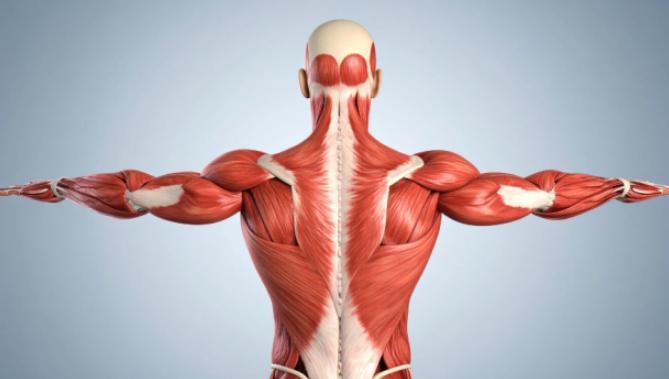
A strong back isn't measured only by the weights you lift or the muscles you see in the mirror. There is an "upper back" that works quietly all day long to keep you upright, stable, and well-aligned: the postural back muscles, which are essential for maintaining an efficient, functional posture. In this article, you'll learn which muscles are involved, how they work, and—most importantly—which practical exercises you can incorporate into your routine, whether at home or in the gym, to make them stronger and more resilient. Good posture isn't just about appearance—it's the visible expression of your body's functional health.
- Why the upper back is essential for good posture
- Understanding the postural muscles of the back
- Effective exercises to strengthen postural back muscles
- Training your back at home or in the gym
- The long-term benefits of postural strength training
Why the Upper Back Is Essential for Good Posture
The Role of the Postural Back Muscles
The postural muscles of the back are the silent workhorses that keep you upright throughout your daily activities, from walking to working at a computer. These muscles—often overlooked in appearance-focused training programs—are fundamental for trunk stability, scapular positioning, and neck alignment. Without sufficient strength and control, the upper back tends to collapse forward, the chest closes, and posture gradually deteriorates, affecting not only movement but also breathing and even mood.
How a Weak Back Affects Everyday Life
Weak or undertrained back muscles often lead to neck pain, shoulder tension, and a constant feeling of fatigue. Over time, poor posture can also reduce athletic performance and negatively impact overall quality of life. Strengthening these muscles, on the other hand, promotes a naturally upright posture, greater confidence in movement, and a more open, self-assured appearance—without requiring conscious effort.
Understanding the Postural Muscles of the Back
The Main Muscles Responsible for Posture
The primary postural muscles of the back include the trapezius (particularly its middle and lower fibers), the rhomboids, the latissimus dorsi, and deeper stabilizing muscles such as the multifidus and the erector spinae. Each plays a unique role in maintaining an upright posture and stabilizing the spine. These muscles never work in isolation—they function together with the abdominal muscles, glutes, and neck muscles to create efficient movement and stability.
Deep vs. Superficial Muscles: Differences and Functions
Deep muscles—such as the transversospinal muscles—are responsible for the fine control of spinal movement. Although they don't generate significant force, they provide stability and motor control. Superficial muscles, such as the latissimus dorsi, are responsible for producing larger movements and greater force. Training both groups together is essential for effective postural strengthening.
Effective Exercises to Strengthen the Postural Back Muscles
Rows: Bodyweight, Dumbbells, or Resistance Bands
The rowing movement is one of the most versatile exercises for strengthening the back. It can be performed with dumbbells, barbells, resistance bands, or even bodyweight using TRX straps or gymnastic rings. The key lies in controlling the movement by pulling the shoulder blades "down and back" while keeping the torso stable. Using a resistance band is particularly suitable for beginners, as it allows gradual progression with controlled resistance.
Horizontal Rows and Their Variations
Horizontal rows (inverted rows) are an excellent alternative for those who cannot yet perform pull-ups. They can be done under a sturdy table, with a low bar, or using TRX straps or rings, adjusting the body angle to increase or decrease the difficulty. These exercises strongly activate the middle trapezius, rhomboids, and scapular stabilizers, directly improving shoulder blade positioning and posture.
Isometric Exercises and Scapular Stabilization
Isometric exercises—such as holding the "Superman" position or performing "Y-T-W" holds—are fundamental for developing neuromuscular control. Rather than focusing on movement, they teach the body how to maintain stable positions. Exercises like scapular activation planks and wall slides are also valuable tools for building endurance and improving postural awareness.
Training Your Back at Home or in the Gym
Adapting Your Training to Your Fitness Level
Everyone starts from a different point. Some people already have an athletic background, while others are completely new to exercise. The important thing is to choose scalable exercises that match your current level of motor control. A resistance band, an exercise mat, and a wall are enough to get started. Those with access to a gym can make use of cable machines, TRX systems, and dumbbells to create more varied and progressive workouts.
Training Frequency, Progression, and Listening to Your Body
To achieve visible and lasting results, it's advisable to train your postural back muscles at least twice per week, combining both dynamic and isometric exercises. Progression should be based more on improving body awareness and muscular endurance than on simply increasing weight. Paying attention to your body's signals is essential for avoiding excessive strain and building a sustainable long-term training routine.
The Long-Term Benefits of Postural Strength Training
Better Posture and Less Pain
Over time, consistent back training leads to a more upright and natural posture, reduced neck discomfort, and higher energy levels throughout the day. The goal isn't simply to "stand up straighter," but to experience your body as a more efficient, integrated system that is less affected by poor daily habits.
Greater Functional Strength for Everyday Life
Strengthening your back isn't just about looking better in the mirror. It helps you carry groceries more easily, sit comfortably for longer periods, and walk or run with greater efficiency. This is functional strength—the kind that improves everyday life while giving you greater confidence and control over your body. A strong posture is ultimately a conscious posture.
Comments (0)