
Trolley
You have no items in your shopping cart

 Budgets
 Dumbers
 Discs
Discs
 Benches
 Racks and Rigs
 Weights Holders
 Isotonic machines
 Calisthenics
 Cardio
 Kettlebells
 Flooring
 Gym Set
 Accessories
 Combat
 ARTI MARZIALI
 CONTAINER GYM
 Tug-Of-War
 Used Gym Equipment
 PILATES MACCHINARI
 GINNASTICA ARTISTICA
 CAMPI DA PADEL
 Prodotti in Pronta Consegna
 Informazioni
 IRONMAN
 Gift Card
- Donatif
- General information
- 0 I like it
- 444 Views
- 0 comments
- gym flooring, safety flooring, gym safety, shock-absorbing materials
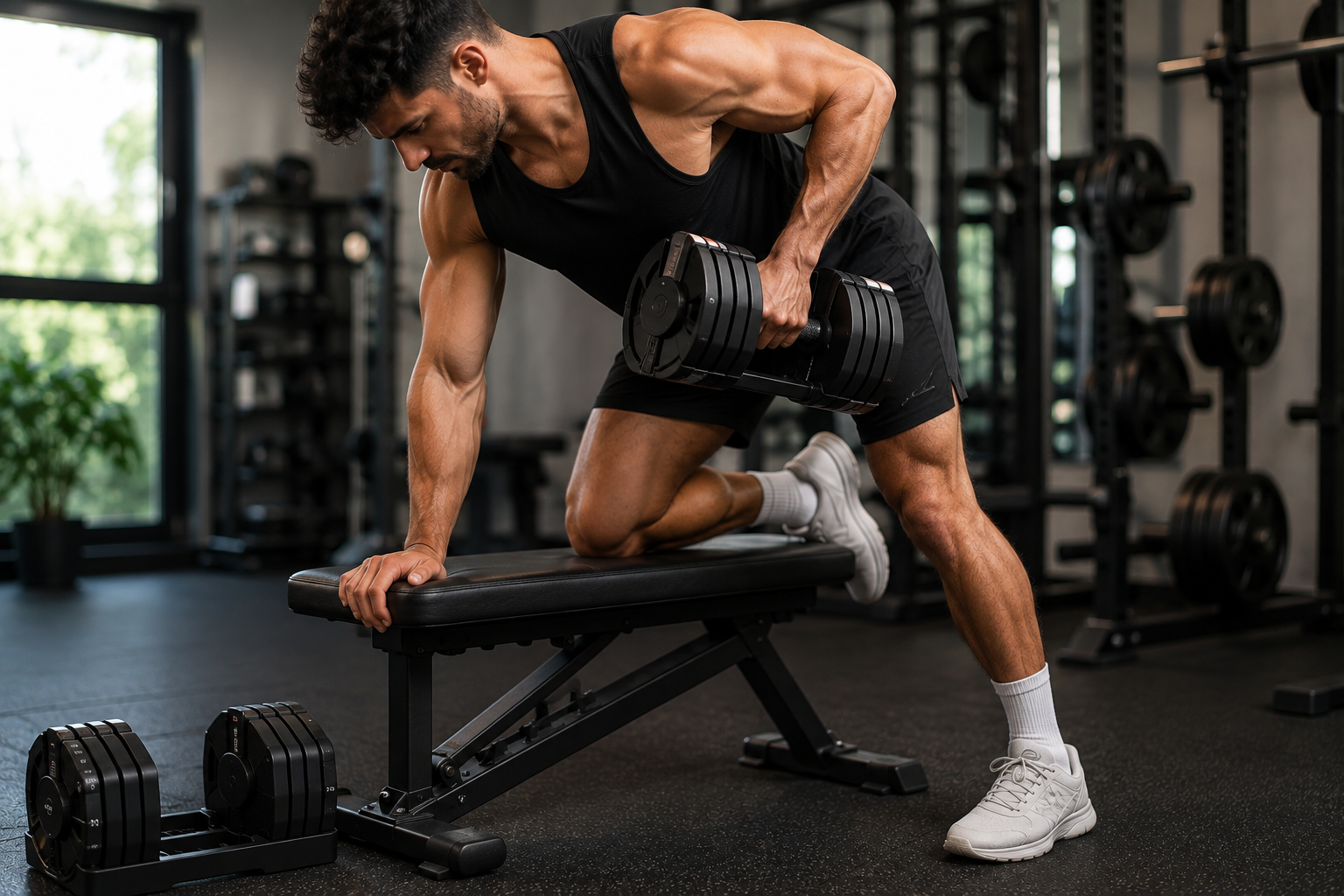
28mm vs 50mm adjustable dumbbells: a guide to universal compatibility for your gym
When a gym invests in its equipment inventory, the ability to leverage tools already available represents a significant economic and operational advantage. Many enthusiasts and fitness center managers own cast iron plates purchased over time and wish to integrate them with new training systems without having to completely replace existing material.
The choice between 28mm adjustable dumbbells and 50mm Olympic standard systems requires a precise technical assessment. The diameter of the plate hole, the robustness of the loading, the availability of accessories, and the compatibility with existing equipment directly influence the daily practicality of training.
This guide analyzes the differences between the two main standards, helping gyms and advanced users understand how to create a flexible setup, reduce waste, and achieve greater modularity through informed choices.
- Differences between 28mm and 50mm standards
- Compatibility with plates and adapters
- Advantages of adjustable dumbbells
- How to choose the right system
- Optimizing the existing setup
- Evaluating professional investment
- Modularity and future growth
Differences between 28mm and 50mm standards
28mm adjustable dumbbells use a smaller sleeve diameter, typically associated with standard-hole plates intended for home use, light gyms, and modular training systems. This format is very popular because it allows for the reuse of numerous plates already on hand and offers a practical solution for those who want to build a progressive set.
Systems with a 50mm diameter, on the other hand, belong to the 50mm Olympic dumbbell standard and are designed for higher loads and uses more oriented toward the professional world. The larger diameter allows for a different weight distribution and greater mechanical resistance when heavy loads are used.
Characteristics of the 28mm standard
The 28mm format often represents the most convenient choice for those who already own compatible plates. The ability to use material purchased over the years reduces the cost of upgrading equipment and allows for the gradual expansion of one's training space.
For many boutique gyms and personal training areas, this standard offers an interesting balance between initial investment, versatility, and ease of management.
Characteristics of the 50mm standard
The Olympic format is designed for situations where reliability and load capacity are priorities. The larger components ensure greater robustness and are often preferred in environments with intensive use.
However, the choice of 50mm must be evaluated by considering compatibility with already available plates, because a complete change of standard may require a more extensive replacement of equipment.
Compatibility with plates and adapters
Compatibility represents one of the main aspects when purchasing new adjustable dumbbells. Before choosing a model, it is necessary to check the internal diameter of the existing plates and verify that the hole is suitable for the dumbbell sleeve.
Many users look for solutions that allow them to keep their existing weights. In these cases, gym weight adapters can be a useful option for connecting components with different characteristics, provided that products designed to ensure safety and stability are used.
Analyzing already available material
Before making a purchase, it is advisable to catalog the existing plates, measure the hole, and evaluate the total weight available. This analysis avoids duplicate investments and allows for the creation of a truly functional configuration.
Compatible cast iron plates can continue to be an important resource within a gym when they are paired with the correct modular systems.
When to use adapters
Adapters can be useful in certain contexts, especially when you want to keep part of the existing equipment. However, they must be chosen by considering tolerances, fastening safety, and frequency of use.
In professional environments, it is always important to prioritize simple, reliable configurations that are easily managed by users.
Advantages of adjustable dumbbells
Adjustable dumbbells offer a higher level of flexibility compared to traditional fixed-weight sets. A single system can cover different training levels simply by changing the number of installed plates.
For a gym, this means optimizing available space and reducing the number of tools needed to offer a complete service.
Space optimization
A modular system allows for the creation of many configurations while occupying less surface area compared to a full rack of fixed dumbbells. This feature is particularly interesting for personal training studios and centers with limited square footage.
The orderly management of components also improves the user experience and facilitates daily operations.
Customization of loads
Weight adjustment allows for the rapid adaptation of equipment to users with different strength levels. This makes the system suitable for both beginners and more experienced athletes.
Modularity thus becomes a strategic tool for expanding the services offered without unnecessarily increasing costs.
How to choose the right system
The choice of the correct diameter depends on the facility's goals, the type of users, and the equipment already present. There is no universally better standard: instead, there is the solution most consistent with the gym's project.
A preliminary technical assessment allows for avoiding incompatible purchases and building a more efficient environment.
Considering intensity and frequency
A center with many hours of daily use must prioritize components that are resistant and easy to maintain. A private gym, on the other hand, can place greater importance on flexibility and the possibility of recovering material already purchased.
Creating a uniform system
Maintaining consistent standards facilitates weight management, reduces errors during training, and improves space organization.
Optimizing the existing setup
Many facilities do not need to start from scratch. An intelligent equipment upgrade allows for transforming an old kit into a more modern and functional solution.
The recovery of compatible components represents a concrete strategy for increasing the value of the initial investment.
Giving new life to old plates
Integrating already available plates with new adjustable dumbbells allows for maintaining continuity in equipment and reducing waste.
Professional organization
Proper organization of components improves safety, speed of use, and the perception of the fitness center's quality.
Evaluating professional investment
The purchase of equipment must be considered as an investment over time. Compatibility, material durability, and the possibility of future expansion affect the real value of the choice.
A modular solution allows for distributing the expense progressively while maintaining high functionality in the weight room.
Reducing the risk of replacements
Choosing compatible systems limits the need to completely replace already present material and protects the gym's budget.
Long-term value
Versatile equipment continues to be useful even when users, training programs, or facility dimensions change.
Modularity and future growth
The design of a modern weight room must also consider the future developments of the gym. Modular solutions like those available on adjustable dumbbells allow for progressively adapting equipment to new needs.
The ability to expand the system without replacing all the material represents a competitive advantage for facilities that want to maintain efficiency and cost control.
Investing in compatibility and modularity means creating a more flexible training environment capable of leveraging already available resources and supporting the gym's growth over time.
Comments (0)