
Trolley
You have no items in your shopping cart

 Budgets
 Dumbers
 Discs
 Benches
 Racks and Rigs
 Weights Holders
 Isotonic machines
 Calisthenics
 Cardio
 Kettlebells
 Flooring
 Gym Set
 Accessories
 Combat
 ARTI MARZIALI
 CONTAINER GYM
 Tug-Of-War
 Used Gym Equipment
 PILATES MACCHINARI
 GINNASTICA ARTISTICA
 CAMPI DA PADEL
 Prodotti in Pronta Consegna
 Informazioni
 IRONMAN
 Gift Card
- Donatif
- General information
- 0 I like it
- 196 Views
- 0 comments
- gym flooring, safety flooring, gym safety, shock-absorbing materials
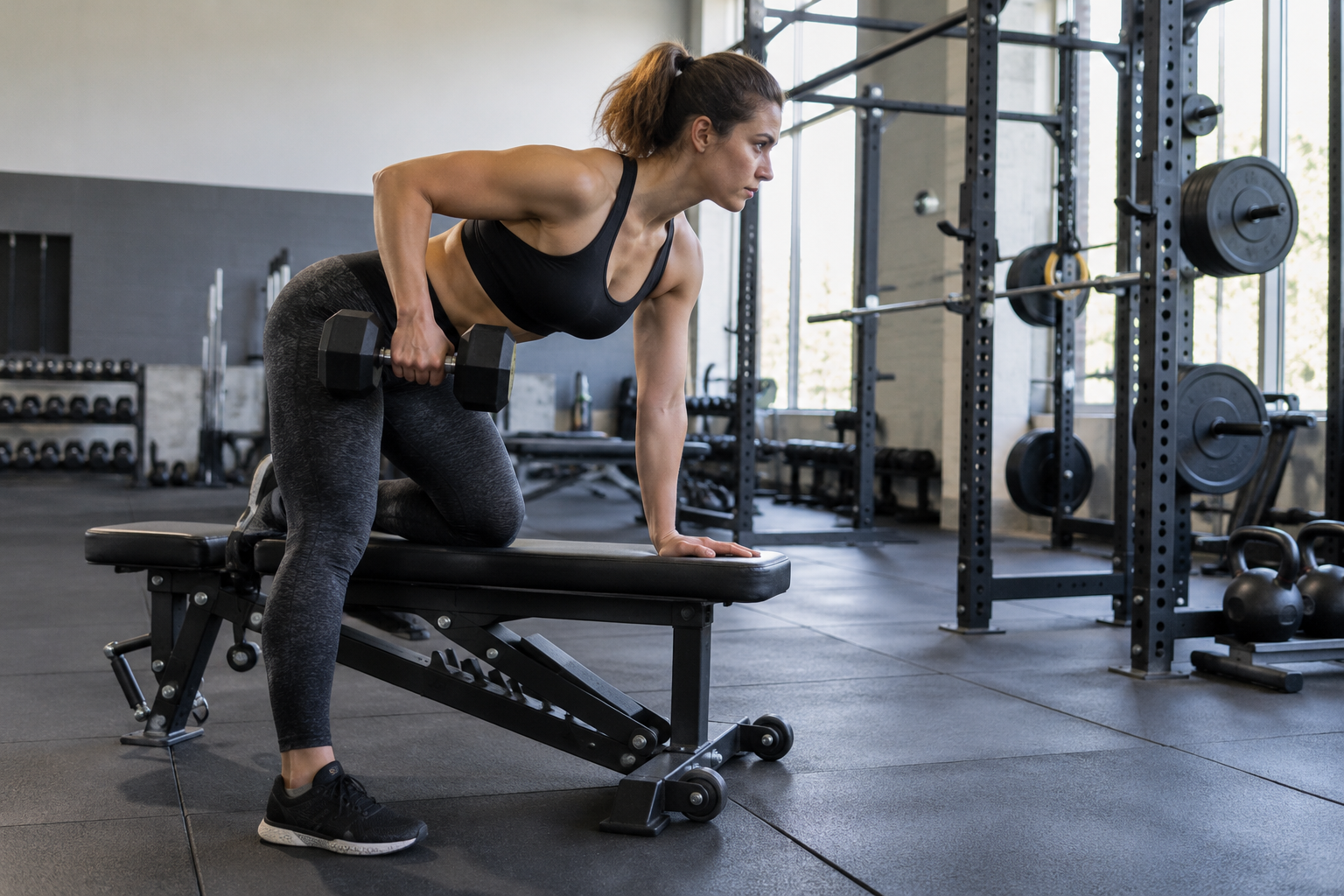
How to Choose a Weight Training Bench: A Guide for Weight Rooms and Powerlifting
Understanding how to choose a weight training bench is essential for anyone managing a professional weight room, designing a strength area, or organizing workouts dedicated to powerlifting. The bench is one of the most frequently used pieces of equipment, but seemingly similar models can present significant differences in terms of stability, load capacity, dimensions, adjustments, and intended use.
A bench suitable for dumbbell exercises does not necessarily meet the same needs as a station for barbell presses and heavy loads. Similarly, an adjustable bench may offer greater versatility compared to a flat model, but it requires specific evaluation of the tilt mechanisms, structure, and maintenance conditions. The initial price alone does not make it possible to determine which solution is most convenient.
For a purchasing manager, the choice should start with the planned exercises, the profile of the users, and the characteristics of the room. This guide explores the technical criteria to verify, the differences between the main configurations, and the economic aspects affecting the investment, with particular attention to professional gyms and powerlifting activities.
- Types of weight training benches
- Declared weight capacity and load limits
- Stability, structure, and materials
- Dimensions and ergonomics of the bench
- Adjustments and inclination systems
- Requirements for powerlifting training
- Compatibility with racks, barbells, and accessories
- Safety, use, and maintenance
- How to compare costs and alternatives
- How to plan the investment in the weight room
Types of weight training benches
The first distinction concerns the configuration of the bench. Flat models feature a fixed support surface and are used for barbell presses, dumbbell exercises, and other movements compatible with their intended use. Adjustable benches instead allow you to modify the inclination of the backrest and, in some cases, the seat.
There are also specific stations for barbell bench presses, equipped with integrated supports. These structures must be evaluated considering not only the bench itself, but also the geometry of the supports, the adjustments, and any safety features provided by the manufacturer. A complete station should not be confused with a simple standalone bench.
For a gym with a diverse clientele, it can be useful to combine multiple types. A flat bench dedicated to strength offers a stable station for specific exercises, while an adjustable one expands workout possibilities. The choice of quantity depends on the frequency of use and the number of people present simultaneously.
Professional flat bench
The flat bench features a simple configuration with a fixed support surface. This characteristic reduces the number of adjustments needed during use and can be practical in rooms where horizontal presses are performed frequently.
It is important to check the dimensions, stability, capacity, and characteristics of the surface. Constructive simplicity does not automatically guarantee quality: even a fixed bench must be designed for the anticipated loads.
Adjustable bench for different exercises
A professional adjustable bench allows the use of different inclinations for presses, dumbbell exercises, and complementary movements. The positions actually available depend on the model and must be verified in the technical data sheet.
However, versatility introduces mechanisms that require checks. It is necessary to evaluate stability in the various configurations, ease of adjustment, and the presence of systems that correctly maintain the selected position.
Declared weight capacity and load limits
Weight capacity represents one of the most important criteria when choosing a bench intended for professional use. The value declared by the manufacturer must be interpreted according to the conditions indicated in the technical documentation. It is incorrect to assume that all companies use the same methods for declaring load capacity.
In some cases, the value may refer to the total load applicable to the structure, while in others, separate limits may be specified. For a correct evaluation, it is necessary to clarify whether the data includes the weight of the user, the weight of the added loads, and any particular conditions expected during the exercise.
The choice must consider the most demanding users who will use the station, not just the average load of the gym. It is advisable to keep use within the limits declared by the manufacturer and to check any restrictions regarding configurations, inclinations, or accessories.
How to interpret maximum capacity
The weight bench capacity must be read alongside the manufacturer's instructions. A high value reported without indications of test conditions or intended use does not allow for a standalone assessment of overall safety.
Before purchasing, it is useful to ask for clarification when the technical data sheet does not distinguish the user's weight from the external load. A precise declaration allows different products to be compared more reliably.
Heavy loads and intensive use
A room dedicated to powerlifting can subject benches to frequent use and significant loads. In addition to the declared capacity, stability, structural characteristics, and frequency of inspections must be considered.
It is not prudent to choose a bench simply because the declared maximum load exceeds what is usually used. Professional suitability also depends on the intended use, installation conditions, and compatibility with other equipment.
Stability, structure, and materials
Stability influences the quality of the support during exercises and contributes to operational safety. A bench must maintain consistent behavior with the anticipated conditions of use, avoiding unwanted movements or uncertain support. The evaluation must consider the structure as a whole, not just the appearance of individual components.
Materials, frame geometry, connections, and the configuration of support points all contribute to the characteristics of the bench. It is not possible to deduce robustness exclusively from the weight of the structure or the apparent thickness of the profiles. Manufacturer information remains the primary reference.
The floor on which the bench is used also plays an important role. An uneven surface can compromise perceived stability and necessitate intervention on the environment. Installation and use must comply with the conditions established by the manufacturer.
Frame and structural connections
The frame must be designed to support the stresses anticipated during exercise. It is useful to verify the declared manufacturing quality, the presence of technical instructions, and the methods for inspecting connections.
Any unauthorized modifications to the structure can alter its characteristics. It is not advisable to add supports, drill holes in components, or replace structural elements without verifying compatibility with the manufacturer or a qualified person.
Support points and installation surface
Contact points with the floor must allow for stable positioning under the expected conditions. The presence of feet or protective elements does not eliminate the need to verify compatibility with the underlying surface.
In a professional room, it is useful to periodically check that the bench does not exhibit abnormal wobbling. If a problem arises, the equipment must be inspected before continuing use.
Dimensions and ergonomics of the bench
Dimensions influence how the user positions themselves during exercises. Surface height, backrest width, and overall length can affect body stability and freedom of movement. There is no single ideal dimension for every activity and every person.
A bench intended for general fitness must be usable by people with different physical characteristics. In a facility specialized in powerlifting, however, the specifications required by reference sports regulations may also be relevant. Needs must be identified before comparing models.
It is also important to evaluate padding and upholstery. A surface that is too yielding can alter the sensation of support, while materials unsuited for intensive use can deteriorate rapidly. The choice should consider comfort, stability, cleanliness, and maintenance.
Height and width of the backrest
The height of the bench affects the ability to place feet flat on the ground during certain exercises. The width of the backrest, on the other hand, conditions the surface available for supporting the torso.
The purchasing manager should compare the declared dimensions with the characteristics of the users and the planned exercises. A practical test, when possible, can help identify ergonomic differences not immediately obvious from the technical data sheet.
Padding, upholstery, and grip
The surface must provide support consistent with the intended use. Thickness, density, and upholstery characteristics contribute to comfort and perceived stability.
It is also useful to check ease of cleaning and instructions regarding usable products. Incompatible detergents can damage the upholstery and reduce the lifespan of the component.
Adjustments and inclination systems
Adjustable benches allow you to modify the position of the backrest and, in some models, the seat. This feature allows exercises to be performed at different angles, but it must be evaluated in relation to the actual needs of the gym. A high number of positions does not automatically represent an advantage.
The adjustment system must be simple to understand and use correctly. In a room frequented by numerous users, non-intuitive mechanisms can increase setup errors and require more assistance from staff.
It is also necessary to verify the stability of the bench at various inclinations. Load capacity and conditions of use may vary depending on the configuration. The manufacturer's instructions must be consulted before using heavy loads.
Backrest positions and versatility
The available positions determine the exercises that can be performed. Some models provide only positive inclinations, while others can offer different configurations.
The choice should start with the training program. If the gym primarily uses the flat bench and few incline variations, a simple configuration may be sufficient. Purchasing unnecessary adjustments increases complexity without guaranteeing an operational benefit.
Locking systems and controls
Mechanisms must maintain the intended position during use. Before starting a set, the user must verify that the adjustment has been completed correctly according to the instructions.
Staff should periodically check the integrity of moving components and report any anomalies. A bench with a defective locking system must not be used until appropriate inspection and intervention take place.
Requirements for powerlifting training
Powerlifting involves specific exercises in which the repeatability of training conditions is of particular importance. For the bench press, athletes may require a stable surface and a station that allows for proper barbell management. The choice must consider both training needs and any specifications of the competitions.
The dimensions and characteristics required in competition depend on the regulations of the relevant federation. It is incorrect to consider any product defined as professional to be automatically compliant with sports regulations. When the gym trains competitive athletes, it is necessary to consult the applicable updated regulations.
The powerlifting bench must also be evaluated together with barbell supports and any safety devices provided. A standalone bench placed inside a rack may offer a different configuration compared to a station with integrated supports. Both require compatibility checks.
Difference between competition bench and training bench
A bench used for competitive preparation can be chosen to replicate conditions similar to those of competition. Dimensions, surface, and support configurations may assume greater importance compared to a general fitness room.
Not all facilities need a station compliant with competition regulations. The need depends on the services offered and the level of the athletes. It is useful to distinguish a specific sports requirement from a commercial feature.
Assistance and management of barbell presses
Barbell presses require procedures adequate to the difficulty of the exercise and the loads used. The presence of a qualified assistant may be appropriate under certain conditions, but it must be organized according to gym procedures.
Any safety systems must be compatible with the station and adjusted correctly. Makeshift accessories or unapproved components must not be used to obtain an apparently more protected configuration.
Compatibility with racks, barbells, and accessories
A bench should not be chosen without considering the other equipment present in the room. If it is used inside a rack, it is necessary to verify that the dimensions allow for correct positioning and that the barbell supports are adequately adjustable. Compatibility cannot be deduced solely from external dimensions.
The configuration must allow the athlete to reach a correct position without interference with the frame or safety systems. Entry, exit, and movement operations for the bench must also be considered, especially in rooms with shared stations.
To compare available configurations, you can consult the category of professional gym benches, subsequently verifying the technical data sheets of individual models. The presence of a bench in a commercial category does not automatically guarantee compatibility with any rack or barbell.
Using the bench inside a rack
The purchasing manager should verify internal space, support position, and the ability to place the bench in the required position. Any transport wheels or handles must also be considered with respect to overall dimensions.
When racks and benches come from different manufacturers, it is advisable to request confirmation of operational compatibility. Checks must concern the entire configuration and not just the physical possibility of inserting the bench into the structure.
Barbells, supports, and complementary accessories
The length of the barbell and the position of the supports must be consistent with the station. An inadequate configuration can make picking up and replacing the load difficult.
Complementary accessories must be selected based on the intended use. It is not advisable to install additional supports or modify the structure without technical instructions confirming their suitability.
Safety, use, and maintenance
A professional bench must be used according to the manufacturer's instructions and within declared limits. Staff training and user instructions contribute to the correct management of the stations. Equipment, even when robust, does not eliminate the risks arising from improperly performed exercises or unsuitable configurations.
Periodic checks should include stability, frame integrity, upholstery conditions, fasteners, and the functioning of any adjustment mechanisms. The frequency of checks must be defined considering manufacturer instructions, intensity of use, and applicable obligations.
When a problem potentially relevant to safety is identified, the bench must be taken out of service until appropriate evaluation takes place. It is useful to keep documentation regarding interventions in order to maintain a history of checks and any replacements.
Periodic checks of the bench
Staff can be trained to recognize obvious anomalies such as wobbling, loose components, deteriorated upholstery, and adjustments that do not function correctly. These checks do not replace any technical interventions that may be necessary.
An internal log can record the model, installation date, available instructions, and checks performed. Recording helps organize maintenance and identify recurring problems.
Cleaning and preservation of upholstery
Padded surfaces require cleaning consistent with the manufacturer's instructions. It is important to use products compatible with the materials, avoiding substances that could damage the upholstery.
Cuts, peeling, or significant deterioration must be evaluated. The replacement of a component must respect the bench's specifications without introducing materials that improperly alter its characteristics.
How to compare costs and alternatives
The economic comparison between benches must consider homogeneous technical characteristics and commercial conditions. A flat bench and an adjustable one may have different prices because they meet different needs. The most expensive model is not necessarily the most suitable, just as the lowest price does not demonstrate greater value.
The total cost of the professional bench can include purchase, transport, possible assembly, maintenance, and replacement of wear-and-tear components. The availability of spare parts and assistance can affect the operational continuity of the room, especially when the station is used frequently.
It is useful to compare quotes using a table showing intended use, declared capacity, dimensions, adjustments, warranty conditions, and accessory costs. This procedure makes it easier to identify real differences and avoids basing decisions on features presented without context.
Initial price and included features
Before comparing two offers, it is necessary to verify that they include the same elements. A standalone bench is not equivalent to a complete station with barbell supports.
It is also necessary to clarify any delivery and assembly costs. Conditions must be reported in the quote, without assuming that additional services are always included.
Operational lifespan, spare parts, and support
The availability of replacement components can influence management over time. Upholstery, mechanisms, and other wear-and-tear elements may require interventions according to conditions of use.
A product with clear documentation and defined support procedures can be easier to manage. It is advisable to verify actual conditions before purchase, avoiding the assumption of a guaranteed lifespan not declared by the manufacturer.
How to plan the investment in the weight room
The choice of bench should be integrated into the overall room project. The first step consists of defining which exercises will be performed, by how many users, and with what frequency. A gym oriented toward general fitness may need multiple adjustable benches, while a center dedicated to powerlifting might prioritize specific stations for barbell presses.
It is useful to analyze peak hours. If numerous users utilize the benches simultaneously, purchasing a particularly sophisticated model does not necessarily solve the problem of waiting times. In some cases, it may be more effective to distribute the budget across multiple adequate stations while maintaining technical characteristics consistent with the intended use.
The second check concerns spaces. A bench must be usable without interfering with other equipment or passageways. Nominal dimensions do not describe the entire operational area, because athlete movement, possible assistance, and barbell loading operations must be considered.
The purchasing manager should therefore compare models through explicit criteria: intended use, load capacity, stability, dimensions, adjustments, rack compatibility, and availability of support. Prioritizing these characteristics helps reduce alternatives without relying exclusively on price or commercial description.
A practical example concerns a room that already has several racks but few compatible benches. Before purchasing new structures, it might be appropriate to verify whether adding adequate benches allows for better exploitation of existing stations. The decision must still be preceded by a check of dimensions and conditions of use.
In a newly opened gym, however, planning can start with the distribution of activities. If the program includes dumbbell exercises, incline presses, and strength training, a combination of flat and adjustable benches can offer greater flexibility compared to an endowment composed of a single type. Quantities must be proportional to anticipated demand.
Economic sustainability must also include post-purchase costs. Maintenance, cleaning, possible spare parts, and temporary unavailability of stations can affect management. A complete evaluation makes it possible to distinguish initial savings from convenience during the entire period of use.
Before the final decision, it is advisable to collect technical data sheets, instructions, and comparable quotes. When information on capacity or compatibility is incomplete, it is preferable to request clarification from the supplier. A documented choice reduces the risk of purchasing a bench unsuited to operational needs.
Investing in a professional bench therefore means selecting equipment consistent with the users, exercises, and room organization. The goal is not to identify the model with the highest number of features, but to choose a solution that is technically adequate, sustainable over time, and compatible with the development of the strength area.
Comments (0)