
Trolley
You have no items in your shopping cart

 Budgets
 Dumbers
 Discs
Discs
 Benches
 Racks and Rigs
 Weights Holders
 Isotonic machines
 Calisthenics
 Cardio
 Kettlebells
 Flooring
 Gym Set
 Accessories
 Combat
 ARTI MARZIALI
 CONTAINER GYM
 Tug-Of-War
 Used Gym Equipment
 PILATES MACCHINARI
 GINNASTICA ARTISTICA
 CAMPI DA PADEL
 Prodotti in Pronta Consegna
 Informazioni
 IRONMAN
 Gift Card
- Donatif
- General information
- 0 I like it
- 86 Views
- 0 comments
- gym flooring, safety flooring, gym safety, shock-absorbing materials
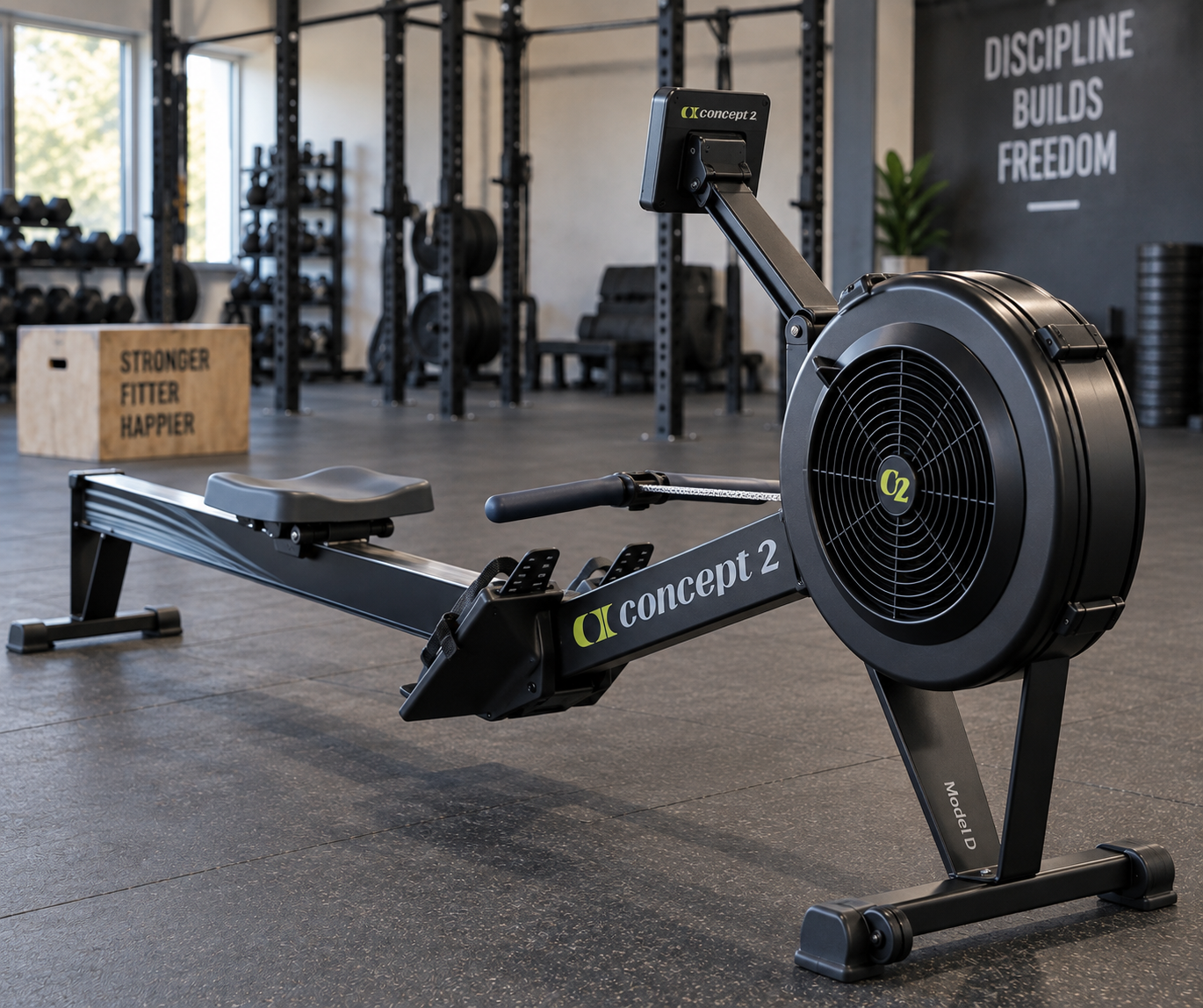
Air bike vs rowing machine: which to choose based on your goals
Air bike vs rowing machine is a comparison involving two cardio equipment pieces with different characteristics and modes of use. The choice depends on training goals, available space, type of users, and the context of use. Evaluating these elements helps identify the most suitable solution without relying exclusively on declared performance.
Although both machines can be used to improve cardiovascular capacity and integrate athletic preparation programs, the way they generate resistance, engage the body, and fit within a gym or functional box is different. Understanding these differences allows for making an investment more consistent with the facility's needs.
For those designing a cardio area, it is also important to consider practical aspects such as maintenance, ease of adjustment, internal pathways, and daily usage frequency. A comprehensive evaluation is more useful than a simple comparison of technical features.
- What are the main differences?
- How does the training change?
- Which to choose based on goals?
- How much space do they require?
- What differences in maintenance?
- Errors to avoid in the choice
- Frequently asked questions
- How to evaluate the investment
What are the main differences between air bike and rowing machine?
The air bike uses a fan connected to the transmission to generate resistance that increases according to the intensity developed by the user. The rowing machine, on the other hand, simulates the rowing motion through resistance systems that can be air, magnetic, water, or hybrid, depending on the model.
Both machines engage a significant part of the musculature, but the motor pattern is different. The air bike alternates the push of the lower limbs with the synchronized movement of the arms through the moving handlebars, while the rowing machine requires a technical sequence that coordinates legs, trunk, and upper limbs along a single trajectory.
These differences affect the type of training proposed, the learning curve, and the organization of the gym.
Resistance system
The way resistance is generated represents one of the elements that most differentiate the two pieces of equipment and influences the feeling of use during the workout.
Movement pattern
The technical gesture required by the rowing machine is different from that of the air bike and requires special attention to correct execution to maintain fluidity and efficiency.
How does the training change?
The air bike is frequently used for warm-ups, metabolic circuits, and interval training, thanks to the ability to quickly increase intensity simply by increasing working speed.
The rowing machine is often used both for continuous workouts and interval exercises, offering a rhythmic movement that requires coordination and technical control.
The choice therefore depends on the type of programming planned and the goals of the facility or user.
High-intensity workouts
The air bike easily integrates into functional circuits thanks to rapid transitions between one station and another and the immediate response of resistance.
Continuous workouts
The rowing machine can also be used for prolonged sessions in which the continuity of the gesture plays a central role.
Which to choose based on goals?
To choose correctly, it is useful to start from the goals of the gym or the user. If the equipment is to be used predominantly in functional circuits, high-intensity classes, or metabolic programs, the air bike represents a frequently adopted solution.
When instead the goal is to introduce equipment dedicated to the rowing gesture and develop specific programs that include this motor pattern, the rowing machine may be more consistent.
In many facilities, the two machines are considered complementary and not necessarily alternative, as they allow proposing different training modalities.
Use in functional boxes
The air bike is often used in circuit workouts thanks to its ease of use and generally simple adjustments.
Use in gyms
The rowing machine can effectively integrate the cardio area when you want to expand the variety of training proposals.
How much space do they require?
The evaluation of space should not be limited to the dimensions of the machine but should also consider the operating area needed during use, passageways, and the possibility of performing maintenance.
Before installation, it is advisable to check the dimensions reported in the manufacturer's technical documentation and maintain the necessary spaces to use the equipment safely.
Flooring also contributes to the machine's stability and the protection of the subfloor. To explore dedicated solutions, you can consult the cardio machines category.
Layout organization
An orderly arrangement facilitates user circulation and makes managing the cardio area easier.
Operating pathways
Corridors should remain clear and allow passage even during more intense workouts.
What differences exist in maintenance?
Both the air bike and the rowing machine require scheduled checks and regular cleaning. The frequency of interventions depends on the intensity of use and the manufacturer's instructions.
It is appropriate to periodically check fasteners, adjustments, moving components, and the general state of the structure, recording the interventions carried out.
Following the manufacturer's scheduled maintenance plan helps maintain efficiency and operational continuity over time.
Routine cleaning
The removal of dust and residue helps preserve the correct functioning of mechanical parts and contact surfaces.
Scheduled inspections
Technical checks should be planned according to what is indicated in the specific equipment manuals.
What errors should be avoided?
One of the most frequent errors consists of choosing a machine exclusively based on popularity or price without evaluating the actual intended use within the facility.
Another critical issue concerns underestimating the necessary operating space and the maintenance required throughout the entire life cycle of the equipment.
It is also appropriate to avoid comparisons based on absolute performance, since air bike and rowing machine respond to different needs and can be complementary.
Unplanned purchases
The choice should be consistent with the training goals and the overall gym project.
Neglecting the context of use
Number of users, frequency of use, and type of classes affect the choice just as much as the machine's features.
Frequently asked questions
Do air bike and rowing machine train the same muscles?
Both engage numerous muscle groups but through different movements. For this reason, the feeling of use and application in training programs do not coincide.
Which machine is more suitable for functional circuits?
In functional circuits, the air bike is often chosen for the speed with which work and recovery phases can be alternated, while the rowing machine is used in programming that includes the rowing gesture.
How to evaluate the investment?
The air bike vs rowing machine comparison should be approached by considering training goals, user types, available space, ease of maintenance, and the possibility of integration with other equipment present in the facility. A choice consistent with the gym project offers greater operational continuity and a more effective use of the investment.
Before purchase, it is advisable to consult the manufacturer's technical documentation to check dimensions, adjustments, installation requirements, and the maintenance plan. For technical data and operating spaces, it is appropriate to refer to the manuals of the individual pieces of equipment, avoiding comparisons based exclusively on commercial features or declared performance without considering the context of use.
Comments (0)