
Trolley
You have no items in your shopping cart

 Budgets
 Dumbers
 Discs
Discs
 Benches
 Racks and Rigs
 Weights Holders
 Isotonic machines
 Calisthenics
 Cardio
 Kettlebells
 Flooring
 Gym Set
 Accessories
 Combat
 ARTI MARZIALI
 CONTAINER GYM
 Tug-Of-War
 Used Gym Equipment
 PILATES MACCHINARI
 GINNASTICA ARTISTICA
 CAMPI DA PADEL
 Prodotti in Pronta Consegna
 Informazioni
 IRONMAN
 Gift Card
- Donatif
- General information
- 0 I like it
- 59 Views
- 0 comments
- gym flooring, safety flooring, gym safety, shock-absorbing materials
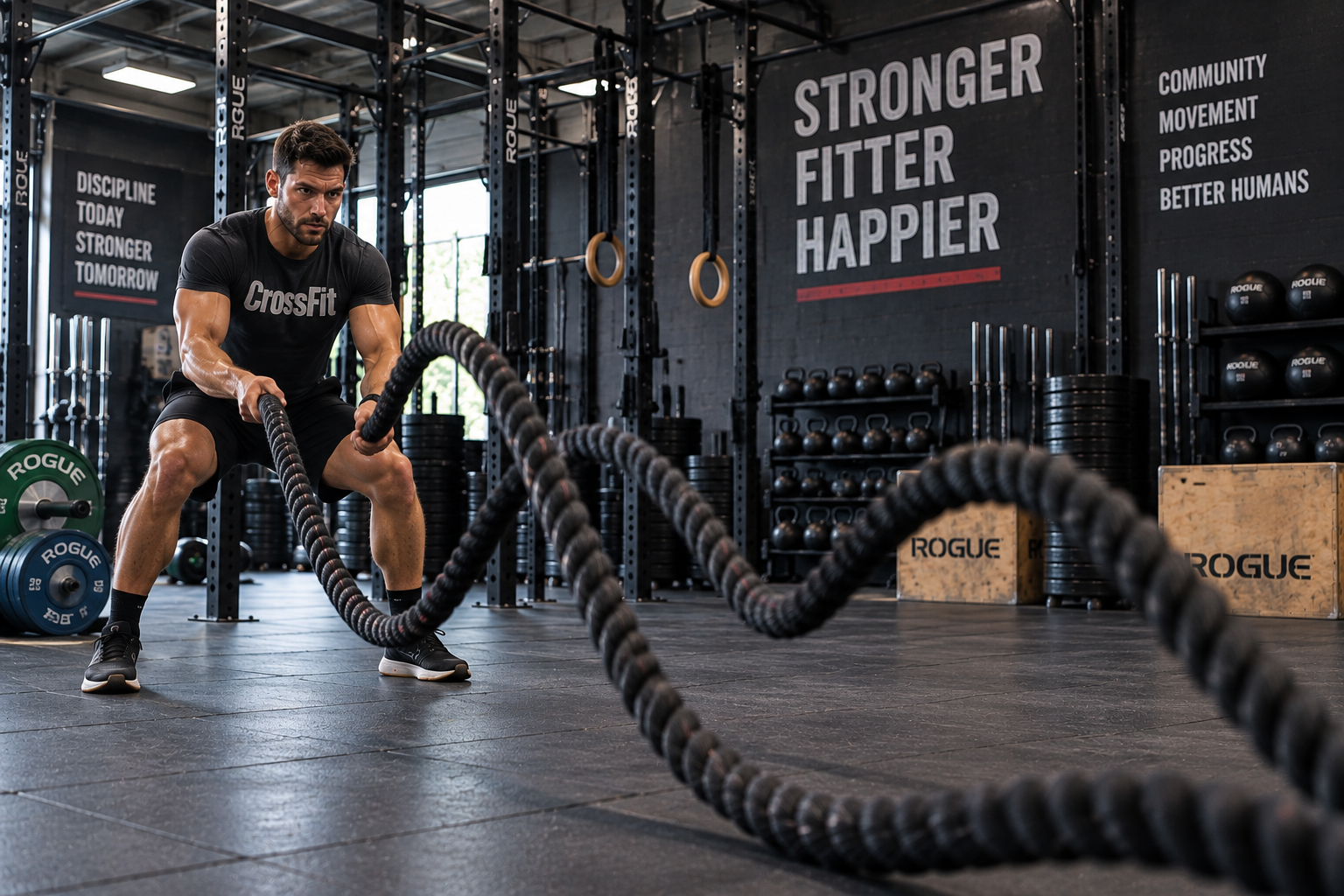
Battle ropes in a professional gym: functional area sizing and flooring protection
A battle rope in a professional gym requires an area designed according to operating space, the anchor system, and the flooring. Proper sizing not only ensures user safety, but also preserves the equipment and maintains an orderly flow of activities within the functional area.
Design should start with an analysis of the type of workout planned, the number of simultaneous users, and the length of the ropes used. Only after this evaluation is it possible to define the layout of the area and choose a surface suitable for the stresses generated during use.
A well-configured area improves the usability of the gym, reduces the risk of interference with other workstations, and limits rope and floor wear over time.
- Quick answer
- What requirements the space must have
- How to configure the layout of the functional area
- How to protect the flooring
- Compatibility with other equipment
- Safety and maintenance
- Design mistakes to avoid
- FAQ
- Evaluating the investment
What are the main criteria for designing a battle rope area?
Design should consider four fundamental elements: available space, rope length, anchor point, and type of flooring. These aspects directly impact operational safety and equipment lifespan.
The setup must allow the user to execute waves without obstacles and without interfering with other workstations dedicated to functional training.
It is also advisable to keep pedestrian pathways clear to prevent ropes from becoming a hindrance during sessions with multiple users.
Where to start the design
The first step is to identify the anchor position and verify that the available space is compatible with the intended rope length.
Evaluating the type of use
An area intended for individual workouts has different requirements compared to an area used for functional training classes with multiple participants at the same time.
What requirements must the space have?
The operating space must allow the rope to extend completely and enable the execution of waves while maintaining correct posture throughout the movement.
In addition to the length of the rope, it is necessary to consider the area occupied by the user and safety clearances relative to nearby equipment.
During design, it is also wise to plan areas dedicated to entering and exiting the workstation to avoid interference with other users.
Organizing operating distances
Workstations should be distributed so as to prevent overlaps between the rope trajectories during exercises.
Managing interior pathways
An orderly layout facilitates user movement and improves the overall efficiency of the functional area.
How to configure the layout of the functional area?
The layout should be designed considering the flow of the most frequent activities. Battle ropes are often included in circuits that comprise bodyweight exercises and other conditioning stations.
A rational arrangement allows instructors to easily supervise users and reduces setup times between sets.
The anchor position should also allow for simple rope replacement during routine maintenance.
Linear configuration
A linear arrangement is generally the easiest solution to manage in gyms with areas dedicated exclusively to battle ropes.
Circuit configuration
In multi-functional areas, the battle rope can be integrated into circuits comprising sled pushes, bodyweight exercises, and slam balls, provided each station has the necessary space to operate without interference.
How to protect the flooring?
The surface where the rope comes into contact with the floor is subject to repeated stress. For this reason, it is advisable to use flooring designed for high-intensity fitness environments.
A suitable surface helps limit rope abrasion and protects the subfloor during daily workouts.
The choice of flooring should be evaluated alongside the intended type of use and the frequency of sessions.
Recommended materials
A shock-absorbing gym floor represents a commonly adopted solution in functional areas thanks to its ability to absorb part of the stress generated during training.
Monitoring wear
Periodically checking the condition of the surface allows for the prompt identification of any signs of deterioration and the scheduling of maintenance work.
How to integrate the battle rope with other equipment?
The battle rope is frequently used together with other stations dedicated to metabolic conditioning. Design must therefore consider the compatibility between different activities.
A balanced distribution reduces user movement and improves circuit management.
The position of the equipment should allow instructors to easily check all workstations during group sessions.
Individual workouts
Workstations dedicated to individual exercises can be placed along the perimeter of the functional area to reduce interference.
Group workouts
When multiple battle ropes are used simultaneously, it is appropriate to provide a regular arrangement that is easily identifiable by users.
What safety and maintenance aspects must be considered?
Safety depends on the stability of the anchor, the quality of the rope, and the correct condition of the flooring.
Scheduled maintenance makes it possible to spot any signs of wear before they can compromise equipment use.
Grips and end protections should also be checked regularly.
Periodic checks
It is good practice to visually check the rope, fasteners, and surface before intensive use of the area.
Area cleaning
Keeping the floor free of debris and dust helps preserve both the rope and the supporting surface.
Which design mistakes should be avoided?
One of the most common mistakes is installing the battle rope in high-traffic areas or too close to other training stations.
Another critical issue concerns choosing surfaces not designed to withstand the continuous contact of the rope during exercises.
Finally, it is advisable to avoid configurations that make rope replacement or access to anchor points difficult.
Unfunctional layout
A disorganized arrangement limits the usability of the area and increases the risk of interference between users.
Inadequate flooring
An unsuitable surface can accelerate the wear of both the floor and the rope during daily use.
FAQ
Is it possible to install a battle rope in any area of the gym?
No. It is preferable to choose a dedicated zone with sufficient space for the length of the rope and a stable anchor system.
Is specific flooring needed?
A surface designed for fitness environments helps limit rope wear and protects the floor during intensive use.
Can battle ropes be included in functional circuits?
Yes, as long as the layout guarantees adequate spaces and does not create interference with other workstations.
How often should the workstation be checked?
The frequency depends on the intensity of use, but it is advisable to carry out periodic checks on the rope, anchor, and flooring.
How to evaluate the investment in designing the battle rope area?
Accurate design makes it possible to obtain a functional workstation that is easily manageable and consistent with the gym's operational flow. Considering available space, layout configuration, anchor system, and flooring quality from the start helps reduce subsequent corrective work and preserve equipment over time.
For professional facilities, it is useful to adopt uniform design criteria across all workstations dedicated to functional training, so as to facilitate maintenance, class organization, and user management.
Carefully evaluating these elements makes it possible to create an efficient, orderly battle rope area suitable for continuous use without turning the choice of equipment into a simple comparison between products.
Comments (0)