
Trolley
You have no items in your shopping cart

 Budgets
 Dumbers
 Discs
 Benches
 Racks and Rigs
 Weights Holders
 Isotonic machines
 Calisthenics
 Cardio
 Kettlebells
 Flooring
 Gym Set
 Accessories
 Combat
 ARTI MARZIALI
 CONTAINER GYM
 Tug-Of-War
 Used Gym Equipment
 PILATES MACCHINARI
 GINNASTICA ARTISTICA
 CAMPI DA PADEL
 Prodotti in Pronta Consegna
 Informazioni
 IRONMAN
 Gift Card
- Donatif
- General information
- 0 I like it
- 108 Views
- 0 comments
- gym flooring, safety flooring, gym safety, shock-absorbing materials
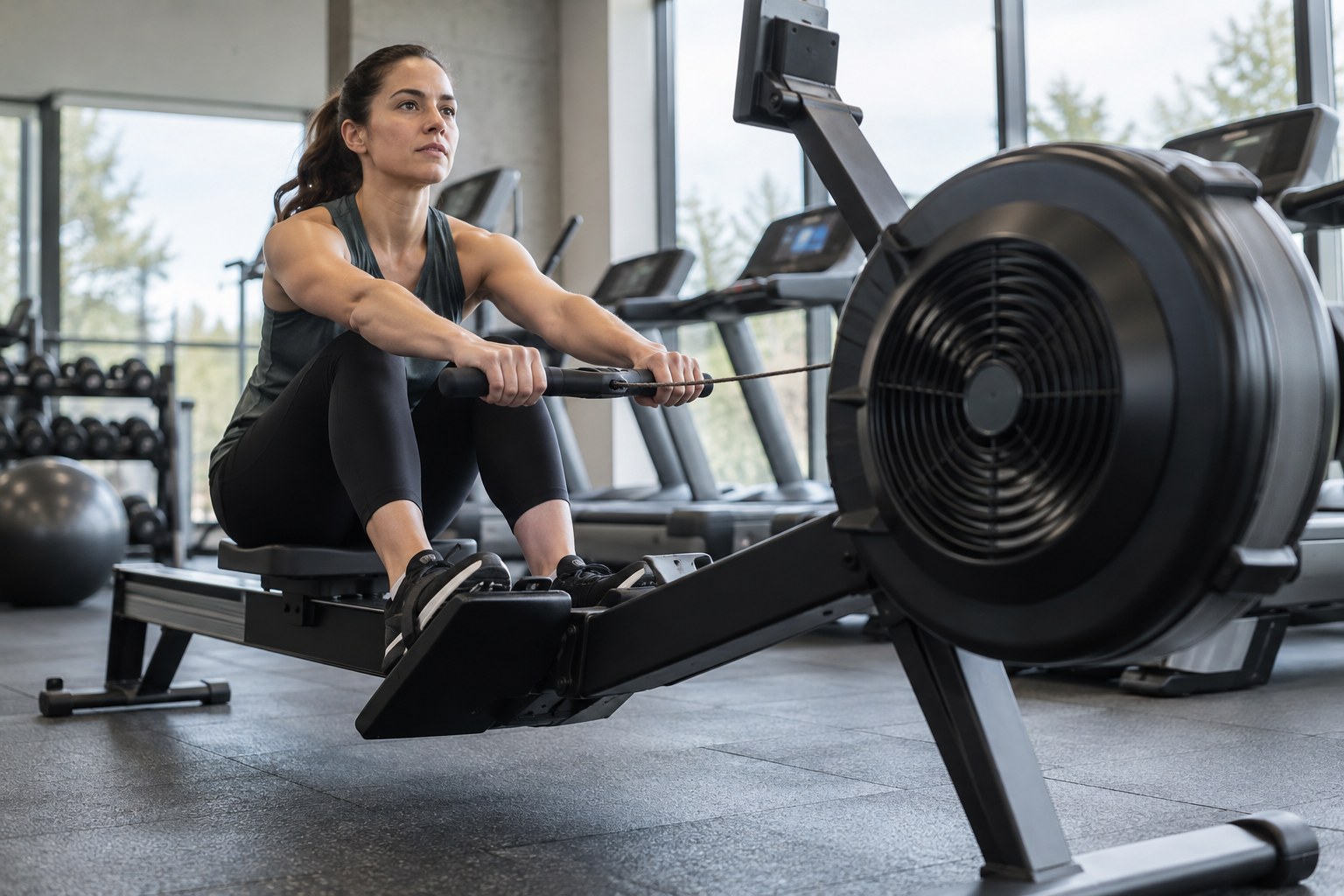
Cardio equipment for a fitness room: selection criteria
A fitness room may have users who are looking for walking, aerobic work, warm-ups, or sessions with low perceived impact. There is no single machine combination suitable for all facilities: the equipment must reflect the required activities, number of people, and available space.
To choose the cardio equipment for a fitness room, it is best to first observe users' habits and then compare the categories. Treadmills, bikes, ellipticals, and rowers offer different experiences and require their own checks regarding footprint, maintenance, and accessibility.
This guide offers a path for managers and directors, from defining demand to daily management. The characteristics of each model and the conditions of the premises must be confirmed with suppliers and competent professionals.
Before establishing the number of stations, describe a typical day: opening, peak times, cleaning, and checks. For each phase, observe who uses the room and which machines remain available. This sequence helps identify not only the desired capacity, but also the times when staff can intervene without interrupting service.
A balanced selection does not necessarily require the same number of machines for each category. If the demand for walking is much higher than for other activities, the initial assumption can reflect this difference. It is still useful to maintain alternatives consistent with the program and verify over time whether users are able to use them.
Needs also change with the organization of classes and memberships. A room used mostly independently requires easily accessible instructions, while a facility with guided sessions can plan specific introduction moments. In both cases, staff must know limits, shutdown procedures, and the anomaly reporting channel.
Before committing to the space, ask for datasheets and drawings of the actual models and verify that they are consistent with the offered configuration. A model change can modify footprint, power supply, or access. Keeping hypotheses and confirmations makes it easier to update the project without losing sight of initial requirements.
- Define users and activities
- Compare cardio categories
- Measure the room
- Read specifications
- Compare offers
- Organize maintenance and support
- Check the room after opening
Define users and activities
Real demand and objectives
Gather information on requested activities, time slots, and session lengths. A questionnaire can complement the observation of queues, but should not be interpreted as a certain prediction. Distinguish frequent requests from occasional ones and record assumptions that remain to be verified.
Consider people with different experiences and needs. Readable controls, easy access, and clear instructions can matter just as much as program variety. Users with clinical needs or specific limitations should agree on the activity with competent professionals when necessary.
Peak times and contemporaneity
Estimate how many people might use the machines simultaneously during the busiest hours. The total number of members does not coincide with simultaneous accesses. Observe whether queues concern a specific category and how long people wait before choosing an alternative.
For a new room, use conservative and stated scenarios to be reviewed after opening. An initial configuration can leave room for subsequent changes, provided it does not compromise passageways and operating spaces. Decisions should be based on observed usage and not solely on the manager's impression.
Compare cardio categories
Treadmills and bikes
The treadmill allows walking and running according to the model's functions. Evaluate usable surface, adjustments, controls, and required space, along with noise and vibrations in the context of the building. The intended use must be consistent with the frequency and duration of planned sessions.
Bikes can offer different configurations and adjustments. Check access to the seat, handlebar and pedal position, resistance system, and ease of adjustment. A compact machine is not automatically suitable if users cannot set it up or staff cannot assist them.
Ellipticals and rowers
Ellipticals offer a guided trajectory that may vary among models. Test access, stability, controls, and movement space. Avoid promising zero impact or universal clinical benefits: the choice of activity depends on the person and the context.
The rower involves a sequence of movements that requires instruction and space in front of and behind the machine. Consider ease of access, resistance, handle path, and repositioning. Staff should be able to explain usage and recognize when a user needs support.
Measure the room
Footprint and operating area
On a floor plan, indicate doors, pillars, sockets, passageways, and footprints. Add the areas required by the manufacturer for access, use, shutdown, and maintenance. External dimensions do not describe all the space needed to move around a machine.
Also check the delivery route and the ability to reach the final position. Stairs, elevators, and openings can affect organization. Involve competent professionals to assess room conditions and applicable regulations, without assuming a commercial floor plan is enough.
Systems and environment
Electrically powered machines require connections compatible with specifications. A qualified professional can evaluate the system and distribution when necessary. Do not place cables in passageways or use improvised solutions to reach a distant socket.
Lighting, ventilation, and noise contribute to experience and management. Consider the position of the machines relative to walls and nearby rooms. Acoustic performance depends on the system and the building: flooring does not automatically guarantee the elimination of vibrations.
Read specifications
Intended use and limits
Compare intended use, maximum user weight, and conditions stated by the manufacturer. Check what each limit includes and whether there are instructions on session length, speed, or other functions. A generic professional description does not replace the manual.
Figures must be comparable. If two datasheets describe motor power or capacity differently, ask for clarification before attributing an advantage. Keep the answers with the offer and flag missing data in the comparison grid.
Controls and safety
Test console readability, startup, and setting modifications with users of varying experience. Essential controls must be identifiable without unnecessarily complex steps. Additional functions and connectivity have value when they truly meet the needs of the room.
Check the position of stop devices and intended procedures. Instructions near the machine should explain initial use and anomaly reporting, without replacing staff training. Anyone experiencing unusual symptoms must stop the activity and seek appropriate assistance.
Compare offers
Models and included services
Prepare requests with equivalent requirements: categories, number of machines, room conditions, delivery, and assembly. Specify whether initial training or packaging removal is required. A total inclusive of installation is not directly comparable to a simple supply.
Ask the offer to identify models and configurations, as well as exclusions and conditions yet to be verified. Technical datasheets help compare features; support and warranty terms must be examined separately. Do not assume all suppliers offer the same performance.
Trial and choice
Consult the cardio machines to identify relevant categories, then ask for data and conditions of the actual models. A trial with users and staff can highlight access or adjustment difficulties that do not emerge from the catalog.
Use the same sheet for each machine and distinguish subjective observations from documented data. A short trial does not prove durability over time. Before ordering, check availability, installation, and room requirements, keeping open questions evident.
Organize maintenance and support
Routine checks
Each model requires its own procedures for cleaning, checks, and maintenance. Assign tasks to trained staff and record activities required by the manufacturer. Do not apply lubricants or adjust components based on experience with a different machine.
An inventory with model, serial number, and support contact facilitates requests. For each anomaly, note the symptom and observed conditions without formulating improvised diagnoses. If the issue may compromise use, make the machine unavailable according to facility procedures.
Spare parts and continuity
Before purchasing, ask how interventions, spare parts, and reports are handled. Availability and timelines must be confirmed in applicable conditions, without assuming a service is included. A stopped machine can change room flows, especially if it is the only one in the category.
Define how to inform users and staff during downtime and how to check the machine before reopening. Keep intervention documentation. A supply of spare parts can be useful when components are identified and compatible, but it does not replace qualified personnel.
Check the room after opening
Observe usage
After the first few weeks, gather simple data on queues, occupancy, and reported difficulties. Compare them with initial assumptions and consider differences between time slots. An underused machine may have a position or instruction issue, not necessarily be useless.
Talk with staff and observe whether users easily reach controls and adjustments. Any layout changes must respect required spaces and conditions. Do not move a powered machine without checking connections and manufacturer instructions.
Adapt equipment
If demand changes, compare alternatives such as different organization, training, or additional purchase. Evaluate each change regarding space, support, and contemporaneity, avoiding increasing the number of machines at the expense of passageways. User requests are useful data to integrate with technical conditions.
Periodically review the maintenance plan and documentation. Effective equipment is that which responds to real activities and can be managed over time. Recording decisions and assumptions helps justify subsequent investments and identify what requires further checks.
Comments (0)