
Trolley
You have no items in your shopping cart

 Budgets
 Dumbers
 Discs
Discs
 Benches
 Racks and Rigs
 Weights Holders
 Isotonic machines
 Calisthenics
 Cardio
 Kettlebells
 Flooring
 Gym Set
 Accessories
 Combat
 ARTI MARZIALI
 CONTAINER GYM
 Tug-Of-War
 Used Gym Equipment
 PILATES MACCHINARI
 GINNASTICA ARTISTICA
 CAMPI DA PADEL
 Prodotti in Pronta Consegna
 Informazioni
 IRONMAN
 Gift Card
- Donatif
- General information
- 0 I like it
- 66 Views
- 0 comments
- gym flooring, safety flooring, gym safety, shock-absorbing materials
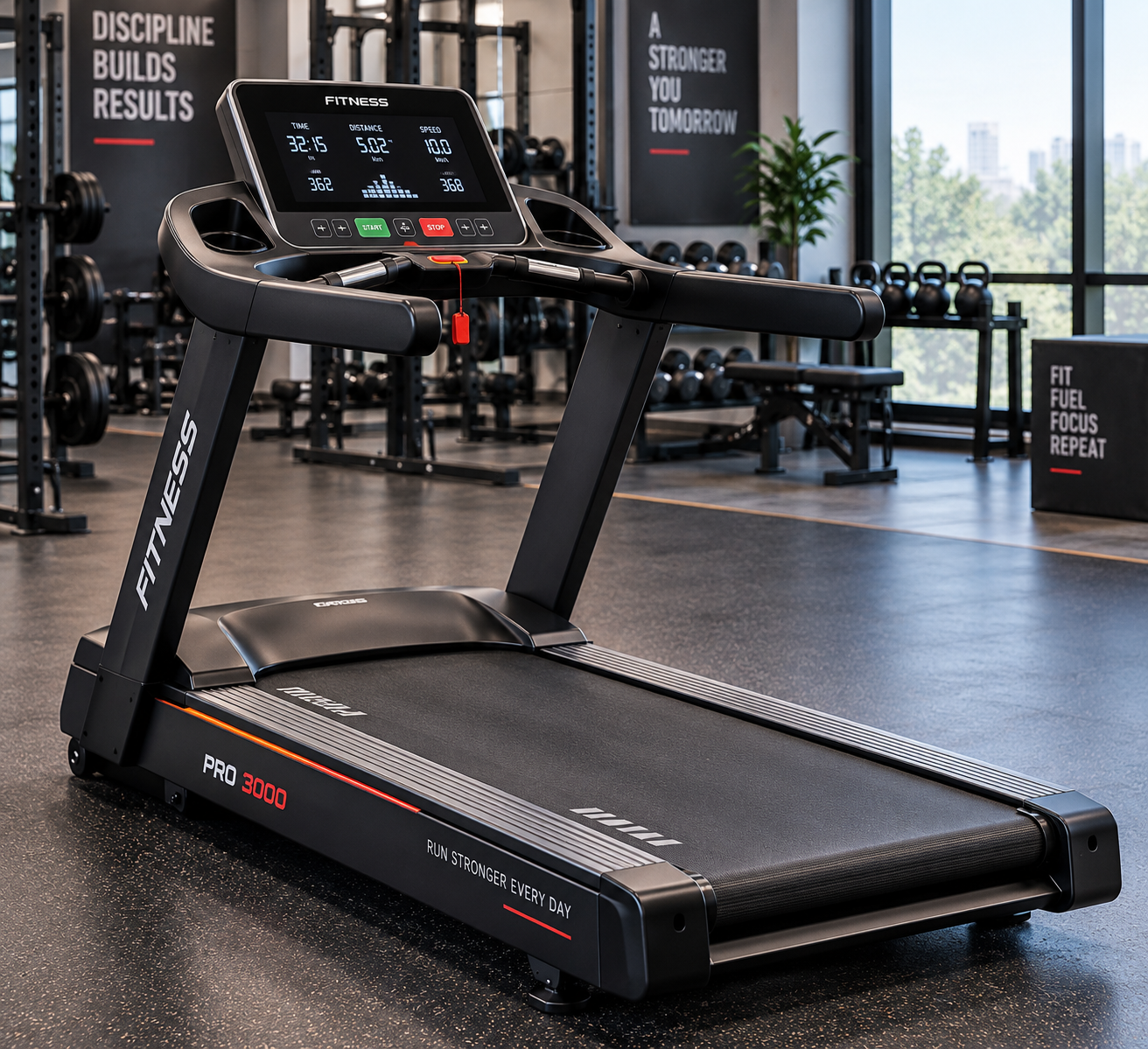
Curved treadmill vs electric: differences, usage and practical selection criteria
The comparison between a curved treadmill and an electric one does not boil down to establishing which one is the absolute best. The two types respond to different needs and present construction features, usage methods and training requirements that must be evaluated based on the user's objectives and the context of use.
In short, the curved treadmill is a non-motorized machine that is moved exclusively by the athlete's push. The electric treadmill, on the other hand, uses a motor that drags the belt at a speed set by the user via a control console. This difference alters the way you run, accelerate, slow down and manage training intensity.
To choose correctly, it is useful to evaluate objective criteria such as the type of training planned, frequency of use, users who will use the machine, available space, required maintenance and truly necessary features, avoiding basing the decision solely on price or current trends.
- Quick answer
- What are the main differences?
- How do they work?
- How to choose practically
- Mistakes to avoid
- Correct use and safety
- Manuals and technical references
- FAQ
- How to evaluate the investment
Curved or electric treadmill: which one to choose?
The curved treadmill is suitable when you want a completely non-motorized equipment in which speed and intensity depend exclusively on the user's push. The electric treadmill is instead more suitable when preset speeds, automatic programs and precise pace control throughout the session are needed.
The choice should be based on the type of training planned, the characteristics of the users and the indications provided by the machine manufacturer.
There is no single solution valid for every situation. Instead, there is the model most consistent with the intended use.
Evaluate objectives
Technical workouts, sprints, high-intensity work and interval sessions may require different characteristics compared to continuous aerobic activities or guided programs.
Consider who will use the machine
A commercial gym, a functional box, a personal training studio and a home gym can have very different operational needs.
What are the main differences between the two types?
The fundamental difference concerns the movement of the belt. In the curved model, the movement is generated exclusively by the athlete, while in the electric model, the motor maintains the set speed.
This feature modifies the machine's behavior during accelerations, decelerations and pace variations.
For those wishing to compare different solutions dedicated to cardio, it is possible to consult the range of professional cardio machines.
Characteristics of the curved treadmill
The presence of the curvature of the running deck allows the user to directly control the pace by modifying body position and the force imparted to the belt.
Characteristics of the electric treadmill
The motor keeps the selected speed constant and normally allows the use of automatic programs, inclination variations and functions managed by the console.
How does it work and how is it used correctly?
In the curved treadmill, every acceleration derives from the user's action. Moving slightly toward the front increases speed, while moving backward tends to slow the run down.
In the electric model, on the other hand, speed is set via the machine's controls and the runner must adapt to the chosen pace.
Both types require an initial familiarization period, especially when switching from one technology to the other.
Use of the curved model
It is important to progressively develop running technique, avoiding overly aggressive starts during the first sessions.
Use of the electric model
Before increasing speed or inclination, it is advisable to acquire stability and posture control.
What practical criteria help in the choice?
A rational choice should consider the type of training, number of users, space availability, expected maintenance and overall budget.
Frequency of use also represents an important criterion. A machine intended for continuous professional use requires different evaluations compared to one intended for occasional use.
The technical specifications reported by the manufacturer always constitute the main reference.
Type of training
Workouts oriented towards sprints, technical running and high-intensity work may favor different characteristics compared to continuous aerobic activities.
Available space
Before purchasing, it is advisable to check the machine's dimensions, required safety area and characteristics of the flooring intended for installation.
What mistakes are best avoided?
One of the most frequent mistakes consists of choosing exclusively based on price without considering usage methods and technical characteristics.
Another mistake is underestimating the adaptation period necessary when switching from one type to the other.
It is also advisable not to modify components or settings beyond what is provided in the machine's manual.
Evaluate only the cost
Price represents only one of the factors to consider along with durability, intended use and maintenance.
Neglect technique
Correct learning of running improves machine control and contributes to more effective use.
How to use both machines safely?
Before use, it is advisable to check that the machine is stable, clean and compliant with the manufacturer's instructions.
Footwear should be appropriate for the intended activity and the surrounding area must remain free of obstacles.
During the first sessions, it is advisable to gradually increase training intensity and duration.
Preliminary checks
Check the condition of the running surface, absence of anomalies and correct positioning of the equipment.
Training progression
Progressively increasing intensity and volume reduces the risk of technical errors in the initial phases of use.
Manuals and technical references
For dimensional data, usage limits, maximum supported weight, maintenance and operating methods, it is necessary to refer to the manual provided by the manufacturer.
Specifications can change significantly between models belonging even to the same category.
In professional contexts, it is advisable to keep the technical documentation and follow the planned maintenance schedule.
Why consult the manual
The manual contains official indications regarding installation, use, maintenance and safety.
Compare specifications
Dimensions, weight, running surface characteristics and installation requirements must be compared before purchase.
FAQ
Does the curved treadmill consume electrical energy during running?
Being non-motorized, the belt movement depends exclusively on the user's push, barring any accessory electronic components present on some models.
Can a beginner use a curved treadmill?
Yes, as long as they start gradually and follow the manufacturer's instructions, dedicating the necessary time to become familiar with its operation.
Which solution is used in functional workouts?
The choice depends on the training programming and the structure's objectives. There is no single solution valid for every context.
How to evaluate the treadmill as an investment
The decision should stem from verifiable criteria: usage methods, number of users, expected maintenance, space availability, structure characteristics and training objectives. By analyzing these elements, it is possible to identify the machine most consistent with one's needs, avoiding comparisons based exclusively on personal preferences or commercial features, favoring instead technical data, manufacturer manuals and the actual intended use of the equipment.
Comments (0)