
Trolley
You have no items in your shopping cart

 Budgets
 Dumbers
 Discs
Discs
 Benches
 Racks and Rigs
 Weights Holders
 Isotonic machines
 Calisthenics
 Cardio
 Kettlebells
 Flooring
 Gym Set
 Accessories
 Combat
 ARTI MARZIALI
 CONTAINER GYM
 Tug-Of-War
 Used Gym Equipment
 PILATES MACCHINARI
 GINNASTICA ARTISTICA
 CAMPI DA PADEL
 Prodotti in Pronta Consegna
 Informazioni
 IRONMAN
 Gift Card
- Donatif
- General information
- 0 I like it
- 10 Views
- 0 comments
- gym flooring, safety flooring, gym safety, shock-absorbing materials
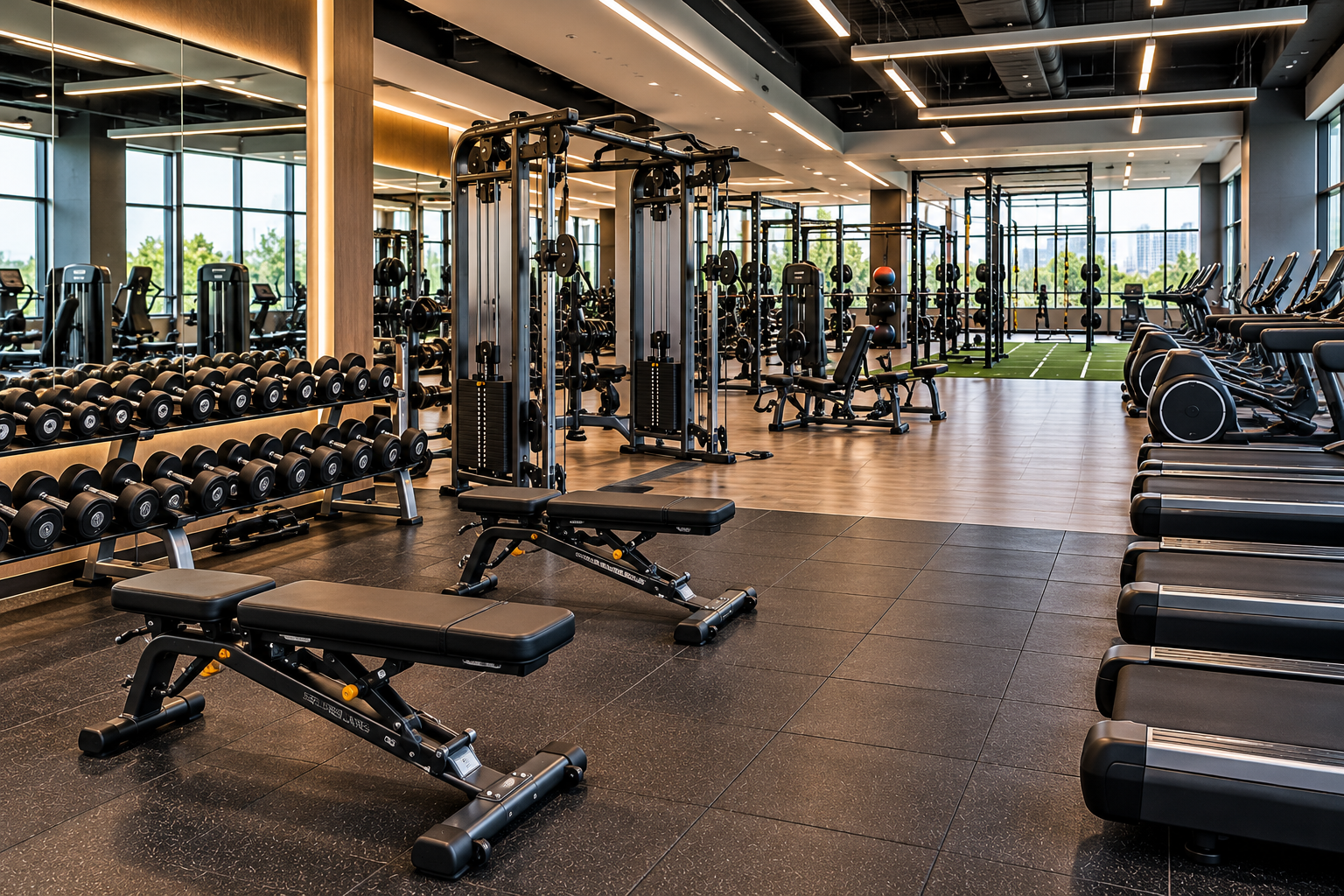
Fitness center: definition, characteristics, and how it works
A fitness center is a facility organized to offer services dedicated to physical activity through training areas, equipment, auxiliary spaces, and services aimed at different types of users. Unlike a simple weight room, a fitness center normally integrates multiple environments and training methods, designed to ensure functional use of spaces and efficient management of activities.
The characteristics of a fitness center depend on the business project, the target audience, and the available surface area. For this reason, it is important to precisely define layouts, pathways, equipment, and services before opening or reorganizing the facility.
This guide illustrates the definition of a fitness center, its main characteristics, and the practical criteria that allow one to understand how it works without delving into the specific design aspects covered in dedicated articles.
- Quick answer
- What is a fitness center?
- What characteristics distinguish it?
- How does a fitness center work?
- Practical organization criteria
- Errors to avoid
- FAQ
- Why know the characteristics of a fitness center
What is a fitness center?
A fitness center is a facility dedicated to training that integrates functional areas, equipment, auxiliary services, and spaces organized to welcome users with different needs. The configuration varies based on the project, but it should always guarantee functional pathways, safety, and proper distribution of activities.
The design must take into account applicable regulations, manufacturer instructions, and the characteristics of the property.
Careful planning facilitates operational management and the future evolution of the facility.
What is the main function?
To offer an organized environment for carrying out physical activity through services and areas dedicated to different training methods.
Who is it aimed at?
It can be designed for a diverse or specialized audience, depending on the management model adopted.
What is a fitness center from an organizational point of view?
From an organizational point of view, a fitness center brings together spaces intended for training, support services, and technical environments necessary for daily operation in a single facility.
Dimensions and configuration can vary significantly.
The organization must be consistent with the expected number of users.
What areas does it include?
Generally a reception, training room, locker rooms, technical rooms, and other service spaces, with variable distribution according to the project.
What services can it offer?
Cardiovascular training, free weights, isotonic machines, classes, functional areas, and complementary services, according to the facility's goals.
What characteristics distinguish a fitness center?
A fitness center is characterized by the integration of different environments and by a design oriented toward functionality.
Each area should perform a precise function.
The distribution of spaces affects the user experience.
Organized layout
Areas are normally divided in a way that facilitates pathways and reduces interference between different activities.
Diversified equipment
Stations are selected according to the planned services. To complete a professional facility, it is possible to evaluate the range of gym equipment most suited to the project.
How does a fitness center work?
Operation depends on the correct integration among spaces, staff, equipment, and the organization of activities.
Each area must be usable without hindering the others.
Maintenance represents a fundamental element of management.
Flow management
Clear pathways and a balanced distribution of equipment facilitate user circulation.
Daily management
Activity scheduling, periodic checks, and maintenance make it possible to maintain high efficiency of the facility.
What practical criteria should be followed?
Design should start from concrete and measurable objectives.
Each choice must be consistent with the business model.
It is useful to provide margins for future updates.
Analyze spaces
Surface area, heights, accessibility, and systems represent fundamental elements in planning.
Anticipate growth
A flexible configuration facilitates the introduction of new equipment and services over time.
What errors should be avoided?
Insufficient planning can limit the facility's efficiency.
Even an unfunctional distribution of environments can create operational criticalities.
Design should always start from the real needs of users.
Neglecting the layout
Unclear pathways and congested spaces reduce the usability of the facility.
Underestimating maintenance
Scheduling periodic checks on equipment and environments helps maintain quality and service continuity.
FAQ
Is a fitness center different from a gym?
In common parlance the terms may overlap, but a fitness center often identifies a facility with a broader offering of services and dedicated areas.
What spaces are essential?
Generally, reception, training area, locker rooms, and support rooms constitute the organizational basis of the facility.
When to choose equipment?
After defining the layout, services, and organization of spaces, verifying compatibility with the overall project.
Why know the characteristics of a fitness center?
Understanding the characteristics of a fitness center makes it possible to design a facility consistent with management goals, improving organization, functionality, and the quality of the services offered.
Analyzing spaces, pathways, equipment, and operating methods allows for creating an efficient environment that is easily adaptable to future needs.
An approach based on verifiable criteria facilitates design decisions and helps enhance the investment in the long term.
Comments (0)