
Trolley
You have no items in your shopping cart

 Budgets
 Dumbers
 Discs
Discs
 Benches
 Racks and Rigs
 Weights Holders
 Isotonic machines
 Calisthenics
 Cardio
 Kettlebells
 Flooring
 Gym Set
 Accessories
 Combat
 ARTI MARZIALI
 CONTAINER GYM
 Tug-Of-War
 Used Gym Equipment
 PILATES MACCHINARI
 GINNASTICA ARTISTICA
 CAMPI DA PADEL
 Prodotti in Pronta Consegna
 Informazioni
 IRONMAN
 Gift Card
- Donatif
- General information
- 0 I like it
- 8 Views
- 0 comments
- gym flooring, safety flooring, gym safety, shock-absorbing materials
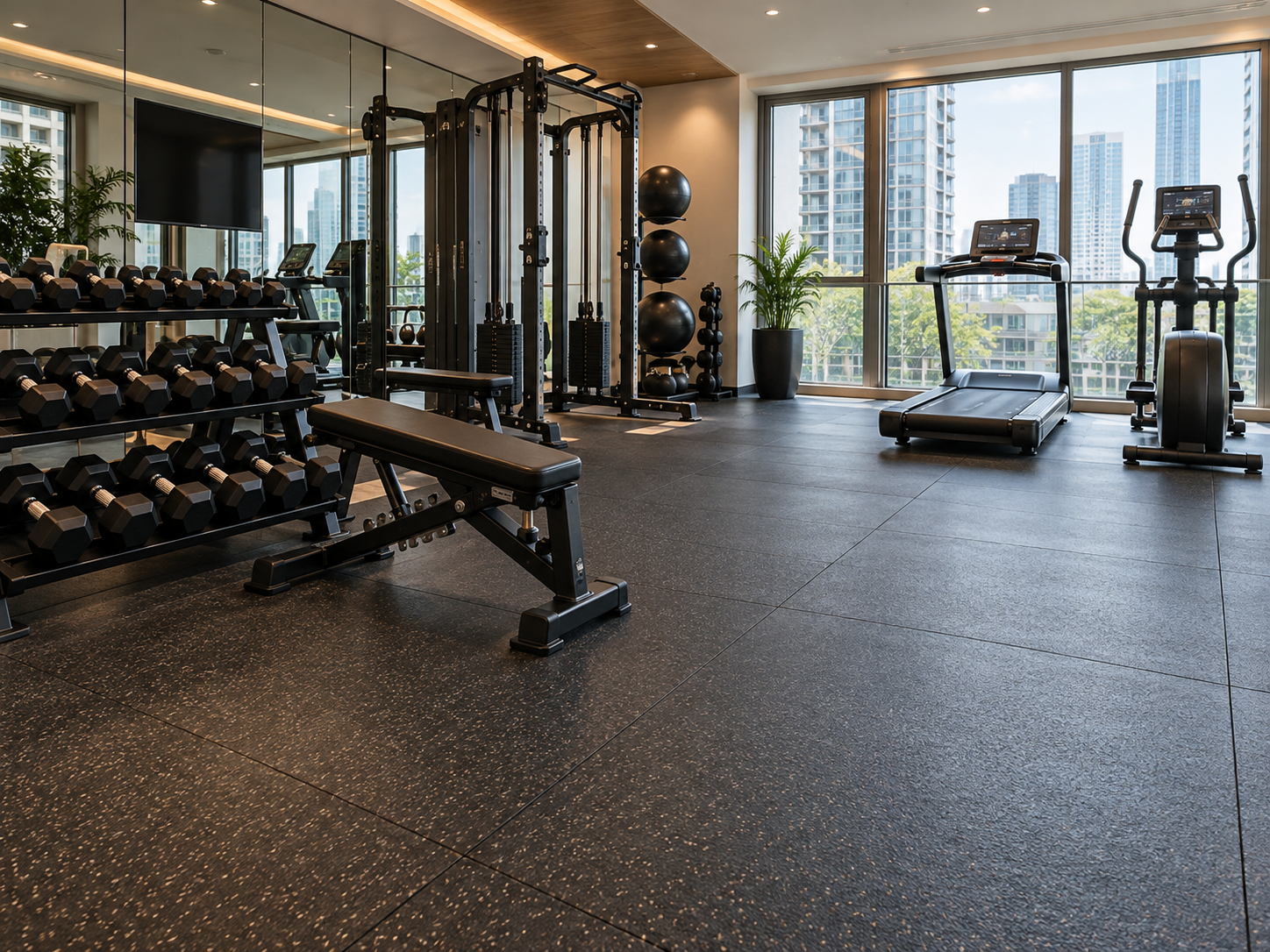
Condominium gym flooring: how to choose the most suitable solution
Condominium gym flooring is one of the most important elements in designing a fitness space. An appropriate surface helps improve training comfort, protects the underlying floor, and supports the correct use of equipment according to the manufacturer's instructions.
The operational approach is to choose the flooring only after defining the gym layout, the types of exercises planned, and the equipment to be installed. Materials, thicknesses, and surface characteristics must be compatible with the overall project and the maintenance needs of the facility.
This guide offers verifiable criteria for selecting the most suitable flooring for a condominium gym without overlapping with in-depth resources dedicated to general design, equipment selection, or maintenance management.
- Quick answer
- Why is flooring important?
- What criteria guide the choice?
- How to check compatibility
- Mistakes to avoid
- How to plan the investment
- FAQ
How to choose the flooring for a condominium gym?
The choice should start with an analysis of the planned activities, the weight of the equipment, and the spatial configuration.
It is advisable to verify that the flooring is compatible with the technical specifications of the machine manufacturers and with the usage, maintenance, and cleaning requirements of the facility.
Early planning helps avoid replacements or modifications after the equipment is installed.
What is the primary goal?
To create a surface consistent with the gym design and the intended use by residents.
What elements should be evaluated?
The type of exercises, equipment distribution, ease of maintenance, wear resistance, and space organization represent the main decision-making criteria.
Why is flooring so important?
The flooring provides the base on which equipment is installed and all gym activities take place.
A coherent choice helps protect the subfloor, makes environment cleaning easier, and improves the daily management of the facility.
It can also help reduce the transmission of noise and vibrations when integrated into a properly planned overall project.
Surface protection
A surface designed for the fitness environment helps limit wear on the underlying floor during normal gym use.
Usage comfort
The choice of flooring also affects movement practicality, cleanliness, and the organization of different gym areas.
What criteria guide the choice?
The selection should take into account the purpose of the various gym areas and the type of equipment installed.
It is useful to distinguish between spaces dedicated to cardio, strength training, and bodyweight exercises, evaluating the operational needs for each zone.
Ease of cleaning, wear resistance, and compatibility with the maintenance program represent additional evaluation elements.
Space subdivision
Flooring design can follow the organization of the different functional areas of the gym to improve management and maintenance.
Maintenance needs
Materials that are easy to clean and maintain promote more efficient gym management over time.
How to check compatibility with equipment?
Before installation, it is advisable to compare the flooring characteristics with the instructions in the technical documentation of the equipment.
Each machine may require specific installation methods, suitable surfaces, or particular support conditions indicated by the manufacturer.
The design should also consider the spaces needed for using, maintaining, and moving the equipment.
Relationship with the layout
The flooring should be designed together with the equipment arrangement, avoiding more complex subsequent modifications.
Correct installation
Following the manufacturer's instructions helps maintain the functionality and stability of the equipment over time.
What mistakes to avoid?
One of the most frequent mistakes is choosing the flooring before defining the gym project.
Another critical issue involves failing to verify compatibility with the weight of the equipment or the type of activities planned.
It is also advisable to avoid materials that are difficult to maintain or poorly suited for the intensive use of a shared space.
Uncoordinated design
The flooring should be an integral part of the overall project and not an element chosen separately.
Inadequate materials
Selection should be based on verifiable technical criteria, avoiding exclusively aesthetic decisions.
How to plan the investment?
The creation of a condominium gym should include a budget dedicated to flooring, installation, maintenance, and any eventual replacement interventions over time.
The choice of equipment and surface should be approached in a coordinated manner. To learn more about the different available categories, you can consult the section dedicated to gym equipment and evaluate the solutions best suited to the project.
Complete planning allows you to obtain a functional facility, simple to manage, and easily upgradable based on the future needs of residents.
Financial planning
The plan should include costs for supply, installation, routine maintenance, and scheduled replacements of surfaces most subject to wear.
Supplier selection
Beyond price, it is advisable to compare technical documentation, support, maintenance instructions, and the availability of solutions compatible with the project.
FAQ
Is it possible to use the same flooring throughout the gym?
It depends on the project. In some cases, it is useful to differentiate surfaces based on planned activities and installed equipment.
When should you choose the flooring?
After defining the layout, equipment, and space organization, to verify the full compatibility of the entire project.
Does the flooring require maintenance?
Yes. Regular cleaning and periodic checks help maintain its functional characteristics according to the manufacturer's instructions.
What sources should be consulted to choose the flooring?
For technical aspects, it is appropriate to refer to equipment manuals, flooring manufacturer documentation, and any references to applicable standards declared by manufacturers. For interventions in common areas, it is also advisable to check applicable building and condominium regulations. The setup of this content follows an answer-first structure with verifiable criteria, consistent with the brief provided.
Comments (0)