
Trolley
You have no items in your shopping cart

 Budgets
 Dumbers
 Discs
Discs
 Benches
 Racks and Rigs
 Weights Holders
 Isotonic machines
 Calisthenics
 Cardio
 Kettlebells
 Flooring
 Gym Set
 Accessories
 Combat
 ARTI MARZIALI
 CONTAINER GYM
 Tug-Of-War
 Used Gym Equipment
 PILATES MACCHINARI
 GINNASTICA ARTISTICA
 CAMPI DA PADEL
 Prodotti in Pronta Consegna
 Informazioni
 IRONMAN
 Gift Card
- Donatif
- General information
- 0 I like it
- 9 Views
- 0 comments
- gym flooring, safety flooring, gym safety, shock-absorbing materials
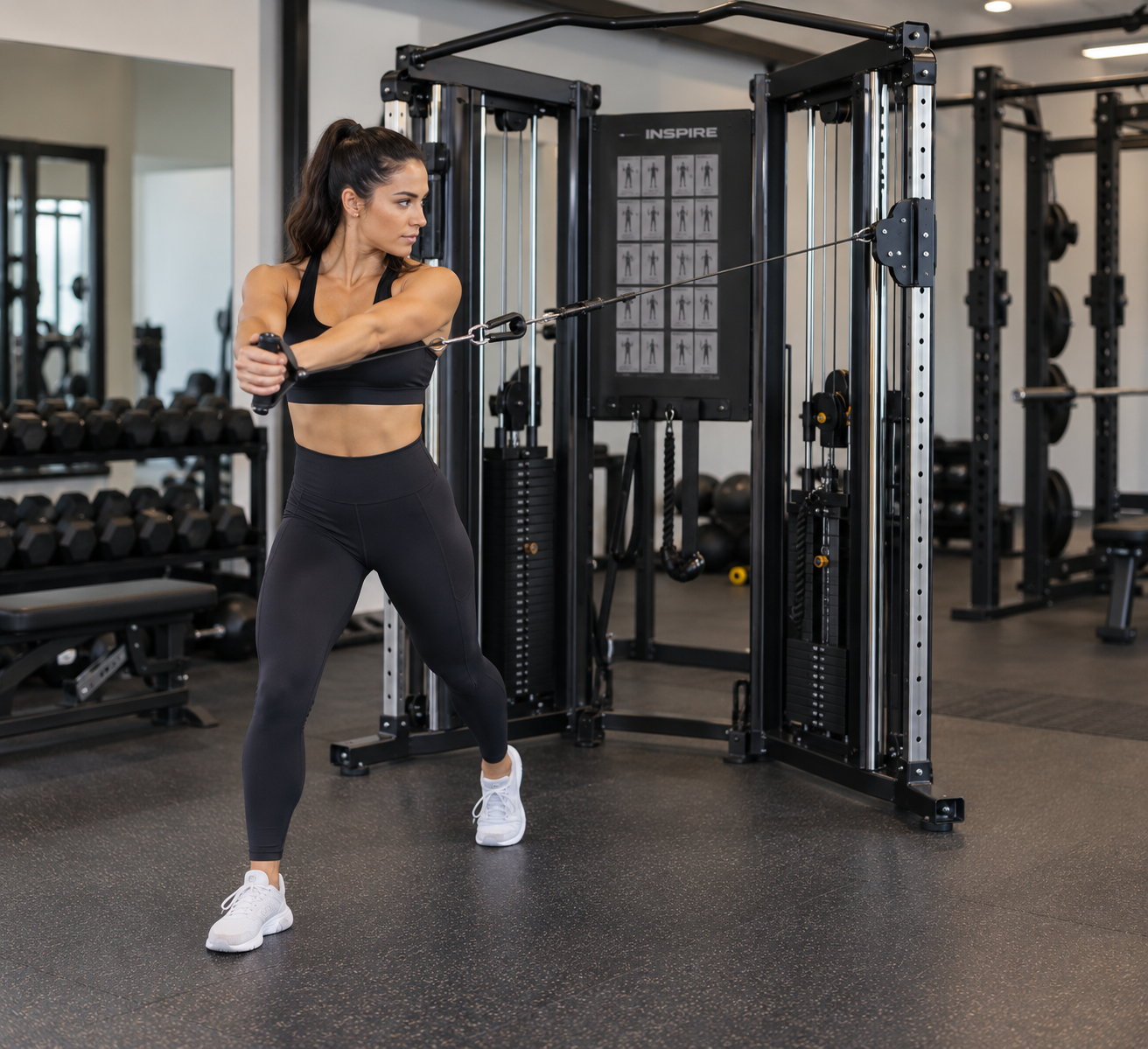
Maintenance of the functional trainer
The maintenance of the functional trainer is a fundamental activity to keep the machine efficient, preserve its durability over time, and ensure conditions of use consistent with the manufacturer's instructions. A regular inspection program makes it possible to detect early signs of wear on cables, pulleys, weight stack guides, and adjustment systems, reducing the risk of activity interruptions and extraordinary interventions.
Each machine is designed with specific construction characteristics and requires maintenance procedures reported in the manufacturer's technical manual. For this reason, it is advisable to avoid improvised interventions and follow a structured planning that includes daily checks, routine maintenance, and more in-depth periodic inspections.
An organized management of maintenance represents an advantage both for commercial gyms and personal training studios, because it helps to maintain a consistent quality of the training experience and to preserve the investment made in the equipment.
- Quick answer
- What maintenance includes
- How to carry out periodic checks
- Cleaning and routine maintenance
- Practical criteria for effective maintenance
- Errors to avoid
- Why plan maintenance
How to perform functional trainer maintenance
Maintenance of the functional trainer consists of periodically checking cables, pulleys, weight stack guides, adjustment systems, and accessories, cleaning surfaces, and following the inspection schedule provided by the manufacturer. Preventive maintenance helps keep the machine efficient and promptly identify any anomalies.
Every intervention should be logged so as to monitor the state of the machine over time and schedule any replacements of wear-prone components.
Before each use, a quick visual inspection is advisable to verify the correct functioning of the main mechanical elements.
Decision-making criteria
The main criteria concern the condition of the cables, the correct functioning of the pulleys, the fluidity of the weight stack guides, the integrity of the accessories, the stability of the structure, and the correct functioning of the adjustment systems.
Technical references
Maintenance operations must follow the instructions provided by the manufacturer. For fitness equipment, the standards of the EN ISO 20957 series can also represent a reference when applicable.
What maintenance includes
Complete maintenance includes visual inspections, functional checks, cleaning of the machine, and verification of the components most stressed during use. The objective is not only to correct any problems but to prevent their occurrence through constant checks.
The components that require the most attention are generally the cables, pulleys, weight stack guides, column adjustment systems, carabiners, and accessories used during exercises.
The supporting structure should also be checked periodically to verify the correct tightening of the elements provided by the manufacturer.
Main components
The verification of cables, pulleys, guides, selectors, fastening systems, and accessories represents the basis of a routine maintenance program.
Intervention log
Maintaining documentation of the checks carried out facilitates the planning of preventive maintenance and the monitoring of wear.
How to carry out periodic checks
Before the gym opens or personal training sessions begin, it is useful to visually check the general condition of the machine. Any abnormal noises, friction, or irregular movements should be investigated before use.
Periodic checks also include checking the sliding of the pulleys, the correct tension of the cables, and the functioning of the adjustments along their entire range of motion.
When the machine is used with high frequency, it is advisable to increase the regularity of checks according to the maintenance plan.
Daily checks
A quick inspection allows you to promptly identify evident anomalies before they affect the functioning of the machine.
Scheduled checks
In-depth checks should follow the frequency indicated by the manufacturer and take into account the actual use of the equipment.
Cleaning and routine maintenance
Cleaning the surfaces helps keep the machine orderly and facilitates the inspection of mechanical components. It is advisable to use products compatible with the materials indicated by the manufacturer, avoiding substances that could damage coatings or plastic parts.
Accessories should be cleaned and stored correctly at the end of the workout so as to reduce wear due to impacts or improper storage.
Even an anti-shock flooring maintained in good conditions contributes to the stability of the training area and protects the floor. To learn more about available solutions, you can consult gym anti-shock flooring.
Surface cleaning
Regular cleaning favors the maintenance of the aesthetic appearance of the machine and makes it easier to identify any anomalies.
Accessory management
Properly storing handles, ropes, and bars helps preserve their condition over time.
What practical criteria to follow
An effective program should distinguish between daily checks, periodic technical verifications, and preventive replacement of wear-prone components according to the manufacturer's instructions.
The availability of compatible spare parts represents an important element in the choice of the machine and in the long-term management of maintenance.
For facilities with intensive use, it may be useful to plan additional checks compared to the scheduled routine maintenance.
Intervention scheduling
Regular planning reduces the risk of machine downtime and facilitates the organization of maintenance activities.
Compatible spare parts
The use of components compliant with the manufacturer's specifications helps maintain the performance of the machine.
Errors to avoid
One of the most frequent errors consists in intervening only when the machine presents an evident malfunction. Preventive maintenance is generally more effective than corrective interventions performed in an emergency.
It is also advisable to avoid unauthorized modifications, neglecting the inspection of cables, or using accessories incompatible with the pulley system.
Even the failure to log checks makes it more difficult to monitor the evolution of wear and plan future interventions.
Lack of preventive maintenance
Scheduling regular checks allows you to promptly identify critical issues before they become more complex to manage.
Lack of documentation
Logging interventions facilitates the technical management of the machine and improves maintenance planning.
Why plan maintenance
Organized maintenance helps keep the functional trainer efficient, reliable, and ready for daily use, reducing downtime and preserving the value of the equipment.
For gyms, fitness centers, and personal training studios, it represents a useful tool to ensure operational continuity and plan technical interventions without interrupting activity.
Following the manufacturer's instructions, regularly monitoring the condition of components, and documenting all checks carried out makes it possible to manage the functional trainer with verifiable technical criteria consistent with professional use.
Comments (0)