
Trolley
You have no items in your shopping cart

 Budgets
 Dumbers
 Discs
Discs
 Benches
 Racks and Rigs
 Weights Holders
 Isotonic machines
 Calisthenics
 Cardio
 Kettlebells
 Flooring
 Gym Set
 Accessories
 Combat
 ARTI MARZIALI
 CONTAINER GYM
 Tug-Of-War
 Used Gym Equipment
 PILATES MACCHINARI
 GINNASTICA ARTISTICA
 CAMPI DA PADEL
 Prodotti in Pronta Consegna
 Informazioni
 IRONMAN
 Gift Card
- Donatif
- General information
- 0 I like it
- 463 Views
- 0 comments
- gym flooring, safety flooring, gym safety, shock-absorbing materials
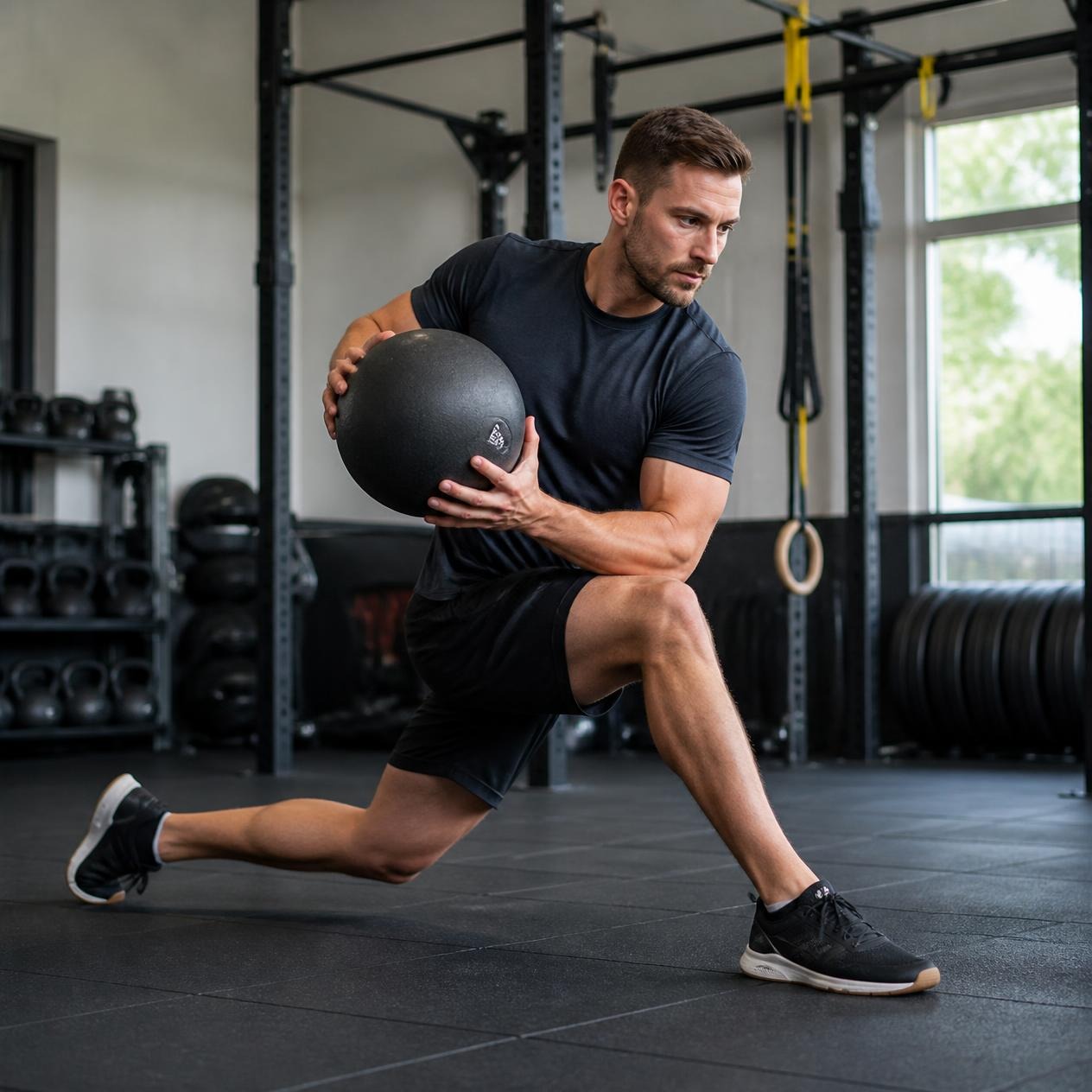
Functional Training in an Apartment Building: How to Reduce Noise and Vibrations
Working out at home is an increasingly popular solution for those who want to stay in shape without depending on gym hours. However, those who live in an apartment often face a concrete problem: the noise produced by functional training. Jumps, kettlebells placed on the floor, slam balls, and explosive movements can generate vibrations that easily propagate through floors and building structures, creating annoyance for neighbors and limiting the freedom to train.
The good news is that functional training does not necessarily have to be noisy. With proper planning of your home gym, the choice of adequate equipment, and some technical precautions, it is possible to perform intense workouts while drastically reducing perceived noise. In many cases, a few targeted interventions are enough to transform a room into a space dedicated to training without compromising the tranquility of the building.
In this guide, we will analyze the best solutions for creating an environment dedicated to silent functional training, choosing the most suitable tools, the best materials, and the precautions that allow you to limit noise, vibrations, and impacts on the floor. The goal is not only to respect the neighborhood but also to improve comfort, safety, and the durability of the equipment.
- Where does noise come from during functional training
- The importance of flooring
- Which equipment to choose
- How to modify exercises without losing effectiveness
- How to organize a silent home gym
- The most common mistakes to avoid
- Practical tips for training without disturbing
- Why invest in the right solutions
Where does noise come from during functional training
Many associate noise exclusively with dropping weights, but in reality, there are numerous sound sources. The main culprits are direct impacts on the floor, explosive movements like burpees and jump squats, moving equipment, and vibrations transmitted to the building structure.
Vibrations often represent the biggest problem. Even when the noise perceived in the room is contained, the energy generated by impacts can propagate through the floor slab and be much more evident in the apartments below. For this reason, simply reducing the volume of the sound is not enough: you need to limit the transmission of vibrations.
Understanding the origin of the problem allows you to intervene in a targeted way, choosing truly effective solutions instead of relying on improvised remedies that produce limited benefits.
Direct impact on the floor
Every time a weight is placed down with little care or an exercise ends with a sudden impact, a portion of the energy is transferred directly to the building structure.
Vibrations are more problematic than noise
The low frequencies generated by impacts are easily transmitted through concrete and masonry. Reducing vibrations is therefore the absolute priority for those living in an apartment building.
The importance of flooring
The first solution to adopt consists of installing a dedicated technical surface. Rubber home gym flooring absorbs a significant portion of the energy produced by impacts, protects the original floor, and improves stability during exercises.
The thickness of the flooring plays a fundamental role. High-density rubber tiles between 15 and 30 millimeters represent an excellent compromise between vibration absorption, durability, and comfort. For particularly intense workouts, even greater thicknesses or multi-layer systems can be used.
It is important to choose products designed specifically for fitness environments. Materials that are too soft compromise the stability of exercises, while cheap surfaces tend to deform quickly, losing effectiveness.
Which thickness to choose
For home use oriented toward functional training, technical flooring that guarantees a good balance between shock absorption and movement stability is generally recommended.
Why quality makes the difference
Professional flooring maintains its elastic characteristics over time, reduces noise, and helps preserve both the home floor and the equipment used.
Which equipment to choose to reduce noise
The choice of equipment greatly influences the level of noise produced during workouts. Tools designed for home environments often incorporate materials capable of limiting impacts and protecting surfaces.
A rubber-coated kettlebell represents one of the most effective solutions. The rubber coating reduces noise in case of accidental placement, protects the floor, and limits vibrations compared to completely cast-iron models. Even if it should not be dropped intentionally, it offers a higher safety margin during daily use.
Similarly, slam balls with specific coatings, quality bumper plates, and coated dumbbells allow you to significantly reduce acoustic impacts without sacrificing training quality.
Why choose coated kettlebells
The rubber coating protects surfaces, reduces noise during placement, and improves the overall experience of training in an apartment.
Slam balls and other silent tools
Slam balls designed to absorb impact represent a much more suitable alternative to classic medicine balls when the goal is to train without disturbing the neighborhood.
How to modify exercises without losing effectiveness
Training silently does not mean reducing intensity. Many exercises can be adapted while maintaining the same physiological goals but limiting impacts on the floor.
For example, jump squats can be replaced with explosive squats by controlling the landing phase, while burpees can be performed without the final jump. Even kettlebell swings can be performed by placing the tool down with more control at the end of the set.
Attention to technique is one of the best tools for reducing noise. Fluid and controlled movements simultaneously improve effectiveness, safety, and comfort.
Controlling the landing phase
Reducing the speed of impact during plyometric exercises significantly limits the transmission of vibrations without compromising the quality of the workout.
More controlled movements
Accurate technique reduces accidental impacts of equipment and improves the efficiency of the athletic gesture.
How to organize a silent home gym
The layout of the equipment also contributes to noise reduction. Positioning the training area away from walls shared with other apartments can limit the propagation of vibrations.
Using dedicated racks also prevents kettlebells and dumbbells from being placed directly on the floor between sets. Additional mats under the racks further contribute to shock absorption.
Keeping the environment tidy also reduces the risk of accidental collisions between tools and makes workouts more fluid and efficient.
Space distribution
A proper arrangement of tools facilitates movement and limits unnecessary displacement that can generate noise.
Using dedicated supports
Always storing tools on specific supports avoids repeated impacts on the floor and extends the life of the equipment.
The most common mistakes to avoid
The most frequent mistake is training directly on the home floor, thinking that a simple fitness mat is enough. In reality, these products are designed primarily for comfort and not for vibration absorption.
Another mistake concerns the choice of equipment not suitable for the home environment. Metal weights without coating and low-quality accessories tend to produce noisier impacts and increase the risk of damaging the floor.
Finally, neglecting equipment maintenance can cause squeaks, vibrations, and additional noise during daily use.
The mat is not enough
A normal yoga mat does not replace technical flooring designed to support weights and absorb impacts.
Avoid dropping weights
Even with coated equipment, it is good practice to always guide the movement until it is placed down, minimizing stress on the building structure.
Practical tips for training without disturbing
Scheduling workouts at the most appropriate times is a gesture of respect toward the neighborhood and reduces the likelihood of creating unpleasant situations. Limiting high-impact exercises in the early morning or late evening also contributes to better coexistence.
Periodically checking the condition of the flooring, supports, and equipment allows you to maintain high acoustic insulation effectiveness over time. Small preventive maintenance interventions avoid the appearance of unwanted noises.
For those who want to train consistently in an apartment, designing a silent home gym means being able to use your equipment every day without limitations and with greater peace of mind.
Creating a sustainable routine
Regular, technically controlled, and well-organized workouts produce less noise and promote better exercise quality.
Small adjustments make a big difference
Always guiding the tools during every movement and keeping the home gym tidy helps to significantly reduce acoustic impacts.
Why invest in the right solutions
Creating a home gym suitable for an apartment building means simultaneously improving comfort, safety, and training quality. Good flooring, coated equipment, and careful planning allow you to perform intense sessions while significantly reducing kettlebell noise in the apartment building and vibrations transmitted to neighboring apartments.
To obtain professional results, it is advisable to choose products designed specifically for home fitness. A selection of home gym equipment allows you to build a functional, resistant space that is also suitable for those living in an apartment.
Investing in the right equipment means transforming your silent functional training into a sustainable long-term habit, preserving relationships with neighbors and creating an ideal environment to train every day with maximum tranquility.
Comments (0)