
Trolley
You have no items in your shopping cart

 Budgets
 Dumbers
 Discs
Discs
 Benches
 Racks and Rigs
 Weights Holders
 Isotonic machines
 Calisthenics
 Cardio
 Kettlebells
 Flooring
 Gym Set
 Accessories
 Combat
 ARTI MARZIALI
 CONTAINER GYM
 Tug-Of-War
 Used Gym Equipment
 PILATES MACCHINARI
 GINNASTICA ARTISTICA
 CAMPI DA PADEL
 Prodotti in Pronta Consegna
 Informazioni
 IRONMAN
 Gift Card
- Donatif
- General information
- 0 I like it
- 9 Views
- 0 comments
- gym flooring, safety flooring, gym safety, shock-absorbing materials
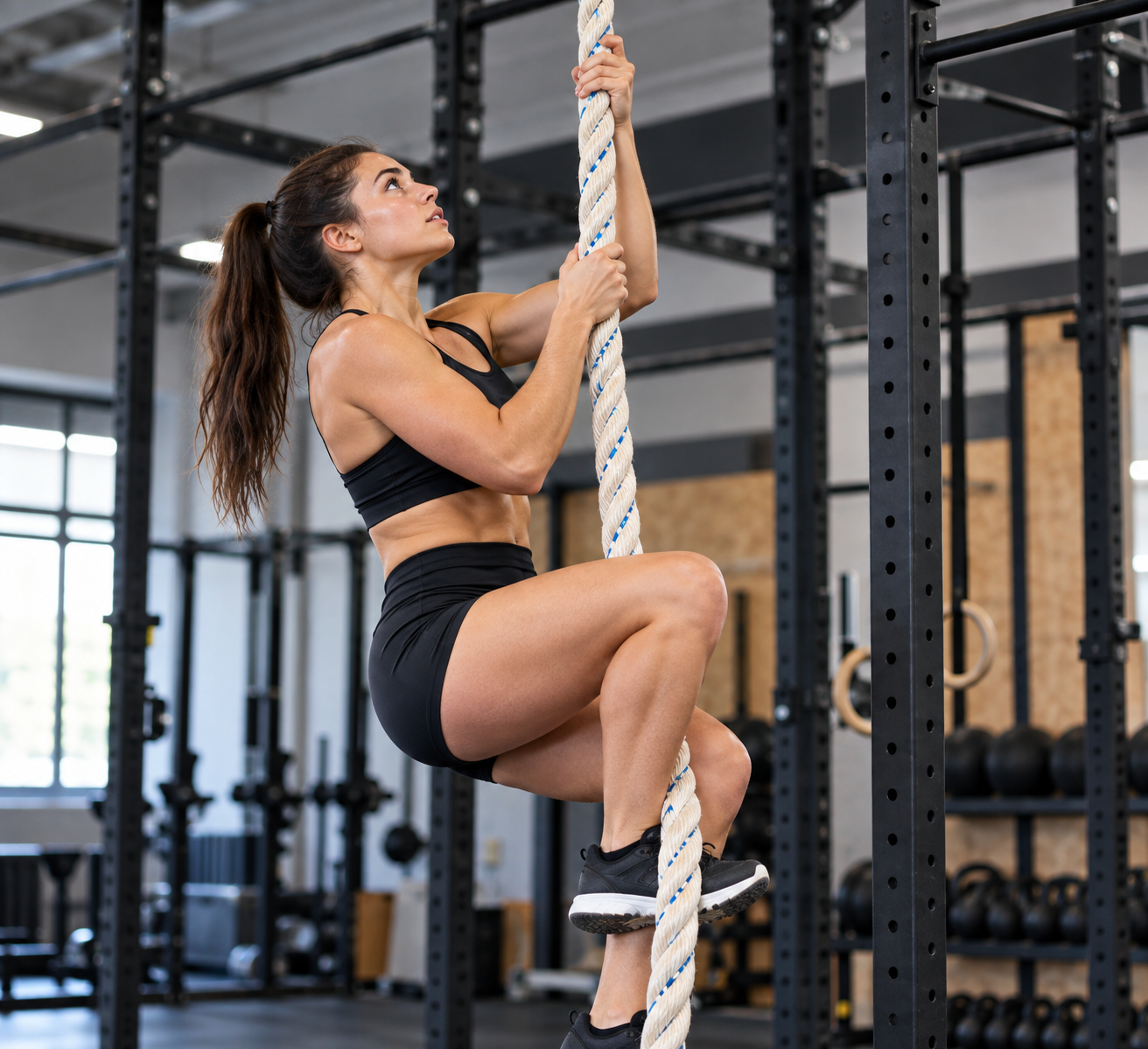
Hemp vs Synthetic Rope: Which to Choose for Rope Climbing
Climbing rope in hemp or synthetic? The choice depends on the context of use, training frequency, the environment where the rope is installed, and the gym's goals. Both materials can be used for rope climbing, but they present different characteristics in terms of grip, maintenance, moisture resistance, and durability.
For a professional facility, there is no single universally valid solution. Instead, it is necessary to evaluate objective criteria such as the number of users, ease of cleaning, compatibility with available spaces, the type of training offered, and the instructions provided by the rope manufacturer.
This guide compares the main differences between hemp and synthetic ropes, offering practical criteria for choosing the most suitable solution without replacing the manufacturer's technical instructions or the checks required during the design of the training area.
- Quick answer
- What are the main differences?
- Comparative table
- How to choose the right rope
- Characteristics and use in rope climbing
- Mistakes to avoid
- FAQ
- Evaluating the investment
Hemp or synthetic: which to choose?
Hemp rope generally offers a more natural feel to the touch and is often appreciated in traditional workouts. Synthetic ropes are normally more resistant to moisture, require different maintenance, and can better adapt to environments with intensive use.
The decision should be based on the gym's operating context rather than the rope material alone.
Before purchasing, it is always advisable to check the technical specifications, installation methods, and maintenance instructions provided by the manufacturer.
Main criterion
The choice must favor compatibility with the environment, frequency of use, and the planned maintenance schedule.
Technical documentation
For data related to materials, capacities, and methods of use, it is appropriate to refer exclusively to the manuals and technical data sheets of the climbing rope manufacturer.
What are the main differences?
The differences mainly concern the behavior of the material during daily use.
Hemp ropes are traditionally used in rope climbing thanks to their natural surface, while synthetic ones are designed to offer different characteristics in terms of maintenance and resistance to external agents.
Neither material is universally better: each solution has advantages and limitations that must be evaluated against the needs of the facility.
Hemp rope
Hemp offers a grip feel appreciated by many users and is often chosen for workouts oriented toward the tradition of rope climbing.
Synthetic rope
Synthetic materials can guarantee a different response to moisture and different maintenance compared to natural fibers, according to the manufacturer's specifications.
Comparative table
The following comparison summarizes the main aspects to consider.
| Criterion | Hemp | Synthetic |
|---|---|---|
| Material | Natural fiber | Synthetic fiber |
| Grip feel | Generally natural | Variable according to the material |
| Moisture resistance | To be verified according to the manufacturer | Generally more suitable for humid environments |
| Maintenance | Follow the manufacturer's instructions | Follow the manufacturer's instructions |
| Use | Traditional training | Professional and intensive training according to the model |
Characteristics can change significantly from one manufacturer to another. For this reason, it is always necessary to consult the technical documentation of the specific product.
How to choose the right rope
The choice should start with an analysis of the installation environment and the number of users who will use the climbing rope.
A sports center with continuous use may have different needs compared to a gym with limited access or a home gym.
It is useful to simultaneously evaluate material, length, diameter, anchorage system, and maintenance schedule.
Length and space
The length of the rope must be compatible with the available height and the layout of the training area.
Rope diameter
The ideal diameter depends on the type of users, training goals, and manufacturer specifications. There is no single value valid for all installations.
Characteristics and use in rope climbing
Rope climbing develops grip strength, coordination, body control, and muscular endurance.
To improve technique, it is important to learn the foot lock, which allows the load to be distributed between the upper and lower limbs.
Training can be completed with complementary exercises such as pegboards, hangings, and pull-ups on the bar.
Progressions
Beginners should start with preparatory exercises before tackling full ascents.
Functional training
The climbing rope can be included in circuits along with rigs, bars, and other functional training equipment to create complete routes.
Mistakes to avoid
One of the most common mistakes is choosing the material exclusively based on price without evaluating the environment, maintenance, and frequency of use.
It is equally important to avoid installations on unverified structures or using ropes lacking the necessary technical documentation.
Rope replacement should take place following the criteria indicated by the manufacturer and after regular inspections.
Installation
The anchorage must be compatible with the load-bearing structure and checked periodically.
Maintenance
A scheduled inspection plan helps keep the equipment efficient and identify any signs of wear.
FAQ
Is hemp always better than synthetic rope?
No. Each material presents different characteristics that must be evaluated based on the environment and intended use.
Which material lasts longer?
Durability depends on intensity of use, maintenance, environmental conditions, and the manufacturing quality of the product.
Is there a recommended diameter?
The diameter must be chosen considering the user level and the manufacturer's instructions. There is no universal standard.
Which standards should be consulted?
For installation, maintenance, and use, it is necessary to follow the manufacturer's technical documentation and the standards applicable to the equipment and supporting structure when provided.
Evaluating the investment
Choosing the climbing rope represents a design decision that must take into account the entire lifecycle of the equipment. Evaluating material, length, diameter, environmental conditions, maintenance, and methods of use allows you to identify the most suitable solution for the gym's needs without relying exclusively on price or personal preferences. A technical comparison between hemp and synthetic materials allows you to create a functional, safe training area consistent with the users' level.
Comments (0)