
Trolley
You have no items in your shopping cart

 Budgets
 Dumbers
 Discs
Discs
 Benches
 Racks and Rigs
 Weights Holders
 Isotonic machines
 Calisthenics
 Cardio
 Kettlebells
 Flooring
 Gym Set
 Accessories
 Combat
 ARTI MARZIALI
 CONTAINER GYM
 Tug-Of-War
 Used Gym Equipment
 PILATES MACCHINARI
 GINNASTICA ARTISTICA
 CAMPI DA PADEL
 Prodotti in Pronta Consegna
 Informazioni
 IRONMAN
 Gift Card
- Donatif
- General information
- 0 I like it
- 9 Views
- 0 comments
- gym flooring, safety flooring, gym safety, shock-absorbing materials
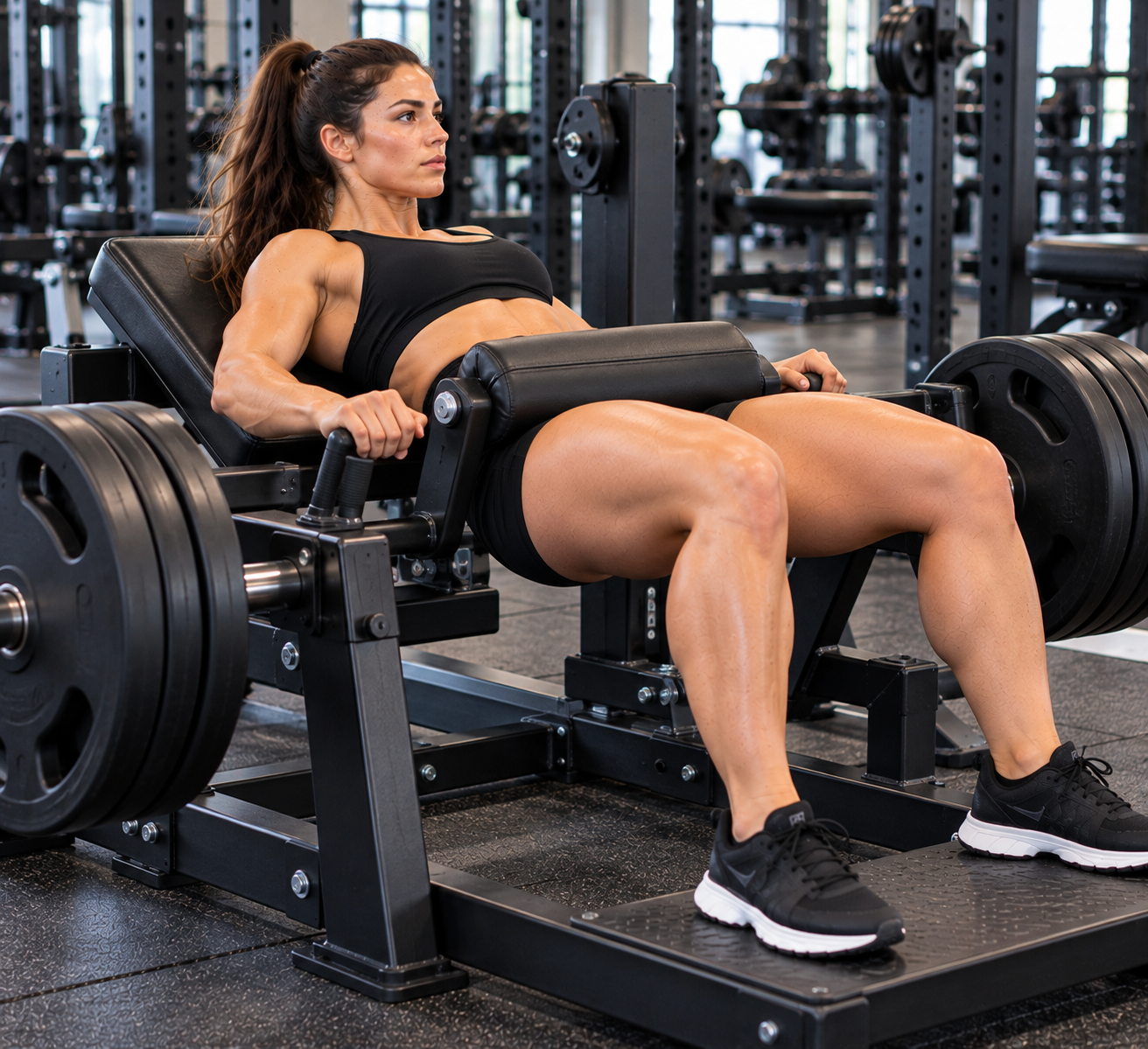
Hip thrust for bodybuilding: requirements and usage criteria
The hip thrust is one of the most used exercises in bodybuilding programs dedicated to hip extension. Thanks to the possibility of performing the movement with different loading modalities and easily adapting the setup, it can be included in numerous training strategies aimed at developing the musculature of the posterior chain.
To make the most of this exercise, it is important to properly set up the station, choose adequate equipment, and maintain a repeatable technique throughout all sets. Execution quality should always take priority over load increases, especially when the exercise is used with high frequency within the programming.
This guide delves into the requirements and usage criteria of the hip thrust in bodybuilding without discussing in detail the comparison with the glute bridge, resistance band variants, or the differences between barbell and machine, topics covered in dedicated articles.
- Quick answer
- What requirements must the station have?
- How to correctly use the hip thrust in bodybuilding
- Practical training criteria
- Safety checks
- Errors to avoid
- FAQ
- Why proper organization improves training
How to use the hip thrust in bodybuilding?
In bodybuilding, the hip thrust is integrated into training programs through a stable setup, controlled technique, and a load progression consistent with the user's level. Careful preparation of the equipment and movement control represent the main criteria for effective execution.
The choice of equipment should be consistent with the training program and the user's experience.
Each set should start after verifying the stability of the station and the correct positioning of the load.
What is the fundamental principle?
Maintain consistent technique across all repetitions, preventing load increases from compromising execution quality.
What is the goal of the exercise?
Integrate the hip thrust into bodybuilding programming through orderly station management and a technique that is repeatable over time.
What requirements must the station have?
Careful preparation facilitates exercise execution and improves workout organization.
Every element of the station should be checked before the start of the set.
A stable configuration helps maintain continuity throughout the movement.
Stable bench
The bench must be placed on a regular surface, maintain stable support, and show no wobbling during exercise execution.
Adequate equipment
Barbells, weight plates, collars, and other accessories should be checked before training to verify integrity and correct assembly.
How to correctly use the hip thrust?
A consistent operational sequence facilitates technique maintenance.
Station preparation is an integral part of the exercise.
Each phase should be performed with control.
Prepare the configuration
Correctly position the upper back on the bench, place the feet stably, and verify the correct positioning of the load before starting the movement.
Control the execution
Maintain a regular trajectory during hip extension, avoiding sudden accelerations and posture variations between one repetition and the next.
What practical criteria help in bodybuilding?
Methodical session management makes it easier to monitor training quality.
Even small organizational details can improve set continuity.
Technique should remain the main reference for every progression.
Load management
Increasing the weight only when the technique remains stable throughout all planned repetitions allows for greater exercise control.
Station organization
To set up a free-weight configuration, you can use an olympic barbell compatible with the weight room, organizing the bench, plates, and workspace in an orderly manner.
What checks to perform before training?
A short checklist helps standardize station preparation.
Preventive checks reduce the risk of organizational errors.
Equipment maintenance is a complementary activity to training.
Check the bench
Verify that the bench is stable, correctly positioned, and free of unwanted movements during a brief preliminary test.
Check the barbell
Make sure the plates are secured, the barbell is intact, and the surrounding area allows for the complete execution of the exercise.
What errors to avoid?
Many errors stem from insufficient station preparation.
Systematic verification facilitates the maintenance of technical quality.
Quickly correcting inaccuracies helps improve training continuity.
Increasing the load too quickly
Increasing the weight before consolidating technique can make execution less controlled and complicate station management.
Neglecting preparation
Starting training without verifying bench stability, barbell layout, and available space can compromise the quality of the entire session.
FAQ
Is the hip thrust suitable for bodybuilding?
Yes. It is frequently included in bodybuilding programs as an exercise dedicated to hip extension and can be adapted to different training modalities.
When to increase the load?
It is advisable to increase it only when the technique remains constant and controlled during all planned repetitions.
Is it useful to check the station before every workout?
Yes. Checking the bench, barbell, plates, and workspace helps maintain safer and more organized operational conditions.
Why properly organize the station?
A hip thrust performed on a carefully prepared station allows you to train with greater continuity, keeping technical quality constant even during elaborate bodybuilding programs.
Systematically checking the bench, equipment, load, and available space makes it easier to manage training progression and reduces errors related to station preparation.
Adopting verifiable operational criteria represents an effective strategy to integrate the exercise into programming while maintaining order, efficiency, and quality during every session.
Comments (0)