
Trolley
You have no items in your shopping cart

 Budgets
 Dumbers
 Discs
Discs
 Benches
 Racks and Rigs
 Weights Holders
 Isotonic machines
 Calisthenics
 Cardio
 Kettlebells
 Flooring
 Gym Set
 Accessories
 Combat
 ARTI MARZIALI
 CONTAINER GYM
 Tug-Of-War
 Used Gym Equipment
 PILATES MACCHINARI
 GINNASTICA ARTISTICA
 CAMPI DA PADEL
 Prodotti in Pronta Consegna
 Informazioni
 IRONMAN
 Gift Card
- Donatif
- General information
- 0 I like it
- 70 Views
- 0 comments
- gym flooring, safety flooring, gym safety, shock-absorbing materials
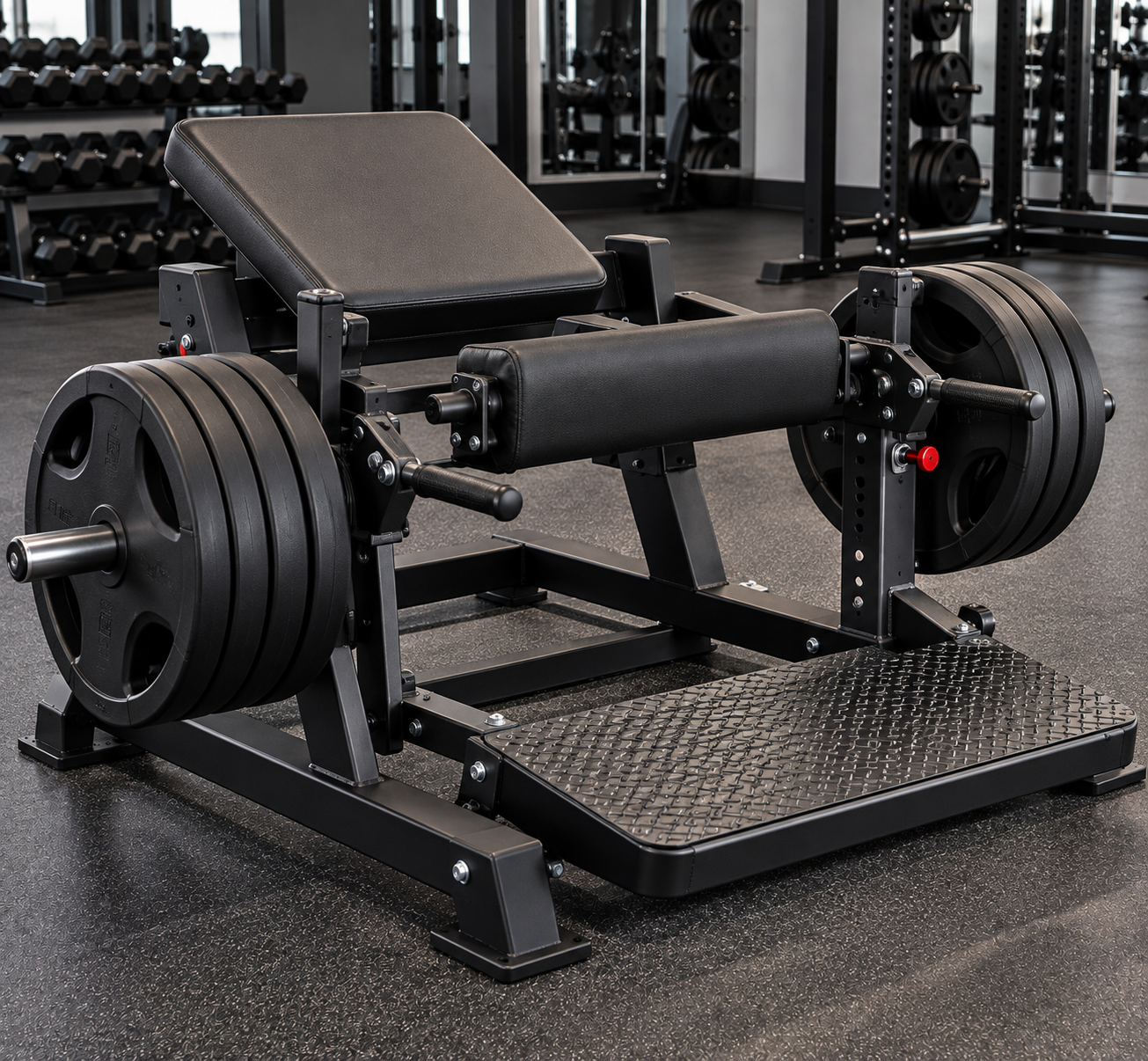
Hip thrust machine for bodybuilding: requirements and criteria of use
A hip thrust machine intended for bodybuilding should offer effective adjustments, a stable structure, a loading system suited to training objectives, and biomechanics consistent with the manufacturer's design. The choice must be based on verifiable criteria such as build quality, ergonomics, maintenance, and practical use, without exclusively considering the declared maximum load.
In bodybuilding, training continuity and the ability to quickly adapt the machine to different users represent important aspects, especially in high-traffic gyms. For this reason, it is useful to carefully evaluate both the technical features and the simplicity of daily use.
This guide analyzes the main requirements to consider in choosing and using a hip thrust machine dedicated to bodybuilding, highlighting the most common errors and the checks to be performed before training.
- What requirements must it have?
- How to use it correctly?
- Free weight or weight stack?
- What adjustments are important?
- Errors to avoid
- Safety checks
- Comparison table
- How to choose the most suitable machine
What requirements must a hip thrust machine for bodybuilding have?
A machine intended for intensive use should offer a rigid structure, components designed for frequent use, and adjustment systems that are simple to use.
Elements to verify include frame quality, ergonomics of contact points, fluidity of movement, availability of spare parts, and simplicity of maintenance.
It is also useful to verify that the manufacturer provides complete technical documentation and detailed instructions for installation, use, and periodic checks.
Why is the frame important?
A stable structure helps maintain consistent machine behavior during use and reduces unwanted oscillations.
How much does ergonomics matter?
Well-designed supports, padding, and contact points facilitate adapting the machine to users with different physical characteristics.
How to use the machine correctly?
Before training, it is advisable to check that all adjustments are set correctly and that locking systems are fully engaged.
The user should follow the procedure indicated by the manufacturer to set up the machine and modify any adjustments only as provided by the manual.
A quick visual check before each session allows identifying any anomalies or components subject to wear.
What checks to perform before use?
Check the stability of the machine, correct positioning of adjustments, integrity of components, and absence of visible damage.
How to manage a shared machine?
In gyms, it is appropriate to check all settings before each use, even if the machine was used immediately before by another user.
Is a free weight or weight stack machine better?
The choice between free weight or weight stack depends primarily on the gym's organization and operational preferences.
Free weight machines allow the use of Olympic plates and can offer greater flexibility in managing available weight.
Models with weight stacks instead allow rapid load variations via selector and can be practical in very busy weight rooms.
When to choose free weight?
It can be an interesting solution when the facility already has a complete set of Olympic plates and wishes to maintain equipment uniformity.
When to prefer the weight stack?
It can facilitate station management when users frequently change the load during sessions.
Which adjustments are most important?
The hip thrust machine adjustments allow adapting the machine to different users and improve practicality during training.
Backrest, starting position, locking systems, and belt, when present, should be easily adjustable and stably maintain the set position.
Before purchase, it is useful to verify the number of available adjustments and the simplicity of their use.
Why check the locking systems?
Adjustment mechanisms must function precisely and ensure stable fixation throughout use.
Is comfort a selection criterion?
Yes. Ergonomic padding and supports can improve the user experience, especially during repeated sessions.
What errors to avoid?
One of the most common errors consists in evaluating the machine exclusively based on the declared maximum load.
It is equally important to verify maintenance, availability of spare parts, simplicity of adjustments, and overall dimensions of the equipment.
Even ignoring the manufacturer's manual or neglecting periodic checks can compromise the management of the machine over time.
Why not consider price alone?
The initial cost represents only a part of the overall investment, which also includes maintenance, spare parts, and operational management.
How much does available space matter?
Before installation, it is advisable to check overall dimensions, operating area, and access paths provided by the technical documentation.
What checks improve safety?
Before each use, it is appropriate to check the stability of the machine, the correct functioning of adjustments, and the absence of damaged components.
The flooring should be suitable for the weight of the equipment and comply with the manufacturer's installation instructions.
For those wishing to learn more about the various available solutions, it is possible to consult the isotonics machines category.
How much does maintenance matter?
Scheduled maintenance allows early identification of any anomalies and keeps the machine efficient over time.
What is the main reference?
The installation, use, and maintenance instructions provided by the manufacturer always represent the main technical reference.
Comparative table of selection criteria
| Criterion | What to verify |
|---|---|
| Frame | Rigidity and stability |
| Adjustments | Number and ease of use |
| Loading system | Free weight or weight stack |
| Ergonomics | Supports and padding |
| Maintenance | Spare parts and component accessibility |
| Documentation | Manuals and technical instructions |
This table allows comparing different models using objective and easily verifiable parameters.
Actual characteristics must always be compared with the manufacturer's official specifications.
What sources to consult?
User manuals, technical documentation, installation instructions, and manufacturer datasheets represent the primary sources to verify the characteristics and operating modes of the machine.
What aspects to compare before purchase?
Ergonomics, adjustments, availability of spare parts, simplicity of maintenance, overall dimensions, and build quality are useful criteria for a complete evaluation.
How to choose the hip thrust machine best suited for bodybuilding?
The choice of a hip thrust machine intended for bodybuilding should be based on technical criteria, practical use, and ease of management over time. A machine with effective adjustments, a stable structure, and simple maintenance can better adapt to the needs of gyms with frequent use.
Before investing, it is advisable to compare technical documentation, construction features, adjustment methods, loading system, and spare parts availability. This approach allows evaluating each model with verifiable parameters without limiting oneself to commercial information.
FAQ
Is a hip thrust machine suitable for a bodybuilding gym? It can be a coherent solution when its technical features meet the needs of the facility and users.
Is free weight or weight stack preferable? The choice depends on the gym's organization, load management, and operational preferences.
Are adjustments important? Yes. An easily adjustable machine can better adapt to users with different physical characteristics.
What is the most useful document before purchase? The manufacturer's manual and technical documentation represent the main sources for verifying the characteristics, installation, and maintenance of the machine.
Comments (0)