
Trolley
You have no items in your shopping cart

 Budgets
 Dumbers
 Discs
Discs
 Benches
 Racks and Rigs
 Weights Holders
 Isotonic machines
 Calisthenics
 Cardio
 Kettlebells
 Flooring
 Gym Set
 Accessories
 Combat
 ARTI MARZIALI
 CONTAINER GYM
 Tug-Of-War
 Used Gym Equipment
 PILATES MACCHINARI
 GINNASTICA ARTISTICA
 CAMPI DA PADEL
 Prodotti in Pronta Consegna
 Informazioni
 IRONMAN
 Gift Card
- Donatif
- General information
- 0 I like it
- 0 Views
- 0 comments
- gym flooring, safety flooring, gym safety, shock-absorbing materials
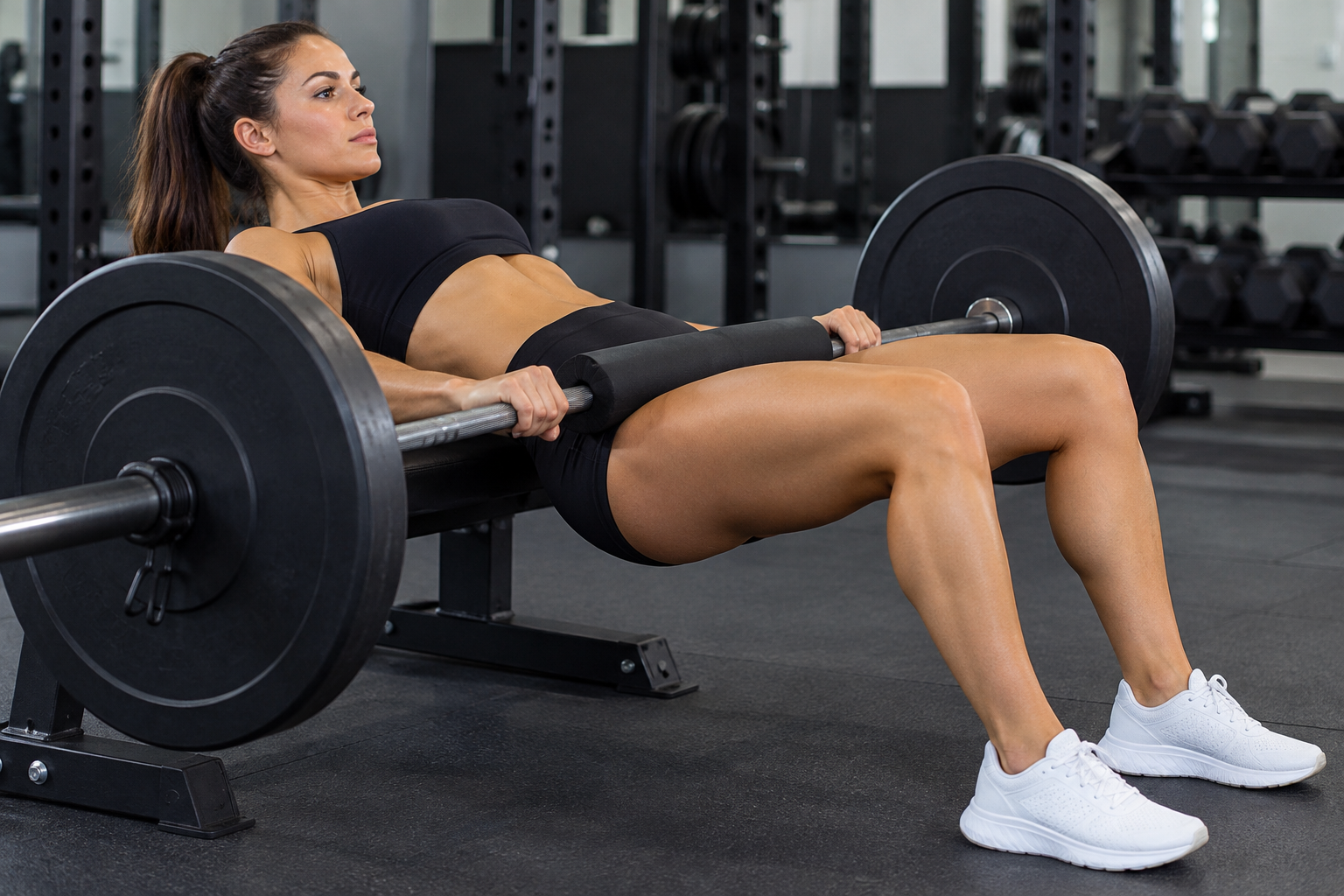
Hip thrust machine vs barbell: which one to choose?
The choice between a hip thrust machine and a barbell depends on training goals, users' experience level, the context of use, and gym organization. Both solutions allow you to perform the hip extension movement, but they differ in loading methods, adjustments, exercise preparation, and operational management.
There is no universally better solution. The comparison must be based on verifiable criteria such as ergonomics, practicality, available adjustments, required maintenance, space needed, and compatibility with the type of users.
This guide compares the two options with a practical approach, highlighting operational differences, organizational advantages, and elements to evaluate before purchasing.
- What are the main differences?
- How are they used?
- Comparative table
- What criteria should be used in the choice?
- Free weight or guided machine?
- Errors to avoid
- Safety aspects
- How to make the final decision
What are the main differences between a hip thrust machine and a barbell?
The barbell represents a traditional solution that requires exercise preparation through barbell positioning, plate loading, and workspace organization.
A hip thrust machine, on the other hand, integrates the movement within a dedicated structure which can be either free-weight or pin-loaded, generally reducing the operations needed to start the exercise.
From an operational standpoint, the main difference concerns how the load is managed and the presence of dedicated adjustments.
Does the movement change?
Both solutions allow for hip extension, but the trajectory and load management depend on the machine's design or the technique used with the barbell.
Which requires more preparation?
Generally, the barbell requires more preliminary operations, while a dedicated machine can make setting up the exercise faster.
How are they used correctly?
With the barbell, it is necessary to set up the load, correctly position the pad on the pelvis, and organize the available space.
With a dedicated machine, instead, it is important to properly adjust the seat, backrest, belt, or other systems provided by the manufacturer before starting the set.
In both cases, correct use must follow the instructions given in the manufacturer's manual.
Which solution facilitates learning?
A guided machine can simplify certain operational phases thanks to integrated adjustments, while the barbell requires greater attention to exercise preparation.
Does anything change for experienced users?
Experienced users can choose either solution by evaluating training goals and their session organization.
Comparative table
| Feature | Hip thrust machine | Barbell |
|---|---|---|
| Preparation | Generally faster | Requires loading and positioning |
| Adjustments | Present depending on the model | Depend on accessories used |
| Load management | Free weight or weight stack | Plates on the barbell |
| Operational space | Dedicated footprint | Free area for the barbell |
| Maintenance | Machine with dedicated components | Barbell and accessories |
The table allows for a quick comparison of the most relevant aspects without giving an absolute advantage to either solution.
Each facility should evaluate these criteria based on its own operational context.
How to interpret the comparison?
The comparison serves to identify the solution most consistent with space requirements, user management, and training organization.
Why is context important?
A commercial gym and a home gym can have very different needs in terms of practicality and equipment management.
What criteria to use in the choice?
The choice should consider the number of users, available space, frequency of use, budget, availability of spare parts, and simplicity of maintenance.
It is also useful to evaluate the presence of ergonomic adjustments and the ease with which different users can adapt the equipment.
For those wishing to compare dedicated models, it is possible to consult the strength machines category.
How much does space impact this?
Available space can influence the choice, especially in facilities with limited training areas.
Does the type of user matter?
Yes. A gym with many users may prioritize equipment that facilitates quick adjustments and station organization.
Free-weight machine or barbell?
A free-weight or weight stack machine maintains different characteristics compared to the barbell, even though in some cases it uses the same Olympic plates.
The comparison mainly concerns operational practicality, adjustment methods, and load management during training.
The choice should be made by evaluating the intended type of use and the facility's organizational preferences.
When to choose free weight?
It can be an interesting solution when you want to use the plates already present in the gym while keeping a dedicated machine.
When to evaluate the weight stack?
It can be practical in contexts where rapid load changes between different users are frequent.
What errors to avoid?
A common mistake consists in exclusively comparing price without considering maintenance, ergonomics, adjustments, and spare parts availability.
It is also advisable to check dimensions, installation requirements, and compatibility with the available space.
Before purchasing, it is recommended to read the official technical documentation of the machine or the barbell manufacturer.
Why measure space?
Insufficient dimensions can limit the correct use of the equipment and the organization of the training area.
Why evaluate maintenance?
The simplicity of control operations and the availability of spare parts affect the long-term management cost.
What safety aspects to consider?
Both the barbell and the machine require periodic checks and use compliant with the manufacturer's instructions.
The adjustments of the hip thrust machine must be correctly set before use, while with the barbell, it is necessary to check the correct securing of the plates and the stability of the training area.
The flooring and any accessories must also be suitable for the intended use.
What checks to perform?
Check tightenings, the condition of the padding, adjustment systems, any belts, plates, and components subject to wear following the manufacturer's instructions.
Why follow the manual?
The manual contains instructions regarding installation, use, maintenance, and specific periodic checks for the model.
How to choose the most suitable solution?
The choice between a hip thrust machine and a barbell should be based on concrete needs and easily verifiable criteria. Gym organization, number of users, speed of use, availability of space, and simplicity of maintenance represent more useful elements than a simple comparison of commercial features.
Before investing, it is advisable to prepare a checklist including dimensions, loading system, available adjustments, technical documentation, availability of spare parts, and a maintenance schedule. This approach allows you to compare alternatives objectively and consistently with the context of use.
FAQ
Does the hip thrust machine replace the barbell? No. They are two different solutions that can even coexist in the same gym.
Which one requires less time for preparation? In many cases, a dedicated machine reduces preliminary operations, but it depends on the model and the station's organization.
Is maintenance different? Yes. The machine requires checks on dedicated components, while the barbell requires the verification of the bar, plates, and accessories.
What is the most reliable source for correct use? The manual provided by the equipment manufacturer represents the primary reference for installation, use, and maintenance.
Comments (0)