
Trolley
You have no items in your shopping cart

 Budgets
 Dumbers
 Discs
Discs
 Benches
 Racks and Rigs
 Weights Holders
 Isotonic machines
 Calisthenics
 Cardio
 Kettlebells
 Flooring
 Gym Set
 Accessories
 Combat
 ARTI MARZIALI
 CONTAINER GYM
 Tug-Of-War
 Used Gym Equipment
 PILATES MACCHINARI
 GINNASTICA ARTISTICA
 CAMPI DA PADEL
 Prodotti in Pronta Consegna
 Informazioni
 IRONMAN
 Gift Card
- Donatif
- General information
- 0 I like it
- 9 Views
- 0 comments
- gym flooring, safety flooring, gym safety, shock-absorbing materials
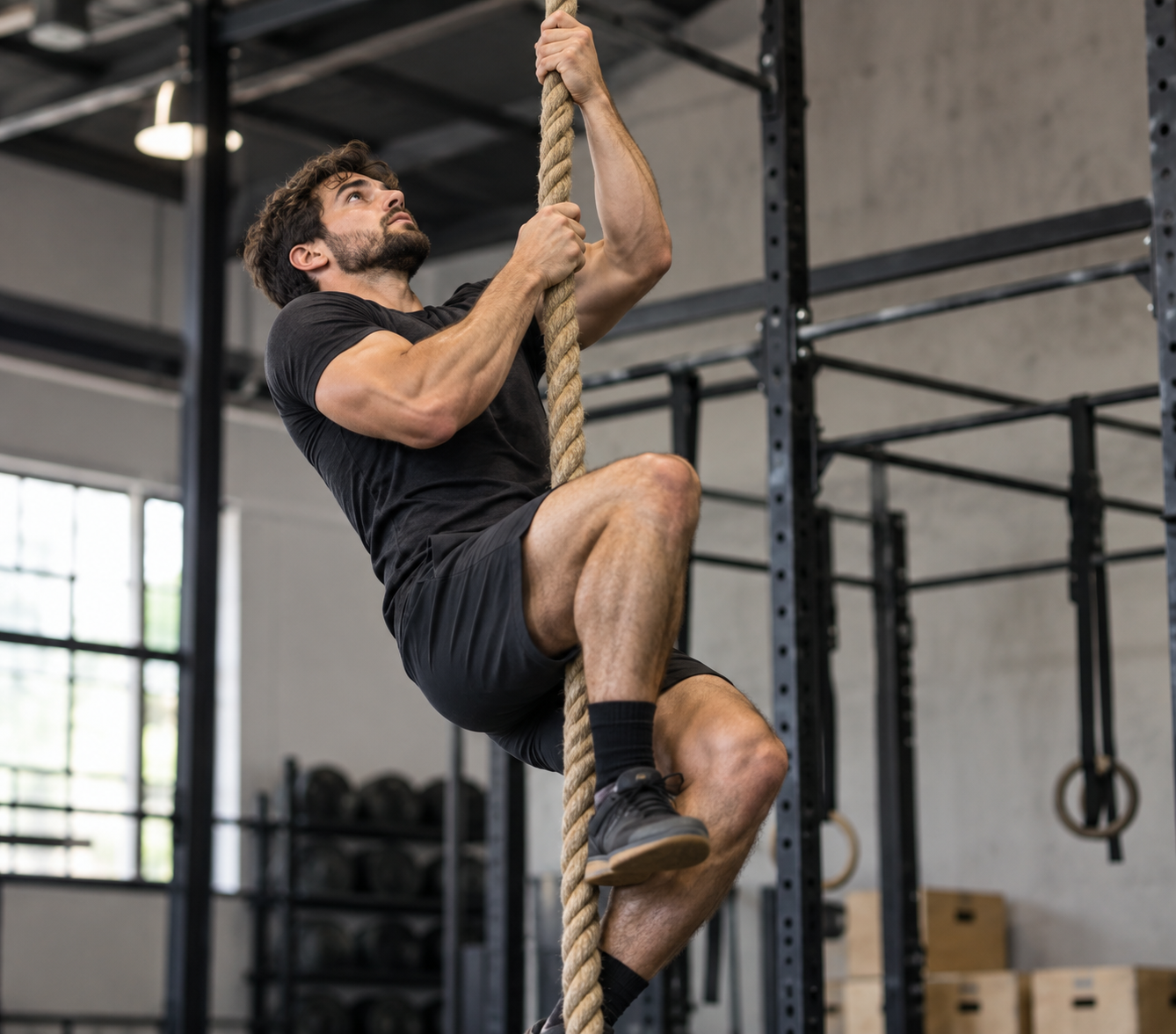
How to choose a gym climbing rope
Climbing rope is one of the most widely used tools in functional training, athletic preparation, and high-intensity circuits. Choosing a gym climbing rope means evaluating not only the material, but also length, diameter, compatibility with the anchoring structure, available space, and expected usage methods.
A correct choice allows for creating a safe, durable workstation suited to the users' level. Conversely, purchasing a rope based exclusively on price or aesthetic appearance can lead to incompatibility with the existing structure or more complex maintenance management.
This guide presents verifiable criteria for selecting a climbing rope intended for a professional gym or a facility dedicated to functional training, without replacing the manufacturer's technical instructions or the structural checks required for installation.
- Quick answer
- What specifications really matter?
- Selection criteria
- Compatibility with structure and space
- Comparison table
- Purchasing mistakes to avoid
- FAQ
- Evaluating the investment
How to choose a climbing rope?
The choice should be based on five main elements: rope material, diameter, length, compatibility with the anchoring system, and intended use. All these aspects must be verified together with the manufacturer's specifications and the characteristics of the structure that will host the workstation.
Before purchase, it is advisable to verify that the rope is suitable for the intended use and that the fixing system is compatible with the load-bearing structure.
The declared characteristics must always be consulted in the official technical documentation of the product.
The most important criterion
The climbing rope must be compatible with the entire training system and not just with the user's preferences.
Documentation to consult
Manufacturer manuals, installation instructions, and technical data sheets represent the primary sources for checking performance, maintenance, and usage methods.
What specifications really matter?
During the evaluation, it is important to analyze the characteristics that concretely affect the user experience and gym management.
Material, length, and diameter influence grip, training methods, and compatibility with available spaces.
The verification must also include the anchoring system and the possibility of carrying out periodic checks on the rope.
Material
Ropes can be made of natural or synthetic fibers. Each solution has different characteristics in terms of maintenance, behavior regarding moisture, and grip sensation.
Diameter and length
The ideal diameter depends on training goals and user level, while the length must be compatible with the height actually available in the gym. There is no universal value valid for all installations.
What criteria to use in the choice?
For a rational selection, it is useful to simultaneously evaluate technical characteristics, usage methods, and facility requirements.
The main criteria include frequency of use, athlete level, ease of maintenance, availability of replacement parts, and simplicity of inspections.
A choice based on these elements makes it possible to reduce the risk of purchasing a rope unsuited to the operational context.
Type of users
A commercial gym may have different needs compared to an athletic preparation center or a facility dedicated exclusively to advanced athletes.
Maintenance
Before purchasing, it is advisable to check the cleaning, control, and replacement procedures indicated by the manufacturer.
How to verify compatibility with structure and space?
The rope must be installed exclusively on a structure verified and designed to support the loads expected during rope climbing.
The available space must allow climbing, descending, and training supervision without interference with other workstations.
The presence of an impact-absorbing flooring contributes to the safety of the work area.
Anchoring system
The fastening must use components compatible with the load-bearing structure following the manufacturer's instructions.
Gym layout
Correct space organization makes it possible to integrate the climbing rope with other stations dedicated to functional training.
Comparison table of selection criteria
| Element | Why it is important | What to check |
|---|---|---|
| Material | Influences grip and maintenance | Manufacturer's technical data sheet |
| Length | Compatibility with height | Space actually available |
| Diameter | Usage comfort | User level |
| Anchoring | System safety | Compatibility with the structure |
| Maintenance | Durability over time | Instructions and scheduled checks |
The joint evaluation of these criteria allows for a more informed choice compared to analyzing a single parameter.
What mistakes to avoid during purchase?
One of the most frequent mistakes consists in selecting the rope without verifying compatibility with the anchor point or the gym height.
It is also discouraged to neglect scheduled maintenance or use fastening components not provided by the manufacturer.
The choice should always be made considering the entire installation system and not just the rope.
Evaluating only the material
The material represents only one of the parameters to consider and does not solely determine the quality of the installation.
Ignoring available space
A length incompatible with the room can limit the use of the climbing rope or require subsequent modifications to the installation.
FAQ
Which material to choose?
It depends on the environment of use, training frequency, and the characteristics declared by the manufacturer.
What is the best diameter?
There is no diameter valid for every situation. The choice depends on the users and training goals.
Can I install the rope on any structure?
No. The structure must be verified and be compatible with the intended anchoring system.
What exercises can complement rope climbing?
Pegboards, pull-ups, and foot lock progressions represent complementary exercises frequently used in preparation programs.
Evaluating the investment
The choice of a climbing rope should be considered as part of the overall design of the functional area. Evaluating material, length, diameter, compatibility with the structure, maintenance program, and space organization makes it possible to obtain a reliable and durable workstation. To complete an area dedicated to functional training, it is possible to integrate the rope with functional training gym accessories, creating a versatile configuration suited to different levels of preparation.
Comments (0)