
Trolley
You have no items in your shopping cart

 Budgets
 Dumbers
 Discs
Discs
 Benches
 Racks and Rigs
 Weights Holders
 Isotonic machines
 Calisthenics
 Cardio
 Kettlebells
 Flooring
 Gym Set
 Accessories
 Combat
 ARTI MARZIALI
 CONTAINER GYM
 Tug-Of-War
 Used Gym Equipment
 PILATES MACCHINARI
 GINNASTICA ARTISTICA
 CAMPI DA PADEL
 Prodotti in Pronta Consegna
 Informazioni
 IRONMAN
 Gift Card
- Donatif
- General information
- 0 I like it
- 455 Views
- 0 comments
- gym flooring, safety flooring, gym safety, shock-absorbing materials
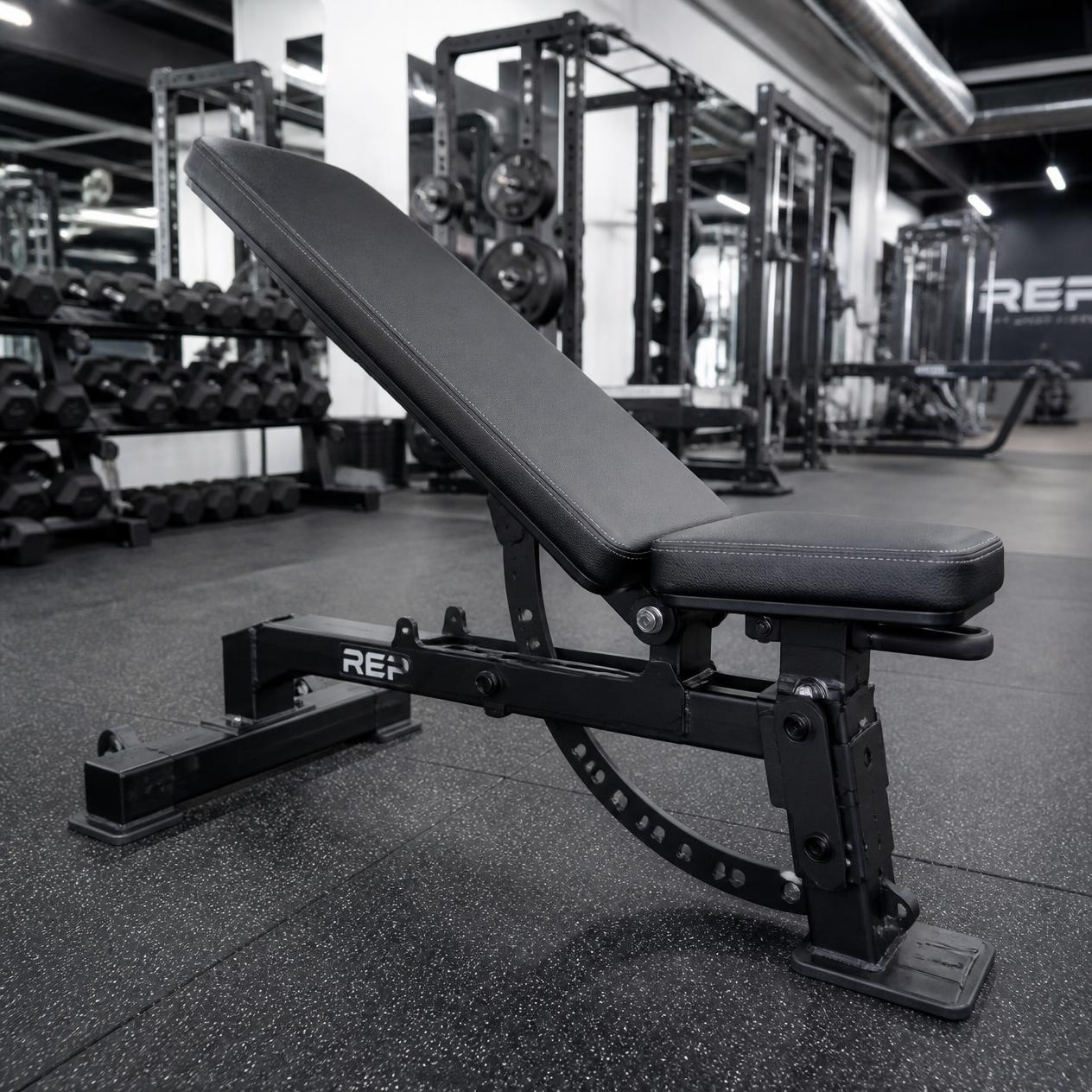
How to choose a professional gym bench: a guide to loads and materials
The professional gym bench is one of the most important pieces of equipment in any weight room, advanced Home Gym, or fitness center. Although it may seem like a simple product, the differences between a professional model and a budget bench are enormous and directly affect user safety, training quality, and the longevity of the investment. Evaluating a bench solely based on price or declared load capacity is one of the most frequent mistakes made by both enthusiasts and small gym owners.
Technical data sheets often report seemingly impressive values such as 300, 400, or even 500 kg of load capacity. However, these numbers do not tell the whole story. It is essential to understand how the load capacity is calculated, what tests have actually been performed, and what the quality of the materials used in the structure's construction is. A bench may claim a high load capacity but exhibit flexing, mechanical play, or instability that completely compromises the training experience.
For powerlifting enthusiasts, personal trainers, and owners of small gyms, knowing the construction elements that distinguish a truly professional bench represents a decisive advantage. In this guide, we analyze the most important parameters to evaluate before purchasing: real load capacity, steel thickness, stability, weld quality, padding, certifications, and features that truly make a difference during intensive use.
- Why build quality is fundamental
- How to interpret the declared load capacity
- The importance of steel thickness
- Stability and safety during training
- Materials, finishes, and components
- Certifications and quality controls
- Mistakes to avoid when choosing
- How to evaluate the best investment
Why build quality is fundamental
A professional bench must maintain structural rigidity even under very high loads. In fact, every minimal deformation alters the athlete's stability, forcing the body to increase the work of the stabilizer muscles and reducing the effectiveness of the exercise. This phenomenon becomes even more evident during heavy barbell presses, where force transmission must be as direct as possible.
Build quality also affects the equipment's lifespan. A structure made with adequate materials maintains its mechanical characteristics after thousands of sessions, while a bench built with cheap components tends to develop play, noise, and a loss of rigidity over time.
For a commercial gym, these aspects take on even greater value, as the equipment is used daily by users with different strength levels and usage patterns.
Daily training and intensive use
Professional benches are designed to withstand continuous usage cycles without compromising precision and safety. This allows for high performance to be maintained even in high-traffic environments.
Comfort and performance
A stable structure improves the athlete's confidence during the most demanding sets, favoring cleaner technical execution and better expression of strength.
How to interpret the declared load capacity
One of the most discussed aspects concerns weight bench load capacity. Many manufacturers use this value as the main commercial lever, but they rarely explain how it was obtained. A simple numerical indication is not enough to evaluate the real reliability of the equipment.
It is important to distinguish between static load and dynamic load. A structure may support a certain weight under static conditions but behave completely differently during real training, where accelerations, impacts, and force variations generate much higher stresses.
The quality of a bench is therefore measured by its ability to maintain rigidity and stability during movement, not just by the theoretical resistance reported in a catalog.
Static and dynamic load
During a bench press, the system is subjected to continuous changes in direction and variations in intensity. Professional design takes these factors into account through appropriate safety coefficients.
The truth behind the declared 300 kg
Many budget benches report very high load capacities without specifying testing methodology, safety margins, or standards used. For this reason, the data should always be interpreted in conjunction with the build quality and available certifications.
The importance of steel thickness
The frame is the heart of the entire structure. More robust profiles and careful design allow for reduced flexing and twisting, improving the stability and durability of the equipment.
It is not just the size of the tubing that counts, but also the quality of the steel used, the precision of the workmanship, and the way the different parts are joined together.
A correctly designed structure distributes forces along the entire frame, limiting stress concentrations that could accelerate wear.
Evaluating gym bench steel thickness
Profiles with adequate thickness ensure greater rigidity and less deformation under load. This translates into more stable training and a significantly longer service life.
Welds and critical points
Even the best steel loses effectiveness if the welds are not performed correctly. Uniform beads, adequate penetration, and quality controls are essential elements for a professional structure.
Stability and safety during training
Stability is one of the most important parameters when choosing a professional bench. A wide base, a correct center of gravity, and a balanced distribution of mass allow for the elimination of unwanted oscillations during use.
An unstable bench forces the athlete to constantly compensate for the structure's movements, increasing fatigue and reducing the effectiveness of the technical movement.
For those who practice powerlifting or use heavy loads, these aspects directly affect safety and performance quality.
Base design
The shape of the base influences the distribution of forces and the bench's ability to remain perfectly stable even during explosive exercises.
Why flat bench stability matters
A stable bench allows all force to be transferred to the barbell without dispersion due to vibrations or micro-movements of the structure, improving performance and safety.
Materials, finishes, and components
Beyond the frame, it is important to evaluate the quality of the padding, upholstery, adjustment systems, and hardware. Every component contributes to the overall durability of the equipment.
The padding must offer the right balance between comfort and support, avoiding excessive sagging under load. Wear-resistant and easy-to-clean upholstery is essential, especially in commercial gyms.
Wheels, handles, and adjustment mechanisms must also be designed to withstand frequent use without compromising precision and reliability.
Comfort and density
High-density materials maintain their shape over time, ensuring constant support even after years of intensive use.
Surface protection
Powder coatings and anti-corrosion treatments increase resistance to impacts, scratches, and humidity, preserving the aesthetics and functionality of the bench.
Certifications and quality controls
Certifications are an important indicator of product reliability. Although they are not the only parameter to consider, they demonstrate that the design follows specific technical standards and control procedures.
A serious manufacturer documents load tests, production processes, and dimensional checks, offering greater transparency than simple commercial claims.
For professional facilities and gyms open to the public, relying on equipment made according to recognized standards helps reduce risks and increase safety.
Laboratory tests
Resistance tests verify the structure's behavior under controlled conditions, simulating repeated use and high loads.
Production control
Consistent quality procedures allow for uniformity across different manufactured units and reduce the likelihood of construction defects.
Mistakes to avoid when choosing
Purchasing solely based on price is one of the most common mistakes. A lower initial cost can translate into more maintenance, shorter lifespan, and the need to replace the equipment after only a few years.
Another mistake is neglecting the intended use. An occasional Home Gym and a commercial gym require different levels of robustness, just as a beginner and a powerlifting athlete do.
Finally, it is important to always check the quality of the adjustments, the overall rigidity, and the ease of moving the bench before purchasing.
Reading the technical data sheet correctly
Comparing only the declared load capacity is not enough. It is necessary to evaluate materials, profile dimensions, adjustment systems, and general construction quality.
Testing the equipment
When possible, testing a bench personally allows you to immediately perceive any play, vibrations, or instability that are difficult to identify on paper.
How to evaluate the best investment
Choosing a professional bench means investing in safety, performance, and durability. A structure built with quality materials maintains precision and reliability even after years of intensive use, reducing maintenance and replacement costs.
Relying on specialized manufacturers is often the best solution for those who want to purchase equipment intended to last over time. To learn more about the features of professional solutions, you can consult professional gym bench, evaluating models designed to ensure high stability, build quality, and maximum reliability.
Analyzing real load capacity, materials, steel thickness, stability, certifications, and quality of workmanship allows you to make an informed choice, avoiding the limitations of budget equipment and making a truly advantageous investment for both an advanced Home Gym and a professional gym.
Comments (0)