
Trolley
You have no items in your shopping cart

 Budgets
 Dumbers
 Discs
Discs
 Benches
 Racks and Rigs
 Weights Holders
 Isotonic machines
 Calisthenics
 Cardio
 Kettlebells
 Flooring
 Gym Set
 Accessories
 Combat
 ARTI MARZIALI
 CONTAINER GYM
 Tug-Of-War
 Used Gym Equipment
 PILATES MACCHINARI
 GINNASTICA ARTISTICA
 CAMPI DA PADEL
 Prodotti in Pronta Consegna
 Informazioni
 IRONMAN
 Gift Card
- Donatif
- General information
- 0 I like it
- 572 Views
- 0 comments
- gym flooring, safety flooring, gym safety, shock-absorbing materials
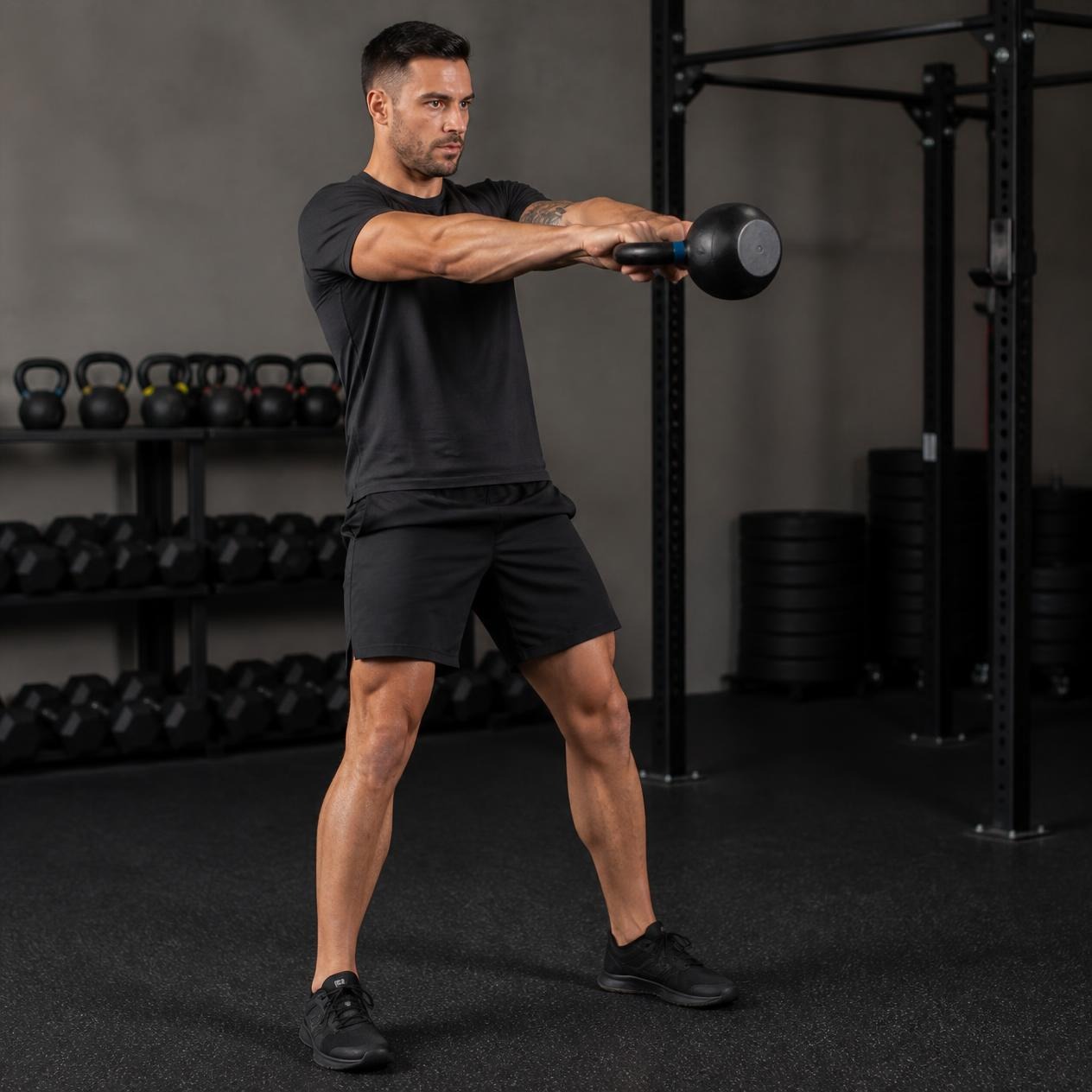
How to Choose the Weight of Your First Kettlebell: A Complete Guide for Men and Women
Purchasing your first kettlebell is one of the most important steps to starting an effective functional training journey. The choice of load influences the quality of technical execution, safety during exercises, and the ability to progress over time without developing bad motor habits. For this reason, there is no universal weight that works for everyone, but rather a solution that depends on strength, mobility, experience, and personal goals.
Many beginners look for a simple answer, such as choosing between an 8 kg or 12 kg kettlebell, or what weight to use if they are men or women. In reality, individual biomechanics matter much more than a generic rule. An excessive load makes it difficult to learn correct motor patterns, while one that is too light could limit strength development and reduce training stimuli.
In this guide, you will discover how to identify the kettlebell weight to start with, which factors to consider before purchasing, which mistakes to avoid, and how to plan an intelligent progression to achieve lasting results in total safety.
- Why the kettlebell weight is so important
- The factors that determine the choice
- Recommended weight for men and women
- Exercises to start with
- The most frequent mistakes
- How to increase weight over time
- How to buy the right kettlebell
- Why choosing well pays off
Why the kettlebell weight is so important
The kettlebell is a different tool compared to traditional dumbbells. The shifted center of gravity completely changes the weight distribution and requires greater activation of the stabilizing muscles. Consequently, an apparently light load can be much more demanding during dynamic movements like swings, cleans, or snatches.
Learning the technique with an appropriate weight allows you to develop coordination, control, and movement awareness. This approach significantly reduces the risk of compensations that could cause discomfort to the back, shoulders, or knees.
The initial choice also influences motivation. A correct weight allows you to complete workouts with satisfaction, progressively improving confidence in your own abilities.
Biomechanics matter more than numbers
Two people of the same age and body weight may require completely different kettlebells. Athletic experience, joint mobility, grip strength, and control capacity affect the outcome more than the simple number on the scale.
Technique first, then load
In functional training, the quality of execution always comes before intensity. Consolidating fundamental movements allows you to safely tackle increasingly complex workouts.
The factors that determine the choice
Before purchasing, it is useful to evaluate your physical activity level. Those who come from years of weight training generally possess a higher strength base than those starting completely from scratch.
Goals also influence the ideal weight. Training to improve strength requires different loads over time compared to a program oriented toward weight loss or endurance improvement.
Technical quality remains the primary criterion, however. If you lose control of the movement during exercises, it means the chosen load is likely too high.
Training experience
A person who is already trained can adapt more quickly to using a kettlebell, while an absolute beginner should prioritize a weight that allows them to learn the fundamental movements without difficulty.
Personal goals
Toning, cardiovascular improvement, strength development, or athletic preparation require different approaches. Clearly identifying your goal helps you choose the most suitable starting load.
Recommended weight for men and women
One of the most frequent questions concerns the choice between an 8 kg or 12 kg kettlebell. For many women without experience, the 8 kg version represents a good compromise for learning the main exercises, while those who already possess decent athletic preparation can look toward 10 or 12 kg.
For beginner men, the most common reference is the 16 kg men's kettlebell, especially if there is already a training base. However, this is not an absolute rule. Some will be able to start with 12 kg, while others will be ready directly for 16 kg.
The fundamental aspect consists of being able to maintain impeccable technique during all planned repetitions, without compromising posture and control.
Guidelines for women
Women who wish to tone up and improve their physical fitness can start with weights between 6 and 10 kg depending on their initial preparation, increasing progressively as their technique becomes stable.
Guidelines for men
For many men, the 12 to 16 kg range represents an excellent starting point, but the final choice must always be based on the quality of movement and not on personal pride.
Exercises to start with
The first workouts should focus on fundamental movements rather than complex exercises. Squats, kettlebell deadlifts, presses, and farmer's carries allow you to develop control and stability.
Only after having gained confidence is it appropriate to introduce swings, cleans, and subsequently more advanced ballistic exercises.
A progressive program allows you to build solid technical foundations and significantly reduce the risk of injury.
Fundamental exercises
Deadlifts, goblet squats, and presses represent the ideal starting point for learning weight management and improving motor control.
When to introduce the swing
The swing should only be tackled after having correctly learned the hip hinge movement. This ensures greater effectiveness and protects the lumbar region.
The most frequent mistakes
The most common mistake consists of choosing a kettlebell that is too heavy, thinking you will get results more quickly. In reality, this slows down learning and increases the probability of developing compensatory movements.
At the opposite extreme, using an excessively light weight can prevent you from correctly perceiving the dynamics of the exercises and limit muscular adaptations.
Neglecting warm-ups or training without a progression also represents a mistake that can compromise results in the long term.
Ego does not help
The best kettlebell is not the heaviest one, but the one that allows you to perform every repetition with precision and control.
Wanting to progress too quickly
Increasing the weight before having consolidated the technique slows down growth and makes it more difficult to build a solid athletic base.
How to increase weight over time
Progression should be gradual and planned. When all sets are completed with impeccable technique and without excessive fatigue, it is possible to evaluate moving to the next weight.
There is no timeline that works for everyone. Some people increase the load after a few weeks, while others need several months of practice.
Monitoring progress through a training journal allows you to make decisions based on concrete data rather than the feelings of the moment.
Signs that indicate the right moment
Fluid movements, core stability, breath control, and the absence of compensations are excellent indicators of the possibility of increasing the weight.
Consistency is more important than intensity
Training regularly using the correct load produces better results than alternating periods of excessive intensity with long breaks.
How to buy the right kettlebell
Beyond the weight, it is important to evaluate construction quality, grip, finish, and balance. A well-designed kettlebell improves comfort during exercises and ensures greater durability over time.
Single-piece cast iron kettlebells generally represent the best choice for most users thanks to their robustness and reliability.
For those who wish to build a complete home gym, choosing professional products represents an investment that will accompany your workouts for many years.
Materials and construction
A uniform surface, a well-finished handle, and consistent dimensions contribute to making training safer and more effective.
Where to buy
Relying on specialized retailers allows you to find certified products and receive advice on choosing the most suitable model. To learn more, you can consult the selection of professional kettlebells available for home and gym training.
Why choosing well pays off
Purchasing the correct kettlebell means investing in the quality of your workouts from the very first day. An appropriate weight allows you to learn the technique safely, build a solid strength base, and achieve constant progress without unnecessary interruptions.
Following a gradual approach allows you to face all phases of athletic development with greater serenity. Consistency, combined with a correct initial choice, represents the true element that determines success in the long term.
Identifying the ideal weight requires a personal evaluation, but understanding the principles illustrated in this guide allows you to make a more informed decision, reduce the risk of errors, and begin your kettlebell training with solid technical foundations and lasting growth prospects.
Comments (0)